Search
My feed
Miami Beach, FL, USA

Curated News

Collection · 1058 items

Related

Curated news

A San Francisco Soundwalk

Source: A San Francisco Soundwalk

Curated news

LutteCoin

Using Situationist principles to critique blockchain and crypto. Source: LutteCoin

Curated news

Little Galleries Turn The Heights Into a Walking Art Wonderland — and They’re Set to Spread Throughout Houston

It’s a Lilliputian masterpiece that takes you a bit by surprise as you stroll down Heights Boulevard. There are two Little Galleries that pop up as you Source: Little Galleries Turn The Heights Into a Walking Art Wonderland — and They’re Set to Spread Throughout Houston

Curated news

Why Public Art Is Good for Cities – YES! Magazine

Studies show that investments in public art can improve street safety, provide tourism and new jobs, and combat social isolation and anxiety. Source: Why Public Art Is Good for Cities – YES! Magazine

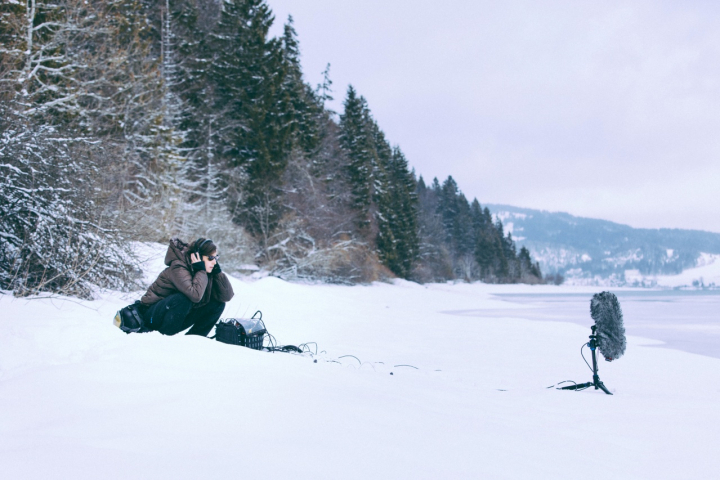
Creating Soundscapes From the Whispering, Bubbling, and Roaring Earth

Now on view at Art Basel Miami Beach, sound artist Jana Winderen’s The Art of Listening: Under Water draws listeners’ attention to the rich sonic landscapes of nature — and highlights how human activity might affect them.

Source: Creating Soundscapes From the Whispering, Bubbling, and Roaring Earth

Submitted by: Babak Fakhamzadeh

pedestrian acts

By de Certeau: In “Walking in the City”, de Certeau conceives pedestrianism as a practice that is performed in the public space, whose architecture and behavioural habits substantially determine the way we walk. For de Certeau, the spatial order “organises an ensemble of possibilities (e.g. by a place in which one can move) and interdictions (e.g. by a wall that prevents one from going further)” and the walker “actualises some of these possibilities” by performing within its rules and limitations. “In that way,” says de Certeau, “he makes them exist as well as emerge.” Thus, pedestrians, as they walk conforming to the possibilities that are brought about by the spatial order of the city, constantly repeat and re-produce that spatial order, in a way ensuring its continuity. But, a pedestrian could also invent other possibilities. According to de Certeau, “the crossing, drifting away, or improvisation of walking privilege, transform or abandon spatial elements.” Hence, the pedestrians could, to a certain extent, elude the discipline of the spatial order of the city. Instead of repeating and re-producing the possibilities that are allowed, they can deviate, digress, drift away, depart, contravene, disrupt, subvert, or resist them. These acts, as he calls them, are pedestrian acts.

Problem?

Encountered a problem? Report it to let us know.

  • Include the page on which you encountered the problem.
  • Describe what happened.
  • Describe what you expected to happen.
Follow us