Search
My feed

Curated News

Collection · 1063 items

Libraries

2 sub-collections · 21 items

trees

Collection · 47 items

Related

Curated news

A Conversation with Ann de Forest Editor of the Anthology WAYS OF WALKING

A Conversation with Ann de Forest Editor of the Anthology WAYS OF WALKING by Amy Beth Sisson

Curated news

City Guesser – Can you guess what city you’re in?

City Guesser is a game that plops you into a random city and forces you to guess where you are at! Source: City Guesser – Can you guess what city you’re in?

Curated news

Ways of Walking : a new book with essays about walking

Ways of Walking brings together 26 writers who reflect on walks they have taken and what they have discovered along the way. Edited by Ann de Forest.

Curated news

Yu-Wen Wu Asked Google How to Walk From Boston to Taipei. She Spent the Next 10 Years Turning the Directions Into an Incredible Artwork

Yu-Wen Wu turned an absurdist set of Google Maps walking directions into a 20-foot artwork in the tradition of Chinese landscape scrolls. Source: Yu-Wen Wu Asked Google How to Walk From Boston to Taipei. She Spent the Next 10 Years Turning the Directions Into an Incredible Artwork

Libraries as gardens | Archivoz

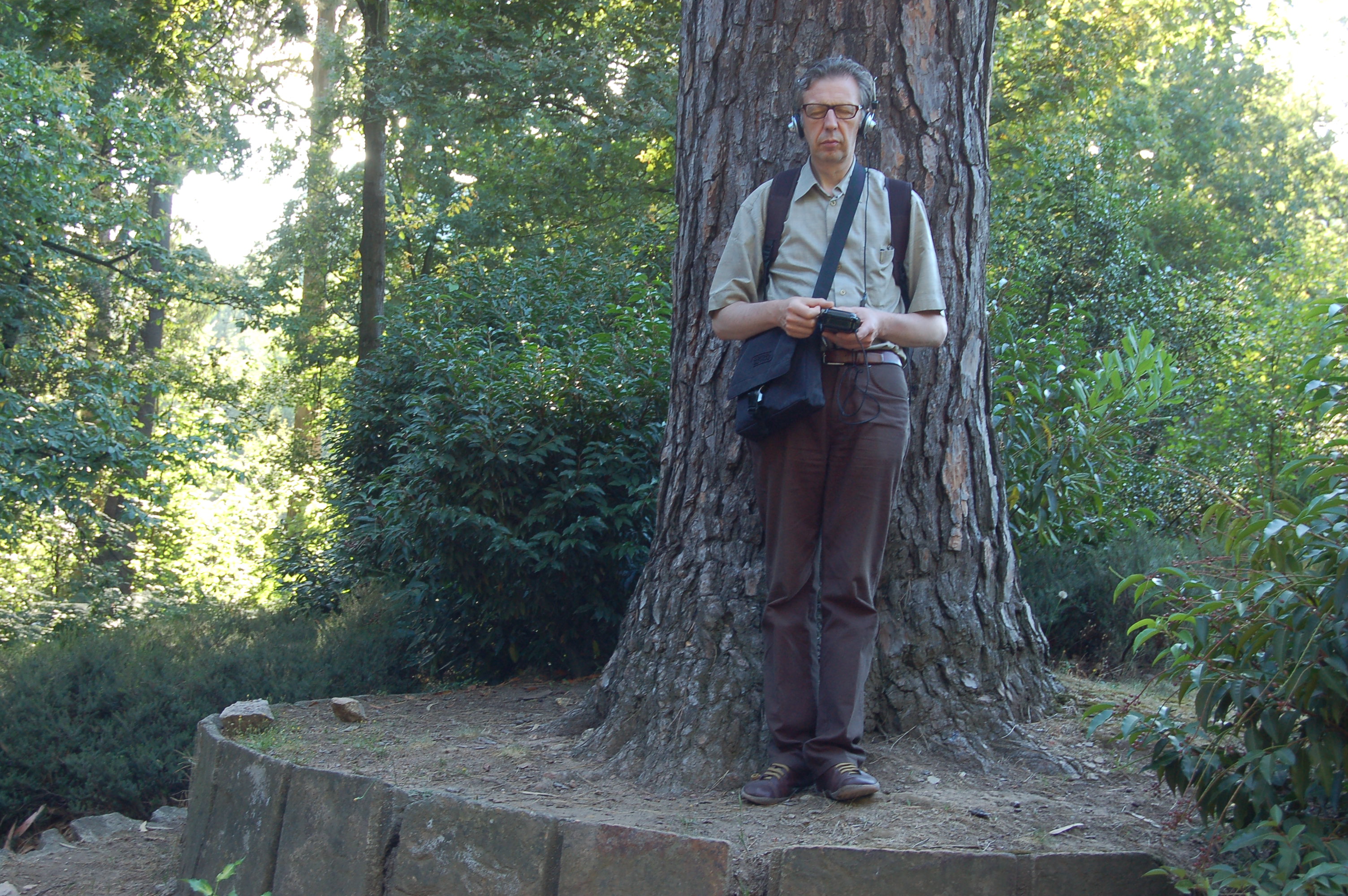
A blog piece about the sound walking project in the online magazine Archivoz.
Your recordings of memories and stories are welcome till end of June and you are as well warmly invited to the webinar at the Urban Tree Festival this Saturday.

Source: Libraries as gardens | Archivoz

Submitted by: Geert Vermeire

pedestrian acts

By de Certeau: In “Walking in the City”, de Certeau conceives pedestrianism as a practice that is performed in the public space, whose architecture and behavioural habits substantially determine the way we walk. For de Certeau, the spatial order “organises an ensemble of possibilities (e.g. by a place in which one can move) and interdictions (e.g. by a wall that prevents one from going further)” and the walker “actualises some of these possibilities” by performing within its rules and limitations. “In that way,” says de Certeau, “he makes them exist as well as emerge.” Thus, pedestrians, as they walk conforming to the possibilities that are brought about by the spatial order of the city, constantly repeat and re-produce that spatial order, in a way ensuring its continuity. But, a pedestrian could also invent other possibilities. According to de Certeau, “the crossing, drifting away, or improvisation of walking privilege, transform or abandon spatial elements.” Hence, the pedestrians could, to a certain extent, elude the discipline of the spatial order of the city. Instead of repeating and re-producing the possibilities that are allowed, they can deviate, digress, drift away, depart, contravene, disrupt, subvert, or resist them. These acts, as he calls them, are pedestrian acts.

Problem?

Encountered a problem? Report it to let us know.

  • Include the page on which you encountered the problem.
  • Describe what happened.
  • Describe what you expected to happen.
Follow us