Search
My feed
Mt. Tabor, Portland, OR, USA

Curated News

Collection · 1063 items

Related

Curated news

Strava art lets you draw with your feet

I started an odd holiday tradition a few years ago. Strava art is using your GPS on your tracking device to draw a picture by turning your body into a drawing tool that records your movements. In 2020 I thought it would be cool to make a Marietta-sized Christmas tree. Part of the challenge of

Curated news

Media Invited to Explore Urban Acoustics with a ‘Sound Walk’ of Nashville #ASA183

The 183rd ASA Meeting will include an urban sound walk, in which media are invited to explore Nashville, its sounds, and efforts to design projects that enhance Source: Media Invited to Explore Urban Acoustics with a ‘Sound Walk’ of Nashville #ASA183

Curated news

5 best heritage walks in Delhi – Luxebook

Discover the city of New Delhi on foot as you bookmark these heritage walks to the gems in the national capital. Source: 5 best heritage walks in Delhi – Luxebook

Curated news

A Walking Tour Through Victor Hugo’s Apartment in Paris – Frenchly

A walking tour through writer Victor Hugo’s apartment in Paris, a treasure trove from his life, loves and collections. Source: A Walking Tour Through Victor Hugo’s Apartment in Paris – Frenchly

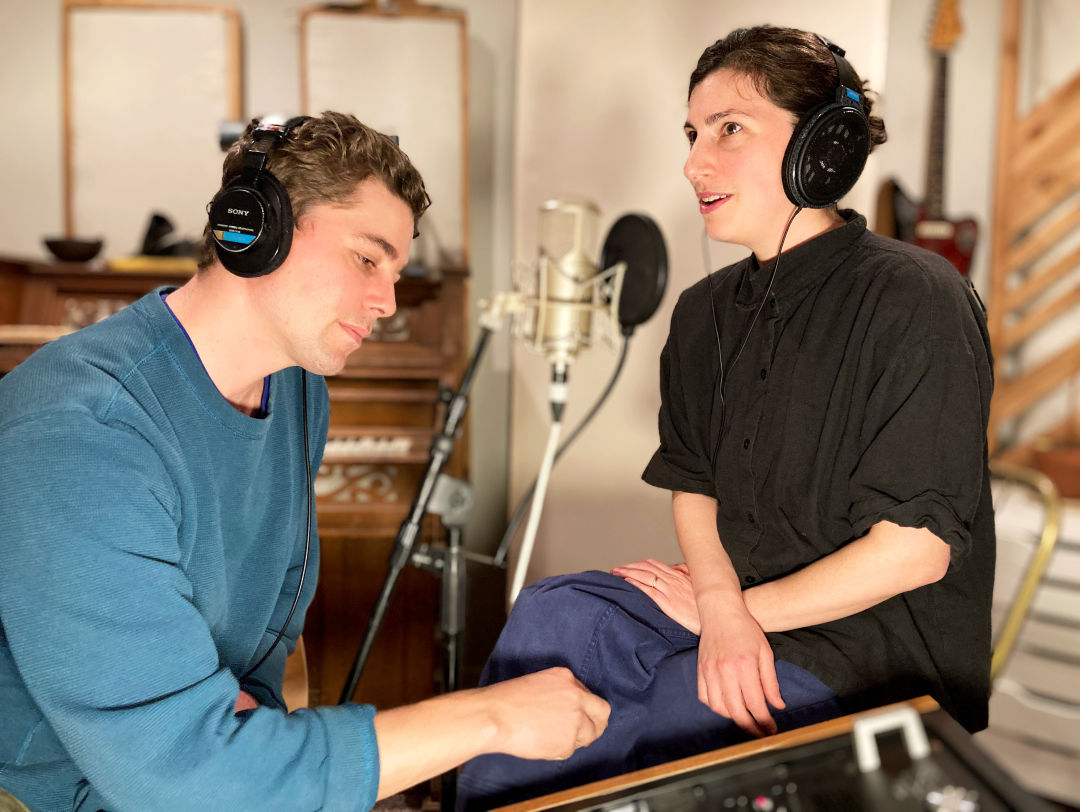
A New “Soundwalk” Takes Listeners on a Story-Laced Tour of Mount Tabor | Portland Monthly

‘Overlay’ is the first in a 10-part series from Third Angle New Music.

Source: A New “Soundwalk” Takes Listeners on a Story-Laced Tour of Mount Tabor | Portland Monthly
Submitted by: Babak Fakhamzadeh

pedestrian acts

By de Certeau: In “Walking in the City”, de Certeau conceives pedestrianism as a practice that is performed in the public space, whose architecture and behavioural habits substantially determine the way we walk. For de Certeau, the spatial order “organises an ensemble of possibilities (e.g. by a place in which one can move) and interdictions (e.g. by a wall that prevents one from going further)” and the walker “actualises some of these possibilities” by performing within its rules and limitations. “In that way,” says de Certeau, “he makes them exist as well as emerge.” Thus, pedestrians, as they walk conforming to the possibilities that are brought about by the spatial order of the city, constantly repeat and re-produce that spatial order, in a way ensuring its continuity. But, a pedestrian could also invent other possibilities. According to de Certeau, “the crossing, drifting away, or improvisation of walking privilege, transform or abandon spatial elements.” Hence, the pedestrians could, to a certain extent, elude the discipline of the spatial order of the city. Instead of repeating and re-producing the possibilities that are allowed, they can deviate, digress, drift away, depart, contravene, disrupt, subvert, or resist them. These acts, as he calls them, are pedestrian acts.

Problem?

Encountered a problem? Report it to let us know.

  • Include the page on which you encountered the problem.
  • Describe what happened.
  • Describe what you expected to happen.
Follow us