Search
My feed

Curated News

Collection · 1058 items

Related

Curated news

Public Art Festival Will Turn Manhattan Street Into a Runway

Art in Odd Places is now accepting proposals for this year’s festival, returning to 14th Street in Manhattan with the theme “Dress.” Source: Public Art Festival Will Turn Manhattan Street Into a Runway

Curated news

Why you should explore Crete in the spring – and on foot | Travel | The Guardian

Greece’s largest and most southerly island is gorgeous in spring – there’s no better time to go trekking Source: Why you should explore Crete in the spring – and on foot | Travel | The Guardian

Curated news

Skip Marathon du Médoc and join Marathon du Beaujolais – Lonely Planet

How do you make a marathon fun? Add wine. Lyon-based writer, wine aficionado and runner (in that order) Anna Richards argues that the best wine marathon in… Source: Skip Marathon du Médoc and join Marathon du Beaujolais – Lonely Planet

Curated news

L-Acoustics Provides Immersive Sensory Engagement at London’s Iconic Walk | AVNetwork

Nick Ryan’s sound installation along The Strand incorporates audio technology from L-Acoustics L-ISA Studio. Source: L-Acoustics Provides Immersive Sensory Engagement at London’s Iconic Walk | AVNetwork

The Art of Walking | JSTOR Daily

Walking as an art has a deep history. By guiding participants, or their own bodies, on walks, artists encourage us to see the extraordinary in the mundane.

Source: The Art of Walking | JSTOR Daily
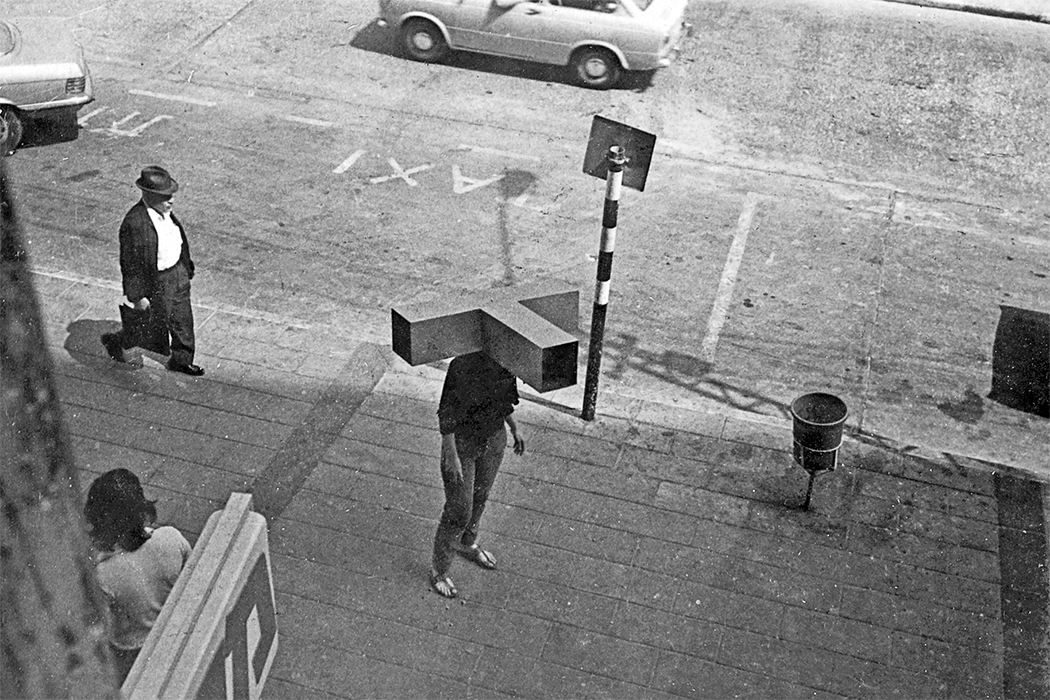
Submitted by: Babak Fakhamzadeh

pedestrian acts

By de Certeau: In “Walking in the City”, de Certeau conceives pedestrianism as a practice that is performed in the public space, whose architecture and behavioural habits substantially determine the way we walk. For de Certeau, the spatial order “organises an ensemble of possibilities (e.g. by a place in which one can move) and interdictions (e.g. by a wall that prevents one from going further)” and the walker “actualises some of these possibilities” by performing within its rules and limitations. “In that way,” says de Certeau, “he makes them exist as well as emerge.” Thus, pedestrians, as they walk conforming to the possibilities that are brought about by the spatial order of the city, constantly repeat and re-produce that spatial order, in a way ensuring its continuity. But, a pedestrian could also invent other possibilities. According to de Certeau, “the crossing, drifting away, or improvisation of walking privilege, transform or abandon spatial elements.” Hence, the pedestrians could, to a certain extent, elude the discipline of the spatial order of the city. Instead of repeating and re-producing the possibilities that are allowed, they can deviate, digress, drift away, depart, contravene, disrupt, subvert, or resist them. These acts, as he calls them, are pedestrian acts.

Problem?

Encountered a problem? Report it to let us know.

  • Include the page on which you encountered the problem.
  • Describe what happened.
  • Describe what you expected to happen.
Follow us