Search
My feed

Curated News

Collection · 1061 items

Related

Curated news

Rijksmuseum unveils Richard Long exhibition thanks to biggest-ever donation

Dutch museum has received €12.5m gift to help support free-of-charge, sculptural exhibitions in the gardens Source: Rijksmuseum unveils Richard Long exhibition thanks to biggest-ever donation

Curated news

US explorer’s trek through China captures its diversity – SHINE News

A multimedia exhibition gives visitors a glimpse into National Geographic explorer and two-time Puli Source: US explorer’s trek through China captures its diversity – SHINE News

Curated news

Stream episode Tokyo Realtime Akihabara Soundwalk by whiterabbitpress podcast | Listen online for free on SoundCloud

Curated news

Puppeteer walks 1,000km in France dressed as giraffe – Henley Standard

Source: Puppeteer walks 1,000km in France dressed as giraffe – Henley Standard

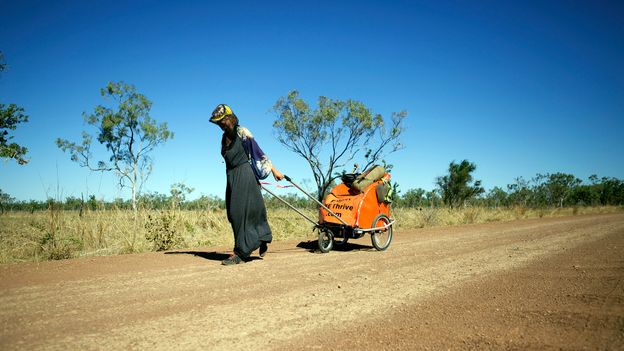
BBC – Travel – The woman who walked around the world

Seeking a deeper connection to the world, Angela Maxwell set off to walk it alone. Six years and 20,000 miles later, she brought that connection home.

Source: BBC – Travel – The woman who walked around the world

Submitted by: Babak Fakhamzadeh

pedestrian acts

By de Certeau: In “Walking in the City”, de Certeau conceives pedestrianism as a practice that is performed in the public space, whose architecture and behavioural habits substantially determine the way we walk. For de Certeau, the spatial order “organises an ensemble of possibilities (e.g. by a place in which one can move) and interdictions (e.g. by a wall that prevents one from going further)” and the walker “actualises some of these possibilities” by performing within its rules and limitations. “In that way,” says de Certeau, “he makes them exist as well as emerge.” Thus, pedestrians, as they walk conforming to the possibilities that are brought about by the spatial order of the city, constantly repeat and re-produce that spatial order, in a way ensuring its continuity. But, a pedestrian could also invent other possibilities. According to de Certeau, “the crossing, drifting away, or improvisation of walking privilege, transform or abandon spatial elements.” Hence, the pedestrians could, to a certain extent, elude the discipline of the spatial order of the city. Instead of repeating and re-producing the possibilities that are allowed, they can deviate, digress, drift away, depart, contravene, disrupt, subvert, or resist them. These acts, as he calls them, are pedestrian acts.

Problem?

Encountered a problem? Report it to let us know.

  • Include the page on which you encountered the problem.
  • Describe what happened.
  • Describe what you expected to happen.
Follow us