Search
My feed
Prince Edward Island, Canada

Curated News

Collection · 1062 items

Related

Curated news

‘To cough was to risk death’: the artist who mapped Syria’s Sednaya prison with testimonies from its survivors | Culture | The Guardian

As an artist and audio investigator, I interviewed people who had been imprisoned in a building where sound and vision were weaponised. So what should happen to this monstrous place now it has been liberated? Source: ‘To cough was to risk death’: the artist who mapped Syria’s Sednaya prison with testimonies from its survivors |

Curated news

Here’s What You Need to Know About Julian Opie’s Celebrated ‘Crossing’ Series

Four works by influential British artist Julian Opie are included in the Artnet Auctions Winter Editions sale, now live for bidding. Source: Here’s What You Need to Know About Julian Opie’s Celebrated ‘Crossing’ Series

Curated news

strav.art — About

GPS art made my you! Submit your Strava art here! #Stravaart Source: strav.art — About

Curated news

Local Tourist: How To Take Yourself On A Mile-long, Road-free Stroll Through University City – Streets Dept

Words and photos by Streets Dept Lead Contributor Eric Dale.______________________ This post is a free sample of our monthly “Local Tourist” column, a Patreon-exclusive series that recommends … Source: Local Tourist: How To Take Yourself On A Mile-long, Road-free Stroll Through University City – Streets Dept

Canada’s new 700km island path – BBC Travel

A Canadian’s quest to design a pilgrimage-inspired path around Prince Edward Island is now the Island Walk, a 700km walking and cycling route.
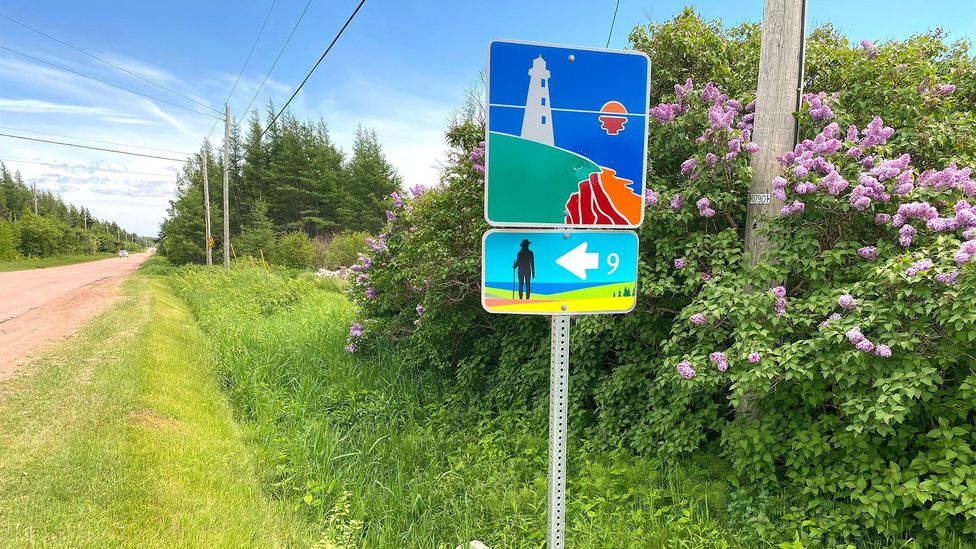
Source: Canada’s new 700km island path – BBC Travel

Submitted by: Andrew Stuck

pedestrian acts

By de Certeau: In “Walking in the City”, de Certeau conceives pedestrianism as a practice that is performed in the public space, whose architecture and behavioural habits substantially determine the way we walk. For de Certeau, the spatial order “organises an ensemble of possibilities (e.g. by a place in which one can move) and interdictions (e.g. by a wall that prevents one from going further)” and the walker “actualises some of these possibilities” by performing within its rules and limitations. “In that way,” says de Certeau, “he makes them exist as well as emerge.” Thus, pedestrians, as they walk conforming to the possibilities that are brought about by the spatial order of the city, constantly repeat and re-produce that spatial order, in a way ensuring its continuity. But, a pedestrian could also invent other possibilities. According to de Certeau, “the crossing, drifting away, or improvisation of walking privilege, transform or abandon spatial elements.” Hence, the pedestrians could, to a certain extent, elude the discipline of the spatial order of the city. Instead of repeating and re-producing the possibilities that are allowed, they can deviate, digress, drift away, depart, contravene, disrupt, subvert, or resist them. These acts, as he calls them, are pedestrian acts.

Problem?

Encountered a problem? Report it to let us know.

  • Include the page on which you encountered the problem.
  • Describe what happened.
  • Describe what you expected to happen.
Follow us