


This is third party content.
Ken Johnston, Our Walk to Freedom
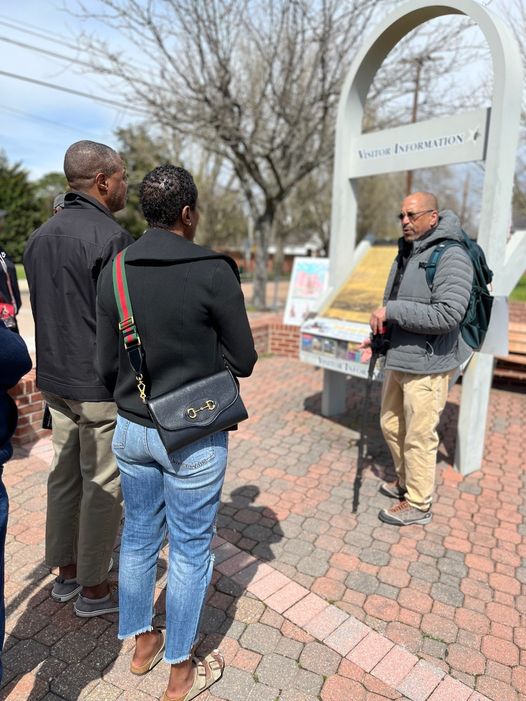
” Walk to Freedom came about in late 2017 after I discovered the National Civil Rights Museum in Memphis, Tennessee was planning remembrance ceremonies in April 2018 to mark the 50th anniversary of Dr. Martin Luther King, Jr.’s assassination. I recognized the importance of this moment and I thought about how could I contribute to […]
85
450 Mulberry St, Memphis, TN 38103, USA
 Walking as Artistic Practice
The webpage "Walking as Art and Cultural Practice" by Ellen Mueller explores the interdisciplinary study of walking from artistic, cultural, and geographic perspectives. It presents walking not just as a mode of locomotion but as a creative and performative act that intersects with spatiality, identity, and environment. The site compiles scholarly resources, theoretical frameworks, and case studies that link walking to concepts such as psychogeography, map-making, and embodied experience, highlighting its role in both contemporary art practices and historical cultural rituals.
Additionally, the page situates walking within broader discussions about place-making, social interaction, and urban exploration, addressing how walking can serve as a method for engaging critically with social and spatial structures. The content includes examples of artists and practitioners who use walking as a medium, emphasizing its capacity to challenge conventional boundaries of artistic production and spatial awareness. This resource is designed to support research and teaching by providing curated references and conceptual tools related to walking as an artistic and cultural phenomenon.


