Search
My feed

Curated News

Collection · 1056 items

Related

Curated news

Rijksmuseum unveils Richard Long exhibition thanks to biggest-ever donation

Dutch museum has received €12.5m gift to help support free-of-charge, sculptural exhibitions in the gardens Source: Rijksmuseum unveils Richard Long exhibition thanks to biggest-ever donation

Curated news

US explorer’s trek through China captures its diversity – SHINE News

A multimedia exhibition gives visitors a glimpse into National Geographic explorer and two-time Puli Source: US explorer’s trek through China captures its diversity – SHINE News

Curated news

Stream episode Tokyo Realtime Akihabara Soundwalk by whiterabbitpress podcast | Listen online for free on SoundCloud

Curated news

Puppeteer walks 1,000km in France dressed as giraffe – Henley Standard

Source: Puppeteer walks 1,000km in France dressed as giraffe – Henley Standard

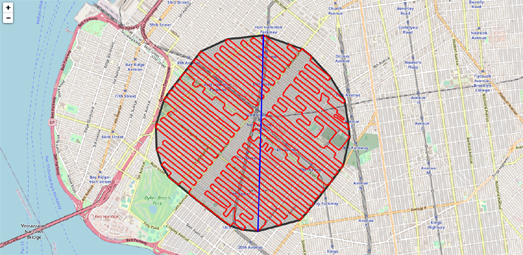
Maps Mania: What is the Longest Tiny Loop?

Long Tiny Loop is an international fitness challenge to find “the longest possible non-self-intersecting loop within the smallest possible region, without revisiting any streets or intersections”. The explanation for Long Tiny Loop is a little complicated but I can assure you that once you explore the maps at the top of the competition leaderboard you will quickly understand the concept. Basically you need to create a long but compact route which doesn’t require you having to travel over the same ground more than once.

Source: Maps Mania: What is the Longest Tiny Loop?

Submitted by: Babak Fakhamzadeh

driftsinging

Drawing with (vocal) sound in response to place while passing through place. Driftsinging borrows from the Situationist Drift, and Baudelaire’s flâneur. Driftsinging also relates to the process of ‘sounding,’ the sonic measuring of distance and depth that locates position in place and ‘echo location’, the examination of place through sonic reflection and refraction, resonance and echo.

Added by R and F Mo
Problem?

Encountered a problem? Report it to let us know.

  • Include the page on which you encountered the problem.
  • Describe what happened.
  • Describe what you expected to happen.
Follow us