Follow the StarTribune for the news, photos and videos from the Twin Cities and beyond.
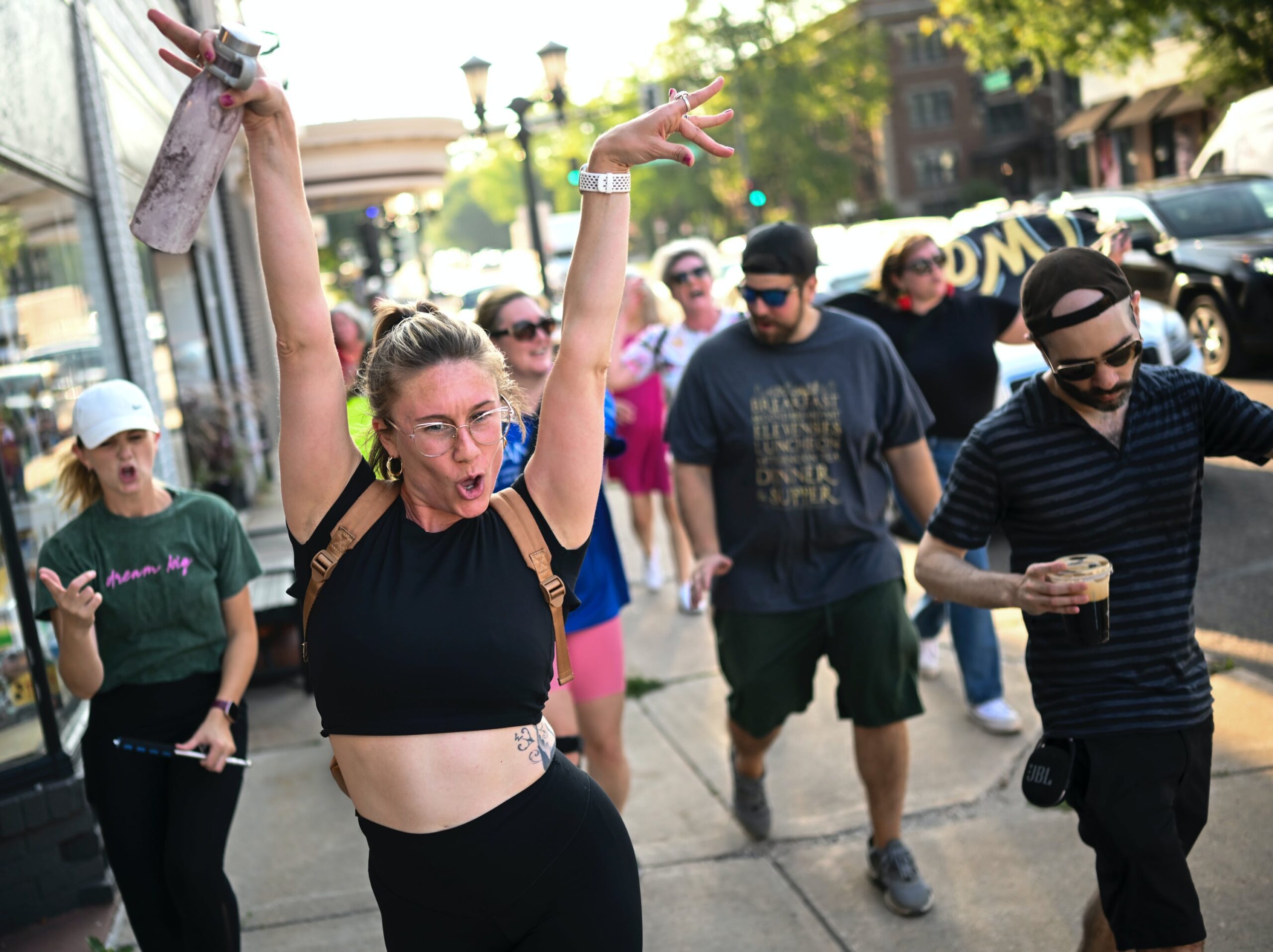
Source: Can you wance? Dancing while walking has become a regular sight in St. Paul
As Swiss glaciers melt at an ever-faster rate, new species move in and flourish, but entire ecosystems and an alpine culture can be lost Source: ‘Like walking through time’: as glaciers retreat, new worlds are being created in their wake | Glaciers | The Guardian
A new museum in Street, Somerset will open this September to mark 200 years of Clarks, combining heritage preservation with community engagement and education. Source: -Shoemakers Museum to Open in Somerset, Celebrating 200 Years of Clarks’ Social and Industrial Legacy-
The artworks in this exhibition were created in direct response to walks taken in the Derwent Valley during Jane Young’s year-long artist residency at Lockhaugh Farm in Rowlands Gill. Source: “Walking: Mapping Self Through Place” – An exhibition by Jane Young – Gateshead Council
Walking Art is an initiative in Islington that supports local people’s mental health through mindful art and movement. Based at Hilldrop Community Centre and led by artist Helen Ainsworth, Walking Art provides free regular sessions for people of all ages and backgrounds to make drawings while walking and observing their surroundings. Source: Mindful Creativity and
Follow the StarTribune for the news, photos and videos from the Twin Cities and beyond.
Source: Can you wance? Dancing while walking has become a regular sight in St. Paul
pedestrian acts
By de Certeau: In “Walking in the City”, de Certeau conceives pedestrianism as a practice that is performed in the public space, whose architecture and behavioural habits substantially determine the way we walk. For de Certeau, the spatial order “organises an ensemble of possibilities (e.g. by a place in which one can move) and interdictions (e.g. by a wall that prevents one from going further)” and the walker “actualises some of these possibilities” by performing within its rules and limitations. “In that way,” says de Certeau, “he makes them exist as well as emerge.” Thus, pedestrians, as they walk conforming to the possibilities that are brought about by the spatial order of the city, constantly repeat and re-produce that spatial order, in a way ensuring its continuity. But, a pedestrian could also invent other possibilities. According to de Certeau, “the crossing, drifting away, or improvisation of walking privilege, transform or abandon spatial elements.” Hence, the pedestrians could, to a certain extent, elude the discipline of the spatial order of the city. Instead of repeating and re-producing the possibilities that are allowed, they can deviate, digress, drift away, depart, contravene, disrupt, subvert, or resist them. These acts, as he calls them, are pedestrian acts.
Encountered a problem? Report it to let us know.
You must be logged in to post a comment.