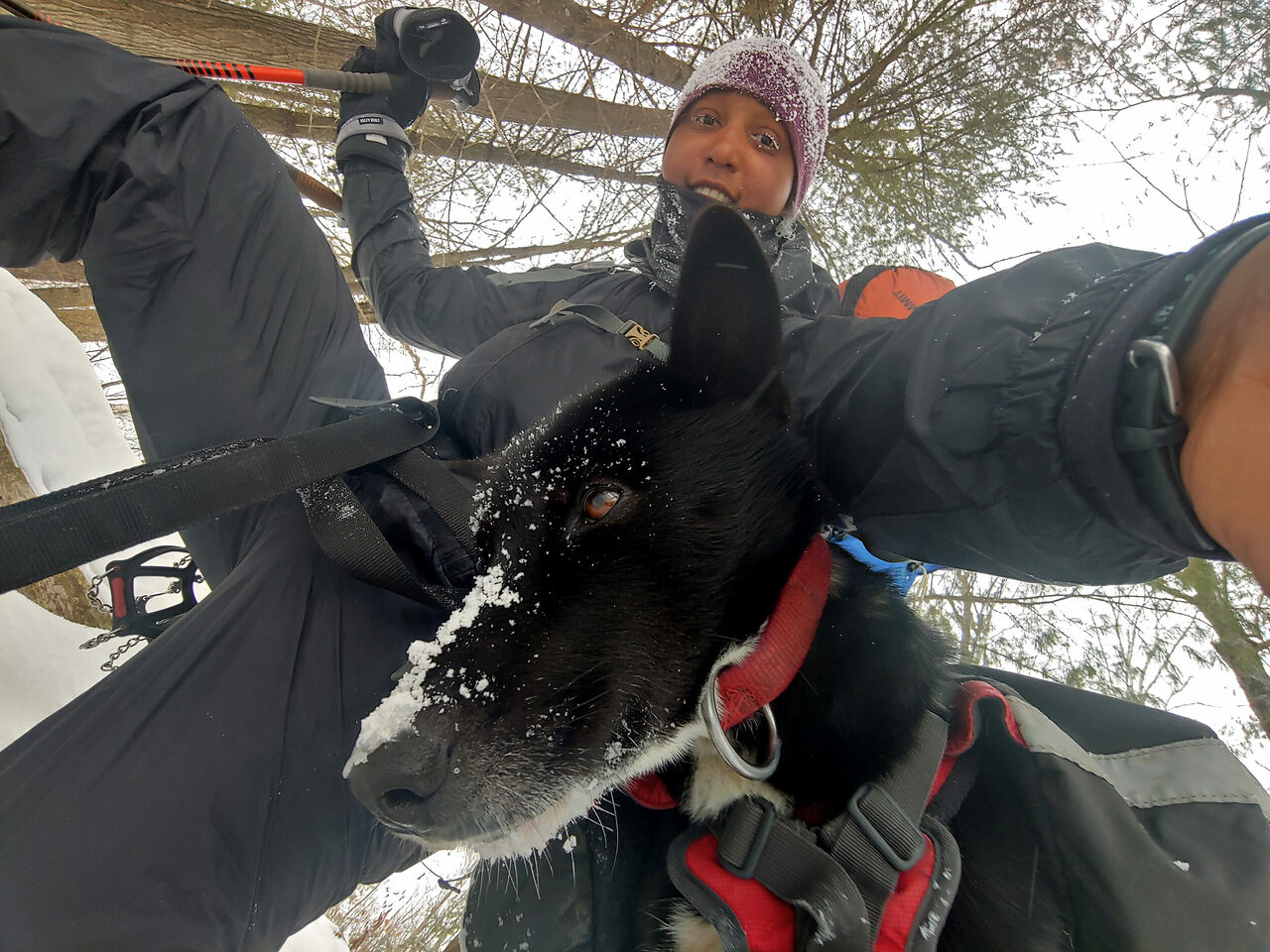
Emily Ford is the first woman and first person of color to complete the grueling hike.
Source: Meet the Woman Who Trekked a 1,200-Mile Ice Age Trail in the Dead of Winter – Atlas Obscura
Waves crashing on the shore, footsteps crunching on the forest floor. Stress levels plummet when we immerse ourselves in nature. Nick Luscombe meets the Japanese scientists working to bring the healing power of nature into the heart of the city. Nature’s secret, they believe, isn’t the sound you can hear, it’s the high frequencies you
Carnival queen Shynel Brizan shares the triumphs and challenges of her 14-year journey in the art form of one of Trinidad and Tobago’s oldest masquerades —the moko jumbie. Source: In A Crowd Of Stilt Walkers, This Queen Reigns Supreme | Essence
The high-wire artist who traversed the National Building Museum Thursday, became a legend for walking between the World Trade Center Twin Towers in 1974. Source: Philippe Petit, Man on Wire, tackles the National Building Museum at 73 – The Washington Post
Tucson abstract artist Carlos Ramirez had always admired the renowned Gebert Contemporary Art Gallery in Old Town and dreamed of showing his art there someday. Source: Abstract artist journeys into Gebert Gallery | Arts & Entertainment | scottsdale.org
Emily Ford is the first woman and first person of color to complete the grueling hike.
Source: Meet the Woman Who Trekked a 1,200-Mile Ice Age Trail in the Dead of Winter – Atlas Obscura
pedestrian acts
By de Certeau: In “Walking in the City”, de Certeau conceives pedestrianism as a practice that is performed in the public space, whose architecture and behavioural habits substantially determine the way we walk. For de Certeau, the spatial order “organises an ensemble of possibilities (e.g. by a place in which one can move) and interdictions (e.g. by a wall that prevents one from going further)” and the walker “actualises some of these possibilities” by performing within its rules and limitations. “In that way,” says de Certeau, “he makes them exist as well as emerge.” Thus, pedestrians, as they walk conforming to the possibilities that are brought about by the spatial order of the city, constantly repeat and re-produce that spatial order, in a way ensuring its continuity. But, a pedestrian could also invent other possibilities. According to de Certeau, “the crossing, drifting away, or improvisation of walking privilege, transform or abandon spatial elements.” Hence, the pedestrians could, to a certain extent, elude the discipline of the spatial order of the city. Instead of repeating and re-producing the possibilities that are allowed, they can deviate, digress, drift away, depart, contravene, disrupt, subvert, or resist them. These acts, as he calls them, are pedestrian acts.
Encountered a problem? Report it to let us know.
You must be logged in to post a comment.