Search
My feed
Wailuku, HI 96793, USA

Curated News

Collection · 1058 items

Related

Curated news

Walking Leicester’s new Richard III trail – 530 years in the making | Leicester holidays | The Guardian

A walk threading through the city follows in the footsteps of the Yorkist king vanquished in 1485, whose remains were found – beneath a car park – in 2012 Source: Walking Leicester’s new Richard III trail – 530 years in the making | Leicester holidays | The Guardian

Curated news

Paddington’s Walking Man and Standing Man

Two men in Paddington, one standing with hands in pockets waiting, and the other is purposefully striding towards him, but they will never meet. Source: Paddington’s Walking Man and Standing Man

Curated news

The Ten List: Walk as Art | Glasstire

Lots of folks walk all the time and don’t call it art, but some of them do. In many parts of Houston, walking is so bizarre that I’ve been making a whole project of it. In my research, I’ve amassed this list that looks at artists who have used walking as a practice, and their various methods

Curated news

Walking Along Shanghai’s Art Deco Lanes: A Guide for ‘Flâneurs’ – WWD

Experiencing Shanghai, or taking a “city walk,” entails checking out historical architecture and indulging in personal discoveries along the way. Source: Walking Along Shanghai’s Art Deco Lanes: A Guide for ‘Flâneurs’ – WWD

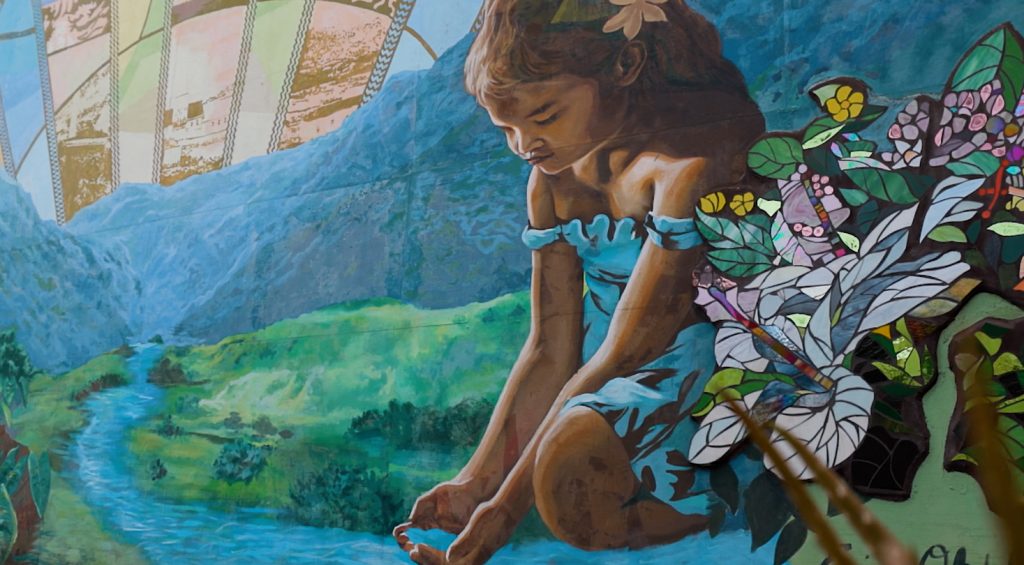
App Created for Self-Guided Walking Tour of Wailuku Town’s Public Art | Maui Now

SMALL TOWN * BIG ART has created a self-guided walking tour of public art in Wailuku Town.

Source: App Created for Self-Guided Walking Tour of Wailuku Town’s Public Art | Maui Now

Submitted by: Babak Fakhamzadeh

pedestrian acts

By de Certeau: In “Walking in the City”, de Certeau conceives pedestrianism as a practice that is performed in the public space, whose architecture and behavioural habits substantially determine the way we walk. For de Certeau, the spatial order “organises an ensemble of possibilities (e.g. by a place in which one can move) and interdictions (e.g. by a wall that prevents one from going further)” and the walker “actualises some of these possibilities” by performing within its rules and limitations. “In that way,” says de Certeau, “he makes them exist as well as emerge.” Thus, pedestrians, as they walk conforming to the possibilities that are brought about by the spatial order of the city, constantly repeat and re-produce that spatial order, in a way ensuring its continuity. But, a pedestrian could also invent other possibilities. According to de Certeau, “the crossing, drifting away, or improvisation of walking privilege, transform or abandon spatial elements.” Hence, the pedestrians could, to a certain extent, elude the discipline of the spatial order of the city. Instead of repeating and re-producing the possibilities that are allowed, they can deviate, digress, drift away, depart, contravene, disrupt, subvert, or resist them. These acts, as he calls them, are pedestrian acts.

Problem?

Encountered a problem? Report it to let us know.

  • Include the page on which you encountered the problem.
  • Describe what happened.
  • Describe what you expected to happen.
Follow us