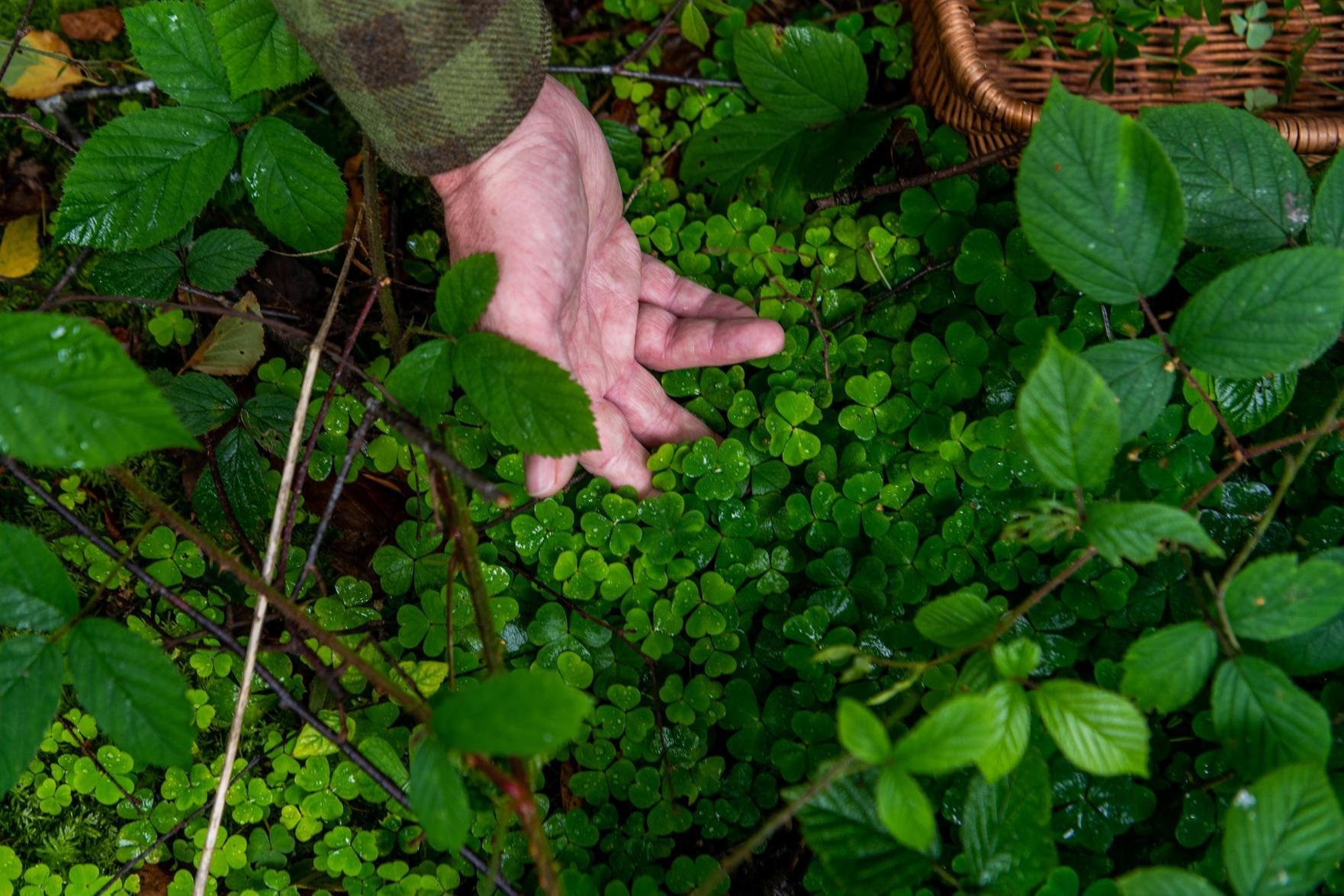
Saturation Point is an 18-month participatory art project exploring and documenting the wild spaces of North Lancashire.
Source: Winter foraging walk and talk in Carnforth as part of art project | Lancaster Guardian
Ken Johnston, the Philly “walking artist,” who walked to Canada last year, is walking on Christmas Eve – from the Poplar Neck Plantation where Harriet Tubman rescued family members in 1854. Source: Philly man walks on Christmas Eve to recreate Harriet Tubman’s holiday rescue of her brothers
We live in a world that moves so fast. So, it’s not surprising that it’s hard for us to find moments of peace and mental clarity. However, that doesn’t mean that they’re not important to find. That’s why we are such strong advocates of mindfulness walking. This practice infuses your everyday life with calmness and
One step at a time, twin brothers are walking across America to raise awareness for children in the foster care system. Source: Twins walk from SC to Philly to raise foster care awareness – NBC10 Philadelphia
Saturation Point is an 18-month participatory art project exploring and documenting the wild spaces of North Lancashire.
Source: Winter foraging walk and talk in Carnforth as part of art project | Lancaster Guardian
pedestrian acts
By de Certeau: In “Walking in the City”, de Certeau conceives pedestrianism as a practice that is performed in the public space, whose architecture and behavioural habits substantially determine the way we walk. For de Certeau, the spatial order “organises an ensemble of possibilities (e.g. by a place in which one can move) and interdictions (e.g. by a wall that prevents one from going further)” and the walker “actualises some of these possibilities” by performing within its rules and limitations. “In that way,” says de Certeau, “he makes them exist as well as emerge.” Thus, pedestrians, as they walk conforming to the possibilities that are brought about by the spatial order of the city, constantly repeat and re-produce that spatial order, in a way ensuring its continuity. But, a pedestrian could also invent other possibilities. According to de Certeau, “the crossing, drifting away, or improvisation of walking privilege, transform or abandon spatial elements.” Hence, the pedestrians could, to a certain extent, elude the discipline of the spatial order of the city. Instead of repeating and re-producing the possibilities that are allowed, they can deviate, digress, drift away, depart, contravene, disrupt, subvert, or resist them. These acts, as he calls them, are pedestrian acts.
Encountered a problem? Report it to let us know.
You must be logged in to post a comment.