Search
My feed
84 W South St, Wilkes-Barre, PA 18766, USA

Curated News

Collection · 1061 items

Related

Curated news

A river runs through it: Walking the length of Brisbane’s most important natural asset – InQueensland

Source: A river runs through it: Walking the length of Brisbane’s most important natural asset – InQueensland

Curated news

Viv Corringham ~ Soundwalkscapes | a closer listen

What is the value of listening to someone else’s soundwalk? It’s a reasonable question. Hildegard Westerkamp defined soundwalking as a practice of listening to one’s environment. A mean… Source: Viv Corringham ~ Soundwalkscapes | a closer listen

Curated news

Officials dedicate ‘Soundwalk’ art and music experience in downtown Fort Wayne | WANE 15

Fort Wayne City officials and the Fort Wayne Public Art Commission dedicated the Downtown Public Art Trail SoundWalk Tuesday, highlighting local artists. Source: Officials dedicate ‘Soundwalk’ art and music experience in downtown Fort Wayne | WANE 15

Curated news

Don’t knock it – walking backwards is an exhilarating workout

Source: Don’t knock it – walking backwards is an exhilarating workout

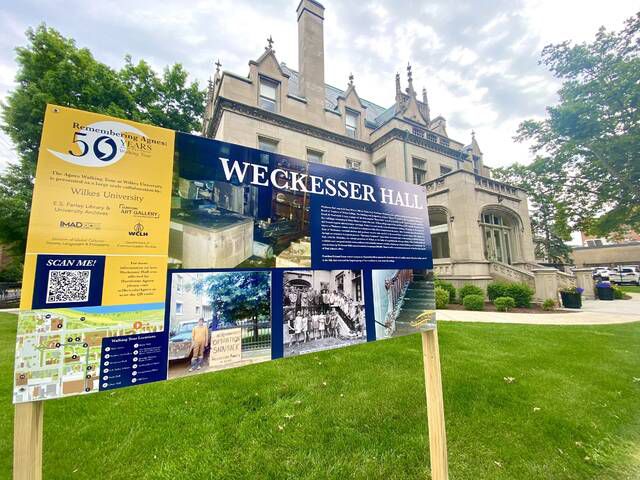
Wilkes University launches audio walking tour, retrospective on Agnes | Times Leader

WILKES-BARRE — With a campus that runs right up against the Susquehanna River Levee, Wilkes University suffered substantial damage when the Agnes flood struck in 1972. Recovery costs were in the…

Source: Wilkes University launches audio walking tour, retrospective on Agnes | Times Leader

Submitted by: Babak Fakhamzadeh

pedestrian acts

By de Certeau: In “Walking in the City”, de Certeau conceives pedestrianism as a practice that is performed in the public space, whose architecture and behavioural habits substantially determine the way we walk. For de Certeau, the spatial order “organises an ensemble of possibilities (e.g. by a place in which one can move) and interdictions (e.g. by a wall that prevents one from going further)” and the walker “actualises some of these possibilities” by performing within its rules and limitations. “In that way,” says de Certeau, “he makes them exist as well as emerge.” Thus, pedestrians, as they walk conforming to the possibilities that are brought about by the spatial order of the city, constantly repeat and re-produce that spatial order, in a way ensuring its continuity. But, a pedestrian could also invent other possibilities. According to de Certeau, “the crossing, drifting away, or improvisation of walking privilege, transform or abandon spatial elements.” Hence, the pedestrians could, to a certain extent, elude the discipline of the spatial order of the city. Instead of repeating and re-producing the possibilities that are allowed, they can deviate, digress, drift away, depart, contravene, disrupt, subvert, or resist them. These acts, as he calls them, are pedestrian acts.

Problem?

Encountered a problem? Report it to let us know.

  • Include the page on which you encountered the problem.
  • Describe what happened.
  • Describe what you expected to happen.
Follow us