Search
My feed
Millbury, MA, USA

Curated News

Collection · 1063 items

Related

Curated news

How Tara Dower finished the 2,100-mile Appalachian Trail in a record 41 days | Sport | The Guardian

The ultrarunner completed the equivalent of more than two marathons a day, and she says that her support team was crucial to her mission Source: How Tara Dower finished the 2,100-mile Appalachian Trail in a record 41 days | Sport | The Guardian

Curated news

Women walking Camino de Santiago speak of ‘terrifying’ sexual harassment | Sexual harassment | The Guardian

Sexual aggression said to be ‘endemic’ on route through Spain, Portugal and France with solo female pilgrims at risk Source: Women walking Camino de Santiago speak of ‘terrifying’ sexual harassment | Sexual harassment | The Guardian

Curated news

‘I’m walking here!’: jaywalking legalized in New York City | New York | The Guardian

New law, letting people cross street outside of crosswalk, ends racial disparities in enforcement, council member says Source: ‘I’m walking here!’: jaywalking legalized in New York City | New York | The Guardian

Curated news

Dead Mall Walking captures the “kenopsia” of dying shopping centres

Shopping centres are an under-appreciated aspect of urban architecture, according to Art Anthony, who films abandoned malls. Source: Dead Mall Walking captures the “kenopsia” of dying shopping centres

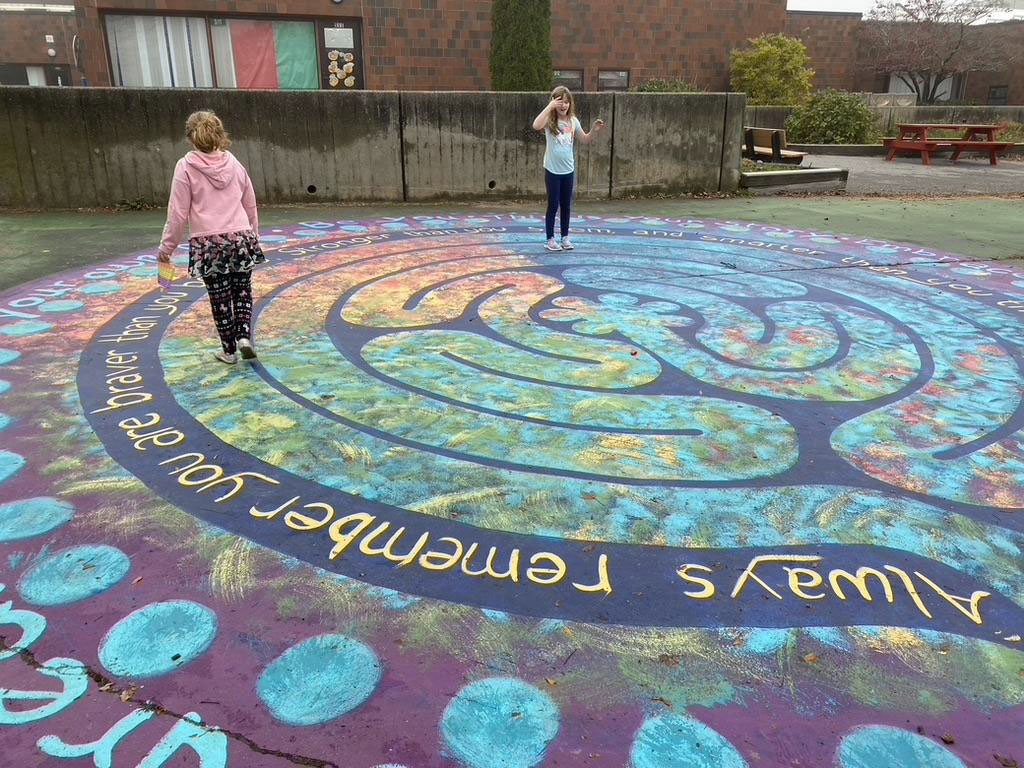
Walking Labyrinth offers advice and ‘moving meditation’ – Millbury Sutton Chronicle

Source: Walking Labyrinth offers advice and ‘moving meditation’ – Millbury Sutton Chronicle

Submitted by: Babak Fakhamzadeh

pedestrian acts

By de Certeau: In “Walking in the City”, de Certeau conceives pedestrianism as a practice that is performed in the public space, whose architecture and behavioural habits substantially determine the way we walk. For de Certeau, the spatial order “organises an ensemble of possibilities (e.g. by a place in which one can move) and interdictions (e.g. by a wall that prevents one from going further)” and the walker “actualises some of these possibilities” by performing within its rules and limitations. “In that way,” says de Certeau, “he makes them exist as well as emerge.” Thus, pedestrians, as they walk conforming to the possibilities that are brought about by the spatial order of the city, constantly repeat and re-produce that spatial order, in a way ensuring its continuity. But, a pedestrian could also invent other possibilities. According to de Certeau, “the crossing, drifting away, or improvisation of walking privilege, transform or abandon spatial elements.” Hence, the pedestrians could, to a certain extent, elude the discipline of the spatial order of the city. Instead of repeating and re-producing the possibilities that are allowed, they can deviate, digress, drift away, depart, contravene, disrupt, subvert, or resist them. These acts, as he calls them, are pedestrian acts.

Problem?

Encountered a problem? Report it to let us know.

  • Include the page on which you encountered the problem.
  • Describe what happened.
  • Describe what you expected to happen.
Follow us