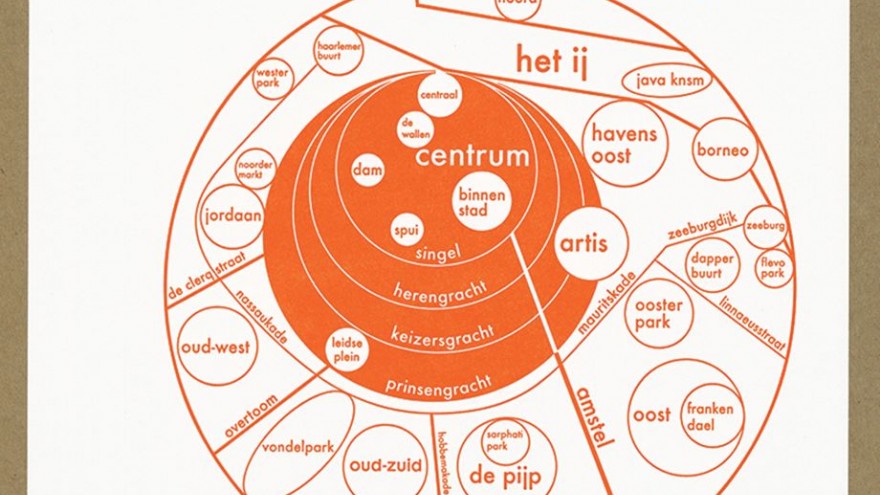
Archie Archambault’s minimal maps simplify the layout of cities so that we don’t have to rely on Google.
Source: Forget GPS, Archie Archambault is mapping cities by memory | Design Indaba
The website https://walkingart.interartive.org is a digital platform dedicated to the exploration of walking as an artistic and cultural practice. It serves as an archive and resource hub that documents various walking art projects, events, and research. The site features detailed descriptions, visual documentation, and theoretical reflections on walking art, highlighting its interdisciplinary nature and its intersections with performance, sound, mapping, and urban exploration. The platform aims to facilitate knowledge exchange among artists, researchers, and audiences interested in the cultural and artistic dimensions of walking. In addition to its archival function, the website offers access to curated collections of walking artworks and narrations, contextualizing them within broader geographic and social frameworks. It provides users with tools to navigate and understand the significance of walking within contemporary art discourses and cultural geography. By situating walking practices in relation to place, memory, and perception, the platform emphasizes the role of movement and spatial experience in shaping artistic expression and cultural identity.
The website of Rosie Parsons presents the work of an artist whose practice intersects with walking, mapping, and the experience of landscapes. The content highlights Parsons’s explorations of place through durational walks, reflecting on the temporal and sensory dimensions of movement across terrain. Her projects often engage with relationships between embodied experience and geographical or historical contexts, using walking as a method of inquiry and artistic production. The site includes examples of Parsons’s collaborative and solo projects, exhibitions, and events that emphasize the layering of memory, environment, and narrative in public spaces. There is documentation of artworks that incorporate drawing, writing, and walking-based performances, underscoring an interdisciplinary approach to understanding and expressing place. The work situates walking not just as physical travel but as a critical practice within contemporary art and cultural geography.
The capital’s Overground routes have been rebranded to reflect the distinct flavours of neighbourhoods they cross – as these station to station strolls reveal Source: Six lines, six walks: we explore London’s Overground reboot on foot | London holidays | The Guardian
Archie Archambault’s minimal maps simplify the layout of cities so that we don’t have to rely on Google.
Source: Forget GPS, Archie Archambault is mapping cities by memory | Design Indaba
pedestrian acts
By de Certeau: In “Walking in the City”, de Certeau conceives pedestrianism as a practice that is performed in the public space, whose architecture and behavioural habits substantially determine the way we walk. For de Certeau, the spatial order “organises an ensemble of possibilities (e.g. by a place in which one can move) and interdictions (e.g. by a wall that prevents one from going further)” and the walker “actualises some of these possibilities” by performing within its rules and limitations. “In that way,” says de Certeau, “he makes them exist as well as emerge.” Thus, pedestrians, as they walk conforming to the possibilities that are brought about by the spatial order of the city, constantly repeat and re-produce that spatial order, in a way ensuring its continuity. But, a pedestrian could also invent other possibilities. According to de Certeau, “the crossing, drifting away, or improvisation of walking privilege, transform or abandon spatial elements.” Hence, the pedestrians could, to a certain extent, elude the discipline of the spatial order of the city. Instead of repeating and re-producing the possibilities that are allowed, they can deviate, digress, drift away, depart, contravene, disrupt, subvert, or resist them. These acts, as he calls them, are pedestrian acts.
Encountered a problem? Report it to let us know.
You must be logged in to post a comment.