Search
My feed
Rosecrans Ave, Los Angeles, CA, USA

Curated News

Collection · 1061 items

Related

Curated news

What I Found on the 365-Mile Trail of a Lost Folk Hero – The New York Times

The Old Leatherman, a sort of real-life Northeastern Sasquatch, g​ave me an excuse to step outside my own life. Source: What I Found on the 365-Mile Trail of a Lost Folk Hero – The New York Times

Curated news

Arts Playlist: Exploring the essence of urban life through ‘Walking in the City’ | Delaware First Media

Cities are more than just streets and buildings; they’re layered with movement, memory, and emotion. Artist Jennifer Small captures that energy in her latest exhibition ‘Walking in the City,’ which chronicles a single day in Venice, Italy, and is on view this month in Wilmington at the Carvel State Building’s Mezzanine Gallery.For this edition of

Curated news

Fancy a stroll? Across Europe, young people like me are finding friends by walking our cities | Viola Di Grado | The Guardian

We are the post-pandemic flâneurs: stepping out of social media silos to meet people and connect with the world around us Source: Fancy a stroll? Across Europe, young people like me are finding friends by walking our cities | Viola Di Grado | The Guardian

Curated news

On the “inside” of being outside – The life of a mountain guide • Outdoor …

Source: On the “inside” of being outside – The life of a mountain guide • Outdoor …

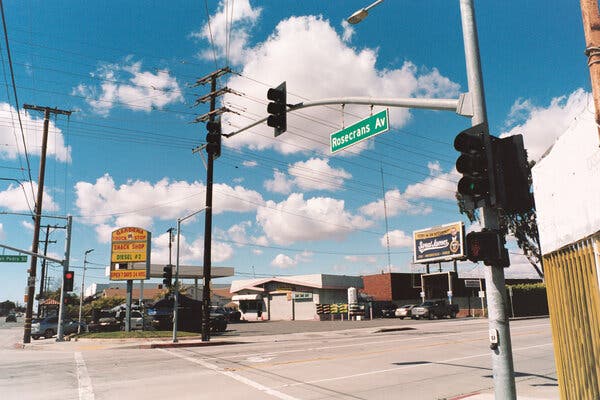
Los Angeles Is a Fantastic Walking City. No, Really. – The New York Times

A stroll down Rosecrans Avenue is not a pleasure. But it does offer a 27-mile canvas of the city’s vastness and its diverse communities coexisting.

Source: Los Angeles Is a Fantastic Walking City. No, Really. – The New York Times

Submitted by: Babak Fakhamzadeh

pedestrian acts

By de Certeau: In “Walking in the City”, de Certeau conceives pedestrianism as a practice that is performed in the public space, whose architecture and behavioural habits substantially determine the way we walk. For de Certeau, the spatial order “organises an ensemble of possibilities (e.g. by a place in which one can move) and interdictions (e.g. by a wall that prevents one from going further)” and the walker “actualises some of these possibilities” by performing within its rules and limitations. “In that way,” says de Certeau, “he makes them exist as well as emerge.” Thus, pedestrians, as they walk conforming to the possibilities that are brought about by the spatial order of the city, constantly repeat and re-produce that spatial order, in a way ensuring its continuity. But, a pedestrian could also invent other possibilities. According to de Certeau, “the crossing, drifting away, or improvisation of walking privilege, transform or abandon spatial elements.” Hence, the pedestrians could, to a certain extent, elude the discipline of the spatial order of the city. Instead of repeating and re-producing the possibilities that are allowed, they can deviate, digress, drift away, depart, contravene, disrupt, subvert, or resist them. These acts, as he calls them, are pedestrian acts.

Problem?

Encountered a problem? Report it to let us know.

  • Include the page on which you encountered the problem.
  • Describe what happened.
  • Describe what you expected to happen.
Follow us