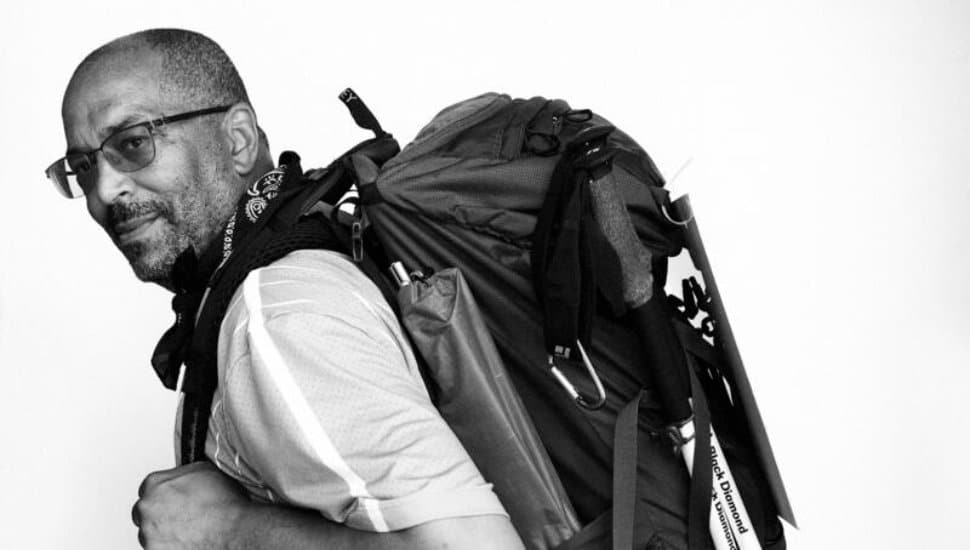
Philadelphia’s “walking artist,” Ken Johnston, has embarked on a 75-mile journey across southern Chester County.
Source: Ken Johnston’s 75-Mile Walk Illuminates Southern Chester County’s Black History Step-by-Step
Asad Dandia sued the NYPD after it spied on his family and community. Now he uses people’s history to reclaim the streets from the systems that surveilled him. Source: The Man Behind the Radical Walking Tours of New York City | The Nation
Seeing as Walk Listen Create’s just wrapped up their Sound Walk September, and is, as far as I can see, the only global sound walk competition, perhaps it’s time to look more rigorously into how one is to actually judge a sound (referred to here as both audio/sound) walk: albeit what an audio walk actually
Almost everywhere I travel as a consultant, someone asks me whether it’s realistic to expect people to walk given the extremes of their climate. They don’t just ask me this in Edmonton and Singapore. I’ve even been asked this about Los Angeles, where the climate is very mild by global standards. Well-traveled elites can form
Philadelphia’s “walking artist,” Ken Johnston, has embarked on a 75-mile journey across southern Chester County.
Source: Ken Johnston’s 75-Mile Walk Illuminates Southern Chester County’s Black History Step-by-Step
pedestrian acts
By de Certeau: In “Walking in the City”, de Certeau conceives pedestrianism as a practice that is performed in the public space, whose architecture and behavioural habits substantially determine the way we walk. For de Certeau, the spatial order “organises an ensemble of possibilities (e.g. by a place in which one can move) and interdictions (e.g. by a wall that prevents one from going further)” and the walker “actualises some of these possibilities” by performing within its rules and limitations. “In that way,” says de Certeau, “he makes them exist as well as emerge.” Thus, pedestrians, as they walk conforming to the possibilities that are brought about by the spatial order of the city, constantly repeat and re-produce that spatial order, in a way ensuring its continuity. But, a pedestrian could also invent other possibilities. According to de Certeau, “the crossing, drifting away, or improvisation of walking privilege, transform or abandon spatial elements.” Hence, the pedestrians could, to a certain extent, elude the discipline of the spatial order of the city. Instead of repeating and re-producing the possibilities that are allowed, they can deviate, digress, drift away, depart, contravene, disrupt, subvert, or resist them. These acts, as he calls them, are pedestrian acts.
Encountered a problem? Report it to let us know.
You must be logged in to post a comment.