Search
My feed

Curated News

Collection · 1063 items

Jean-Jacques Rousseau

Collection · 3 items

Nature

1 sub-collections · 164 items

Related

Curated news

I ran 1,400 miles around Ireland | Ireland holidays | The Guardian

On a running pilgrimage in the land of my forebears I was blown away by the scenery – and even more so by the warmth of the people Source: I ran 1,400 miles around Ireland | Ireland holidays | The Guardian

Curated news

WALC! – Practices and cultures of urban walking | Università di Padova

A research feedback exhibition, an illustration exhibition, and the installation of two public art works in the railway station area: this is how the project WALC (Walking Landscapes of Urban Source: WALC! – Practices and cultures of urban walking | Università di Padova

Curated news

‘Walking Artist’ retraces route of Underground Railroad in Windsor-Essex – YouTube

A ‘Walking Artist’ is in Windsor-Essex, retracing the route of the Underground Railroad.

Curated news

11 of the UK’s best winter walks – all ending at a cosy pub | Winter walks | The Guardian

Too much turkey and Baileys? Blow away the Christmas cobwebs on one of our rambles. And if that doesn’t work, they all end at a pub for a hair of the dog Source: 11 of the UK’s best winter walks – all ending at a cosy pub | Winter walks | The Guardian

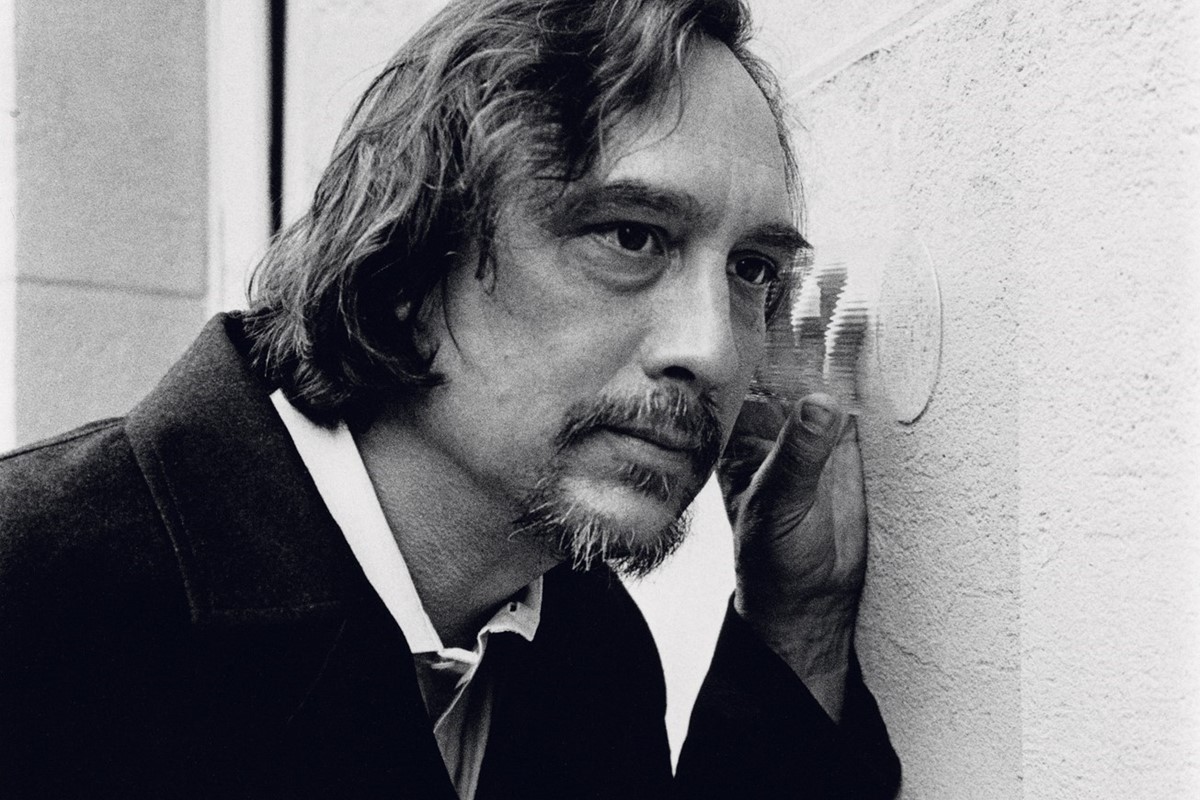
Sound Designer Nicolas Becker of Walking in Nature | AnOther

“Rousseau’s essay was so important because it put words to my relationship with nature,” says Nicolas Becker of Reveries of the Solitary Walker, Rousseau’s unfinished text from the 18th century

Source: Sound Designer Nicolas Becker of Walking in Nature | AnOther

Submitted by: Babak Fakhamzadeh

pedestrian acts

By de Certeau: In “Walking in the City”, de Certeau conceives pedestrianism as a practice that is performed in the public space, whose architecture and behavioural habits substantially determine the way we walk. For de Certeau, the spatial order “organises an ensemble of possibilities (e.g. by a place in which one can move) and interdictions (e.g. by a wall that prevents one from going further)” and the walker “actualises some of these possibilities” by performing within its rules and limitations. “In that way,” says de Certeau, “he makes them exist as well as emerge.” Thus, pedestrians, as they walk conforming to the possibilities that are brought about by the spatial order of the city, constantly repeat and re-produce that spatial order, in a way ensuring its continuity. But, a pedestrian could also invent other possibilities. According to de Certeau, “the crossing, drifting away, or improvisation of walking privilege, transform or abandon spatial elements.” Hence, the pedestrians could, to a certain extent, elude the discipline of the spatial order of the city. Instead of repeating and re-producing the possibilities that are allowed, they can deviate, digress, drift away, depart, contravene, disrupt, subvert, or resist them. These acts, as he calls them, are pedestrian acts.

Problem?

Encountered a problem? Report it to let us know.

  • Include the page on which you encountered the problem.
  • Describe what happened.
  • Describe what you expected to happen.
Follow us