Search
My feed

Mapping community memories

DSC_0038

Join us for a discussion with computer scientist and independent researcher Eugenio Tisselli, on how to build and document collective, communal, memories, using digital tools.

Eugenio will discuss his project ojoVoz, an open source online-offline platform for the collaborative creation of community memories. Since 2011, he has worked with both urban and rural communities interested in presenting and re-presenting their common issues, and making them known to other members of their communities and the general public.
The ojoVoz platform allows groups of people to share their views and document their environment through geographically located pictures and sound recordings. These contents can be posted to a collaborative website, where they can be browsed using different criteria such as date, location or keyword.

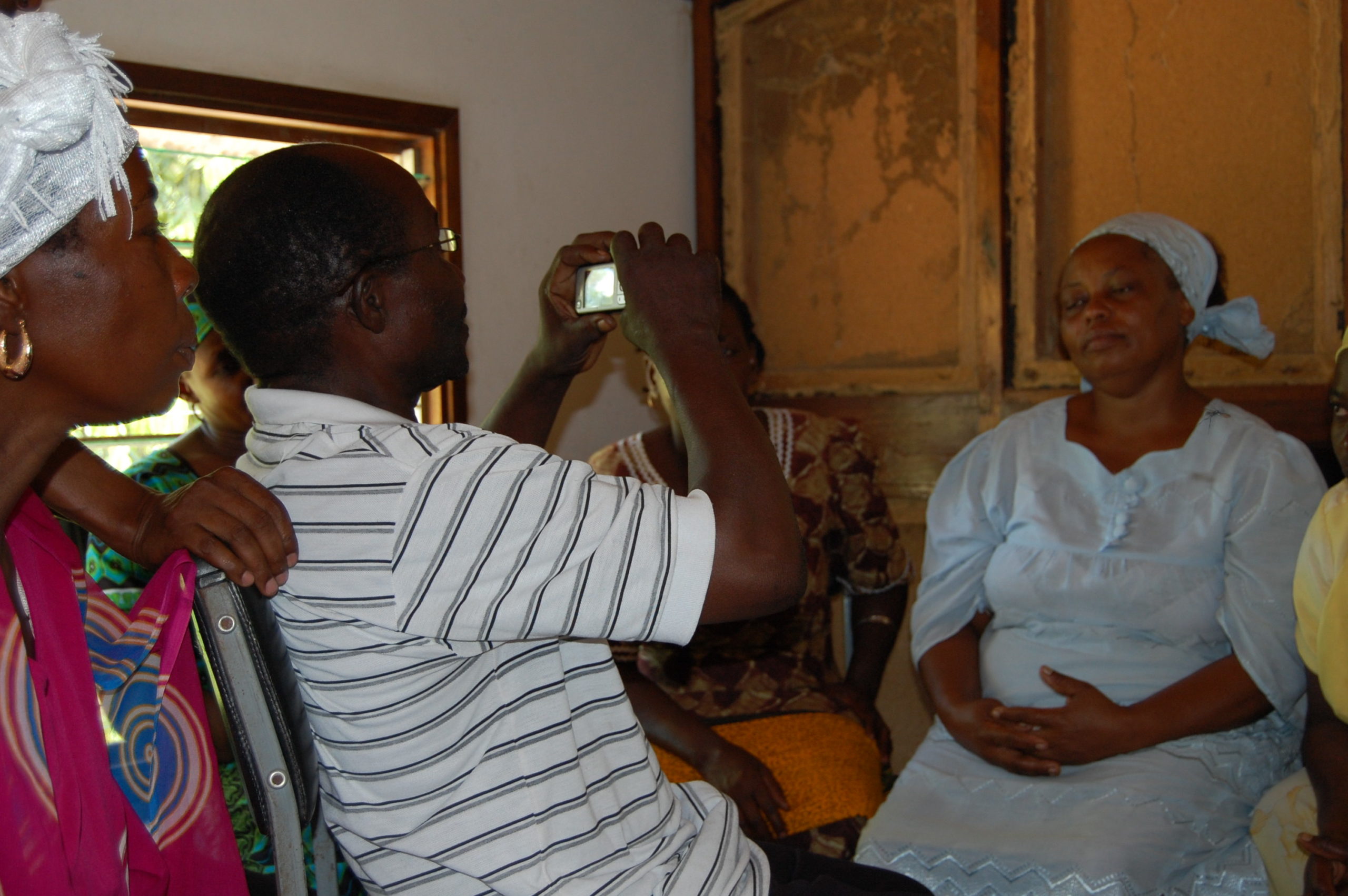
In 2011, Eugenio started the Sauti ya wakulima project with a group of Tanzanian farmers, who used the ojoVoz platform to create an online-offline space for mutual learning. Then, in 2012, he worked with members of an indigenous community in Oaxaca, Mexico, who documented novel agricultural practices that took place in their fields. In that same year, the ojoVoz platform was used by scientific researchers to document, map and study the social and environmental impacts of solid residues and waste generated in Mexico City.
Later, in 2014, and also in Mexico City, he worked with a group of urban farmers who wanted to share their persistent practices of ancient agricultural traditions.

Since then the ojoVoz platform has been used by a multitude of artists, researchers, and activists in countries as far apart as Colombia or South Sudan.

After Eugenio’s presentation, there will be ample room for discussion, and questions.

Join us!

Hosts

Eugenio Tisselli

Eugenio Tisselli

(Mexico) 
Babak Fakhamzadeh

Babak Fakhamzadeh

Co-founder of walk · listen · create (Netherlands / Iran / Brazil) 
This event has happened

2022-02-22 19:00
2022-02-22 19:00
2022-02-22 19:00

Café recording
Only available to registered users.
Online

walk · listen · café

Collection · 114 items

Related

video

Mapping community memories

Eugenio Tisselli discusses his project ojoVoz, an open source online-offline platform for the collaborative creation of community memories.

Eugenio Tisselli Babak Fakhamzadeh
Walking piece

Cool Vienna

Vienna is a wonderful subject for a deck of Dérive app task cards, and so, we now have a deck for Vienna.

Babak Fakhamzadeh
walkingevent

Slow Coast 500

Claudia Zeiske’s Slow Coast 500 was a long-distance walk from Dunnet Head to Berwick-upon-Tweed along the entire coast of the North Sea in Scotland.

Claudia Zeiske Andrew Stuck
walkingevent

Walking Visions

Live from Prespa, we are joined by Greek artiists Aimilia Siafarika and Iro Grigoriadi to dive into a conversation about Walking Visions, the topic of the Walking Encounters 2023.

AIMILIA SIAFARIKA Iro Grigoriadi +2
walkingevent

Walking as Artistic Practice 

We are excited to have Ellen Mueller as our guest for this Cafe. For the last few years, she has been compiling a comprehensive resource on walking art and sharing it through her blog and through her own teaching resources. However, she is now the author of recent book from SUNY Publishers that brings together

Ellen Mueller Andrew Stuck
walkingevent

On Cybernetic Capitalism

We welcome back Bob Parks. Bob was one of the pioneers of performance art in England in the 1960s, and on the US West Coast in the 1970s, and eventually has seen his practice evolve into a mixture of performance and walking art, subscribing to the idea that Walking Art is Performance Art on wheels, with the capacity to bring in the whole world's population.

Bob Parks

pedestrian acts

By de Certeau: In “Walking in the City”, de Certeau conceives pedestrianism as a practice that is performed in the public space, whose architecture and behavioural habits substantially determine the way we walk. For de Certeau, the spatial order “organises an ensemble of possibilities (e.g. by a place in which one can move) and interdictions (e.g. by a wall that prevents one from going further)” and the walker “actualises some of these possibilities” by performing within its rules and limitations. “In that way,” says de Certeau, “he makes them exist as well as emerge.” Thus, pedestrians, as they walk conforming to the possibilities that are brought about by the spatial order of the city, constantly repeat and re-produce that spatial order, in a way ensuring its continuity. But, a pedestrian could also invent other possibilities. According to de Certeau, “the crossing, drifting away, or improvisation of walking privilege, transform or abandon spatial elements.” Hence, the pedestrians could, to a certain extent, elude the discipline of the spatial order of the city. Instead of repeating and re-producing the possibilities that are allowed, they can deviate, digress, drift away, depart, contravene, disrupt, subvert, or resist them. These acts, as he calls them, are pedestrian acts.

Problem?

Encountered a problem? Report it to let us know.

  • Include the page on which you encountered the problem.
  • Describe what happened.
  • Describe what you expected to happen.
Follow us