Search
My feed
2017

Exciting New Development Coming Soon

1572959779.MollyIrwinClark_Paddington_18076748_1509340385751820_9152070885644134978_o
Paddington Basin, London, UK
60 minutes

geography

Collection · 27 items

hospital

Collection · 6 items

human scale

Collection · 4 items

water

4 sub-collections · 82 items

Related

walkingevent

Underneath The Arches

Underneath The Arches is a soundwalk along the Kennett and Avon canal from The Holburne Museum, Bath to Avoncliff Aqueduct by saxophonist Nick Sorensen.He will perform an improvisation underneath the arches of the bridges, tunnels and aqueducts along the route, responding to the specific acoustics of each of the sites. The walk will commence at

Nick Sorensen
post

Reflecting on the texture of air

Laura Mitchison captured the history of two hospitals closing down through the soundscapes they carried throughout their histories.

Laura Khan Mitchison
book

On Listening

On Listening is a unique collection of forty multi-disciplinary perspectives drawn from anthropology, bioacoustics, geography, literature, community activism, sociology, religion, philosophy, art history, conflict mediation and the sonic arts including music, ethnomusicology and field recording. These specially commissioned contributions explore the many ways in which skilled listening can mediate new relationships with our physical environment

Angus Carlyle Cathy Lane
post

Flood Stories: The impact of cyclone Debbie in eastern Australia

Jeanti St Clair is a media lecturer at Southern Cross University in Australia, and a documentary and audio walk producer. She is the producer of Flood Stories, an audio walk/installation in Lismore NSW, making Flood Stories our first submission for Sound Walk September 2020. Here, Jeanti is talking about her new work.

Jeanti St Clair

geography

Collection · 27 items

hospital

Collection · 6 items

human scale

Collection · 4 items

water

4 sub-collections · 82 items

Related

walkingevent

Underneath The Arches

Underneath The Arches is a soundwalk along the Kennett and Avon canal from The Holburne Museum, Bath to Avoncliff Aqueduct by saxophonist Nick Sorensen.He will perform an improvisation underneath the arches of the bridges, tunnels and aqueducts along the route, responding to the specific acoustics of each of the sites. The walk will commence at

Nick Sorensen
post

Reflecting on the texture of air

Laura Mitchison captured the history of two hospitals closing down through the soundscapes they carried throughout their histories.

Laura Khan Mitchison
book

On Listening

On Listening is a unique collection of forty multi-disciplinary perspectives drawn from anthropology, bioacoustics, geography, literature, community activism, sociology, religion, philosophy, art history, conflict mediation and the sonic arts including music, ethnomusicology and field recording. These specially commissioned contributions explore the many ways in which skilled listening can mediate new relationships with our physical environment

Angus Carlyle Cathy Lane
post

Flood Stories: The impact of cyclone Debbie in eastern Australia

Jeanti St Clair is a media lecturer at Southern Cross University in Australia, and a documentary and audio walk producer. She is the producer of Flood Stories, an audio walk/installation in Lismore NSW, making Flood Stories our first submission for Sound Walk September 2020. Here, Jeanti is talking about her new work.

Jeanti St Clair
Walking piece
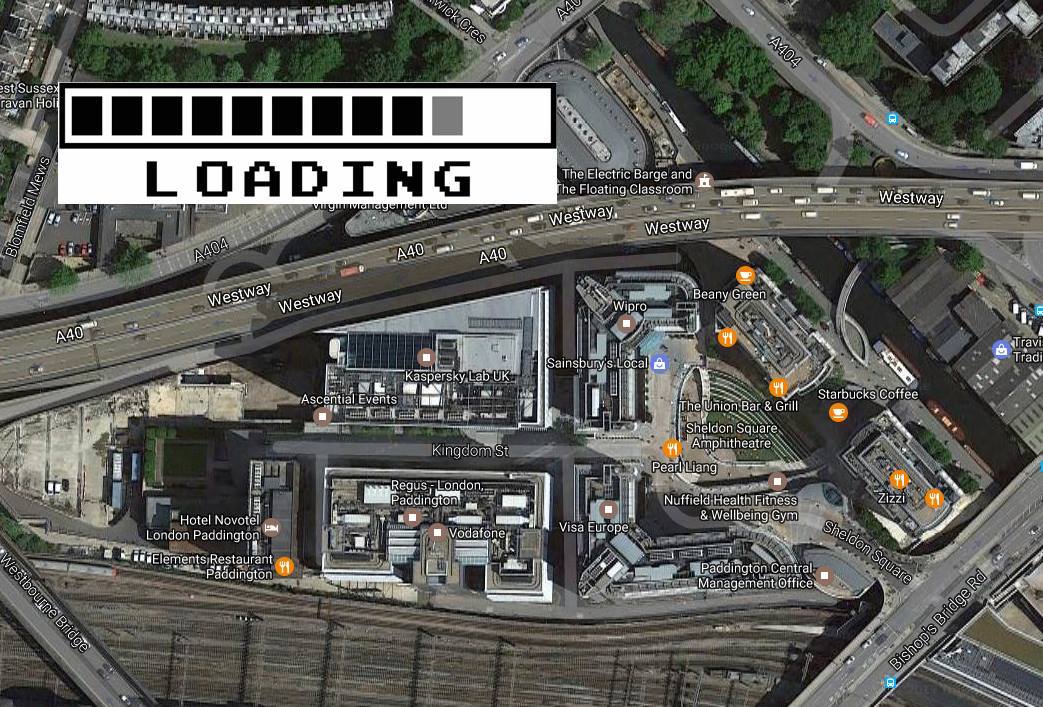
Exciting New Development Coming soon explores the everyday realities of Paddington Basin; past and present, real and imagined. Paddington Basin is a man-made area, originally the terminus point of the Grand Union Canal. Now, it is a place whose physical and ideological geography is owned and formed by a conglomerate of private companies, each promising

Exciting New Development Coming soon explores the everyday realities of Paddington Basin; past and present, real and imagined.

Paddington Basin is a man-made area, originally the terminus point of the Grand Union Canal. Now, it is a place whose physical and ideological geography is owned and formed by a conglomerate of private companies, each promising and presiding over our experience of it. How do these imposed values of the Basin compare to the actual human responses to it? How do these ideologies deal with the unmoving aspects of the place – namely the water, the hospital and its location?

An invitation to distort your senses, mistrust your perception and question your position.

This audio walk was created by Rosa Irwin Clark, Molly Irwin Clark and Alice Ashton of Degenerate Space for Antiuniversity Now 2017. Map download here https://docs.wixstatic.com/ugd/353e02_518de1e12b78418ea66aa14cf9e419c6.pdf 

Credits

Hosted by: Degenerate Space

APA style reference

Irwin Clark, M. (2017). Exciting New Development Coming Soon. walk · listen · create. https://walklistencreate.org/walkingpiece/exciting-new-development-coming-soon/

pedestrian acts

By de Certeau: In “Walking in the City”, de Certeau conceives pedestrianism as a practice that is performed in the public space, whose architecture and behavioural habits substantially determine the way we walk. For de Certeau, the spatial order “organises an ensemble of possibilities (e.g. by a place in which one can move) and interdictions (e.g. by a wall that prevents one from going further)” and the walker “actualises some of these possibilities” by performing within its rules and limitations. “In that way,” says de Certeau, “he makes them exist as well as emerge.” Thus, pedestrians, as they walk conforming to the possibilities that are brought about by the spatial order of the city, constantly repeat and re-produce that spatial order, in a way ensuring its continuity. But, a pedestrian could also invent other possibilities. According to de Certeau, “the crossing, drifting away, or improvisation of walking privilege, transform or abandon spatial elements.” Hence, the pedestrians could, to a certain extent, elude the discipline of the spatial order of the city. Instead of repeating and re-producing the possibilities that are allowed, they can deviate, digress, drift away, depart, contravene, disrupt, subvert, or resist them. These acts, as he calls them, are pedestrian acts.

Problem?

Encountered a problem? Report it to let us know.

  • Include the page on which you encountered the problem.
  • Describe what happened.
  • Describe what you expected to happen.
Follow us