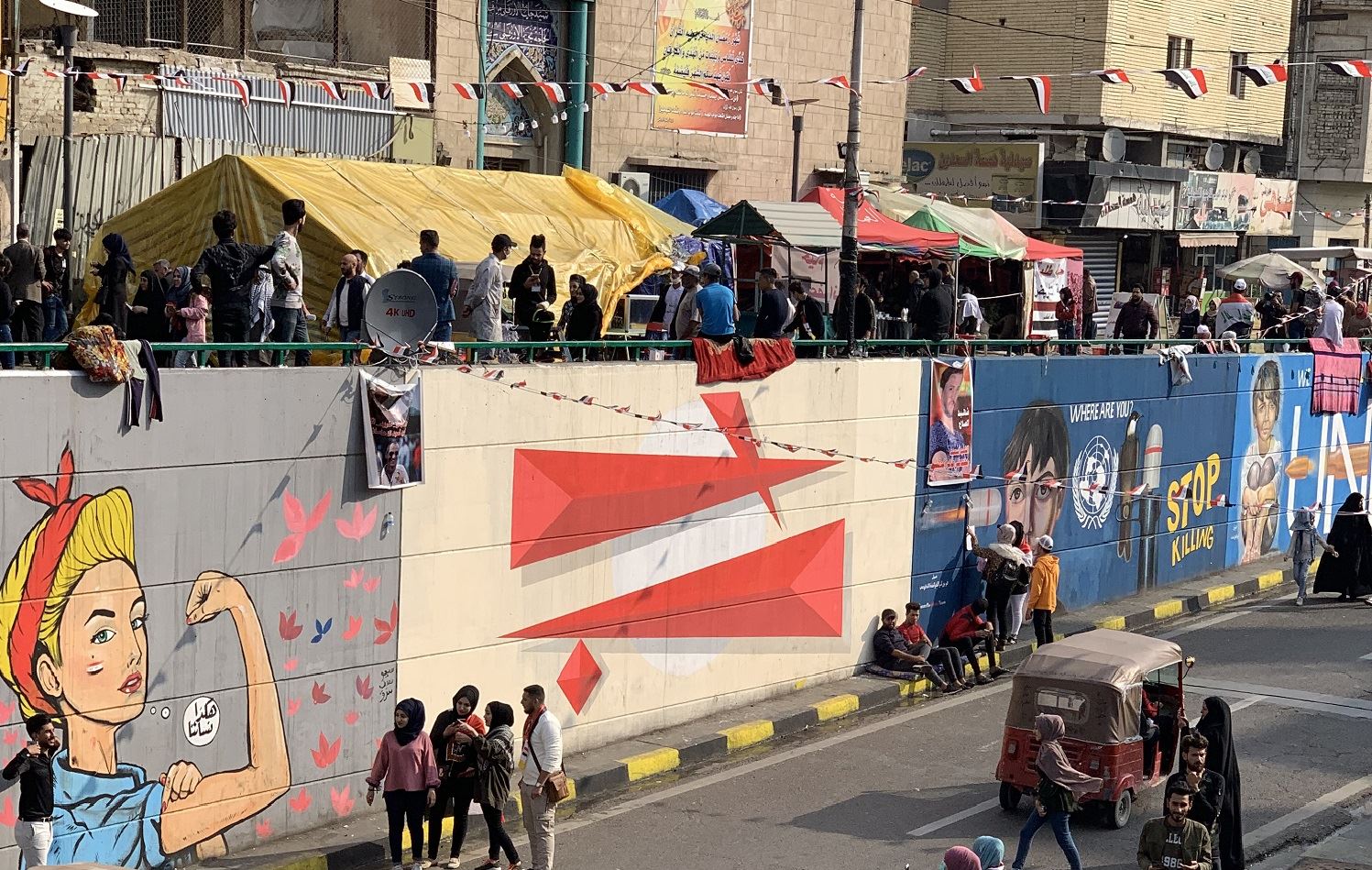
Protesters and artists have turned the walls of the tunnel in Tahrir Square into a mosaic of revolutionary paintings
Source: ‘I feel I’m walking in Paris’: the revolutionary art of Tahrir Square | Rudaw.net
e69 soundwalk in the dark is a monologue that I recorded on September 29th, 2021, from 4.56am to 5.25am, in one take, while walking around our cottage in Duhamel Québec in the dark. I talk abo… Source: Conscient Podcast: e69 soundwalk in the dark – The CSPA
With iconic architecture, dramatic facades and delicate balconies, the buildings of Downtown Cairo are rich in history, with stories that reflect the city’s cosmopolitan nature. Source: A Walk Through Downtown Cairo’s Timeless Architecture
Protesters and artists have turned the walls of the tunnel in Tahrir Square into a mosaic of revolutionary paintings
Source: ‘I feel I’m walking in Paris’: the revolutionary art of Tahrir Square | Rudaw.net
pedestrian acts
By de Certeau: In “Walking in the City”, de Certeau conceives pedestrianism as a practice that is performed in the public space, whose architecture and behavioural habits substantially determine the way we walk. For de Certeau, the spatial order “organises an ensemble of possibilities (e.g. by a place in which one can move) and interdictions (e.g. by a wall that prevents one from going further)” and the walker “actualises some of these possibilities” by performing within its rules and limitations. “In that way,” says de Certeau, “he makes them exist as well as emerge.” Thus, pedestrians, as they walk conforming to the possibilities that are brought about by the spatial order of the city, constantly repeat and re-produce that spatial order, in a way ensuring its continuity. But, a pedestrian could also invent other possibilities. According to de Certeau, “the crossing, drifting away, or improvisation of walking privilege, transform or abandon spatial elements.” Hence, the pedestrians could, to a certain extent, elude the discipline of the spatial order of the city. Instead of repeating and re-producing the possibilities that are allowed, they can deviate, digress, drift away, depart, contravene, disrupt, subvert, or resist them. These acts, as he calls them, are pedestrian acts.
Encountered a problem? Report it to let us know.
You must be logged in to post a comment.