Search
My feed
New York, NY, USA

Curated News

Collection · 1058 items

Related

Curated news

John Cleese’s classic “silly walk” burns more calories than a normal gait | Ars Technica

Increasing the inefficiency of physical activity could boost cardiovascular fitness. Source: John Cleese’s classic “silly walk” burns more calories than a normal gait | Ars Technica

Curated news

When Crosswalks Go Rogue 

Activists are painting unsanctioned DIY crosswalks at intersections in cities like Seattle and LA. Transportation officials should understand why. Source: When Crosswalks Go Rogue – Bloomberg

Curated news

Into the night: why walking in the dark is good for the soul

Shorter days don’t have to put a stop to walking trips, as our writer finds on a night-time ramble on the South Downs Source: Into the night: why walking in the dark is good for the soul | Walking holidays | The Guardian

Curated news

A Walk With Yiayia – An Emotional Stroll Around the Neighbourhood

Indie Hive review A Walk With Yiayia, a casual but heartfelt adventure game and interactive fiction by solo developer Trent Garlipp. Source: A Walk With Yiayia – An Emotional Stroll Around the Neighbourhood

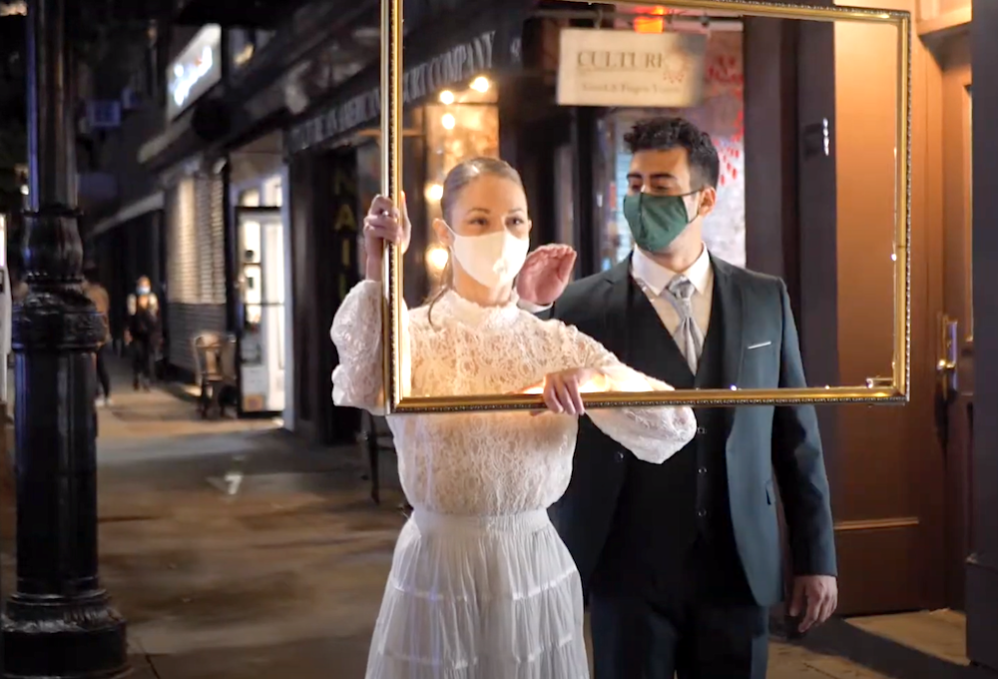
‘Voyeur’ Theatrical Walking Tour Transforms New York City Into 1899 Paris

With COVID-shuttered Broadway, theater-lovers have had little to fill their imaginations. Enter ‘Voyeur,’ an immersive walking tour in New York City.

Source: ‘Voyeur’ Theatrical Walking Tour Transforms New York City Into 1899 Paris

Submitted by: Babak Fakhamzadeh

pedestrian acts

By de Certeau: In “Walking in the City”, de Certeau conceives pedestrianism as a practice that is performed in the public space, whose architecture and behavioural habits substantially determine the way we walk. For de Certeau, the spatial order “organises an ensemble of possibilities (e.g. by a place in which one can move) and interdictions (e.g. by a wall that prevents one from going further)” and the walker “actualises some of these possibilities” by performing within its rules and limitations. “In that way,” says de Certeau, “he makes them exist as well as emerge.” Thus, pedestrians, as they walk conforming to the possibilities that are brought about by the spatial order of the city, constantly repeat and re-produce that spatial order, in a way ensuring its continuity. But, a pedestrian could also invent other possibilities. According to de Certeau, “the crossing, drifting away, or improvisation of walking privilege, transform or abandon spatial elements.” Hence, the pedestrians could, to a certain extent, elude the discipline of the spatial order of the city. Instead of repeating and re-producing the possibilities that are allowed, they can deviate, digress, drift away, depart, contravene, disrupt, subvert, or resist them. These acts, as he calls them, are pedestrian acts.

Problem?

Encountered a problem? Report it to let us know.

  • Include the page on which you encountered the problem.
  • Describe what happened.
  • Describe what you expected to happen.
Follow us