Search
My feed
Rotterdam, Netherlands

Curated News

Collection · 1058 items

Related

Curated news

The Changing Face of 65 East 125th St., Harlem, 1977 – 2025 – Flashbak

From revolution to Jesus, the evolution of 65 East 125th Street, Harlem, NYC photographed by Camilo José Vergara since 1977 Source: The Changing Face of 65 East 125th St., Harlem, 1977 – 2025 – Flashbak

Curated news

The Long Walk Special Screening Puts Audience on Treadmills

If influencers walk less than three miles an hour… they’ll miss the end of the movie. Source: The Long Walk Special Screening Puts Audience on Treadmills

Curated news

Take Your Beer for a Walk: August 2025 – Erie Reader

Let’s celebrate Erie at Celebrate Erie, shall we, Erie? Source: Take Your Beer for a Walk: August 2025 – Erie Reader

Curated news

Bengaluru walkers sketch ‘JAI HIND’ on streets with GPS tracking

The initiative was led by Vikas Ruparelia, 53, Director of a private company and a GPS art enthusiast who has earlier created digital artworks in London, Barcelona, Vienna, Mumbai, and Ahmedabad. Calling it one of his most fulfilling projects, he said: “It took me nearly 30 days to plan the route. Executing it on Independence

Museum Boijmans Van Beuningen presents Art Amid the Ruins | Museum Boijmans Van Beuningen Newsroom

Art in Rotterdam during the Second World War: exhibition, book and walking map.

Source: Museum Boijmans Van Beuningen presents Art Amid the Ruins | Museum Boijmans Van Beuningen Newsroom
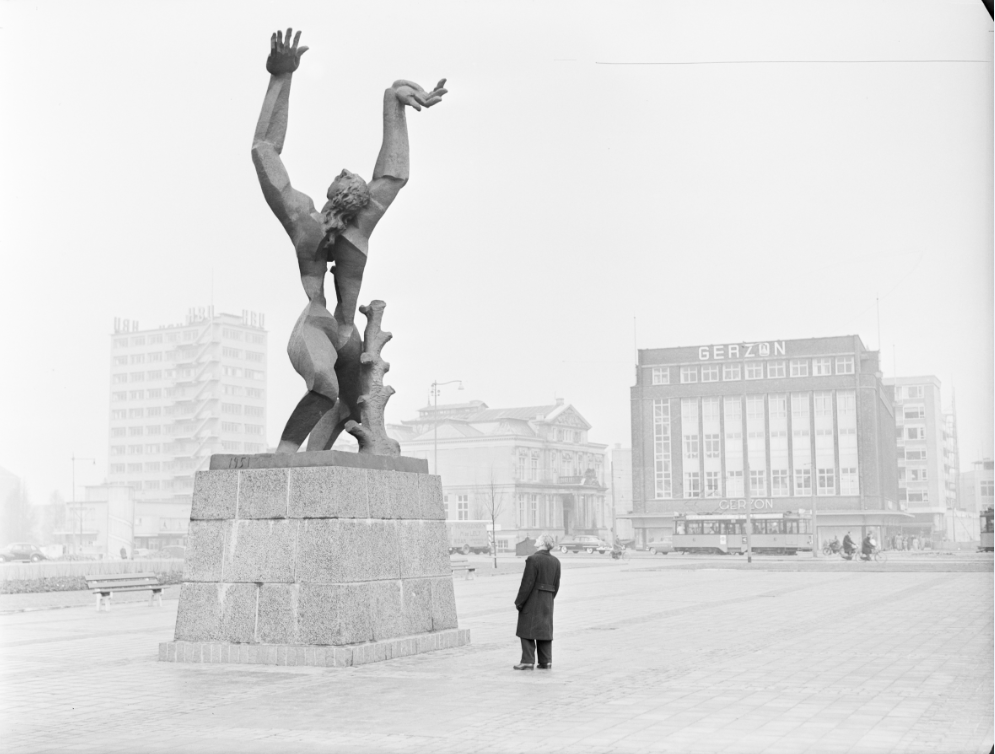
Submitted by: Babak Fakhamzadeh

pedestrian acts

By de Certeau: In “Walking in the City”, de Certeau conceives pedestrianism as a practice that is performed in the public space, whose architecture and behavioural habits substantially determine the way we walk. For de Certeau, the spatial order “organises an ensemble of possibilities (e.g. by a place in which one can move) and interdictions (e.g. by a wall that prevents one from going further)” and the walker “actualises some of these possibilities” by performing within its rules and limitations. “In that way,” says de Certeau, “he makes them exist as well as emerge.” Thus, pedestrians, as they walk conforming to the possibilities that are brought about by the spatial order of the city, constantly repeat and re-produce that spatial order, in a way ensuring its continuity. But, a pedestrian could also invent other possibilities. According to de Certeau, “the crossing, drifting away, or improvisation of walking privilege, transform or abandon spatial elements.” Hence, the pedestrians could, to a certain extent, elude the discipline of the spatial order of the city. Instead of repeating and re-producing the possibilities that are allowed, they can deviate, digress, drift away, depart, contravene, disrupt, subvert, or resist them. These acts, as he calls them, are pedestrian acts.

Problem?

Encountered a problem? Report it to let us know.

  • Include the page on which you encountered the problem.
  • Describe what happened.
  • Describe what you expected to happen.
Follow us