Search
My feed
300 Massachusetts Ave, Amherst, MA 01003, USA

Curated News

Collection · 1063 items

Related

Curated news

Take a Walk, Spark Your Writing

Learn how walking boosts creativity and fuels your writing process—insights from neuroscience, research, and literary greats like Zadie Smith and Dickens. Source: Take a Walk, Spark Your Writing

Curated news

A walking tour of Art Deco Cambridge | Varsity

Mia apfel leads us through the glitz and glamour of a Cambridge past Source: A walking tour of Art Deco Cambridge | Varsity

Curated news

WALK DONT RUN brings over 100 local artists to downtown Seattle | The Seattle Times

The free community event is part of efforts to revitalize downtown, and will fill urban spaces with music, visual art and live performances. Source: WALK DONT RUN brings over 100 local artists to downtown Seattle | The Seattle Times

Curated news

Bored With Your Usual Route? Turn the City Into Your Open-Air Museum – Runlovers

The complete guide for runners who want to discover their city’s street art, one step at a time. Source: Bored With Your Usual Route? Turn the City Into Your Open-Air Museum – Runlovers

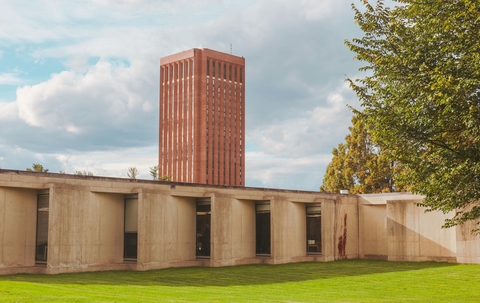
Campus Walking Tour to Traverse Brutalist Heritage and History at UMass Amherst on Oct. 13 : UMass Amherst

After gathering at the Campus Center, Timothy Rohan, associate professor and chair of the history of art and architecture department, and UMass Brut will host a walking tour at 2 p.m. for the UMass Amherst community highlighting campus structures built during the university’s ambitious post-World War II building campaign.

Source: Campus Walking Tour to Traverse Brutalist Heritage and History at UMass Amherst on Oct. 13 : UMass Amherst

Submitted by: Babak Fakhamzadeh

pedestrian acts

By de Certeau: In “Walking in the City”, de Certeau conceives pedestrianism as a practice that is performed in the public space, whose architecture and behavioural habits substantially determine the way we walk. For de Certeau, the spatial order “organises an ensemble of possibilities (e.g. by a place in which one can move) and interdictions (e.g. by a wall that prevents one from going further)” and the walker “actualises some of these possibilities” by performing within its rules and limitations. “In that way,” says de Certeau, “he makes them exist as well as emerge.” Thus, pedestrians, as they walk conforming to the possibilities that are brought about by the spatial order of the city, constantly repeat and re-produce that spatial order, in a way ensuring its continuity. But, a pedestrian could also invent other possibilities. According to de Certeau, “the crossing, drifting away, or improvisation of walking privilege, transform or abandon spatial elements.” Hence, the pedestrians could, to a certain extent, elude the discipline of the spatial order of the city. Instead of repeating and re-producing the possibilities that are allowed, they can deviate, digress, drift away, depart, contravene, disrupt, subvert, or resist them. These acts, as he calls them, are pedestrian acts.

Problem?

Encountered a problem? Report it to let us know.

  • Include the page on which you encountered the problem.
  • Describe what happened.
  • Describe what you expected to happen.
Follow us