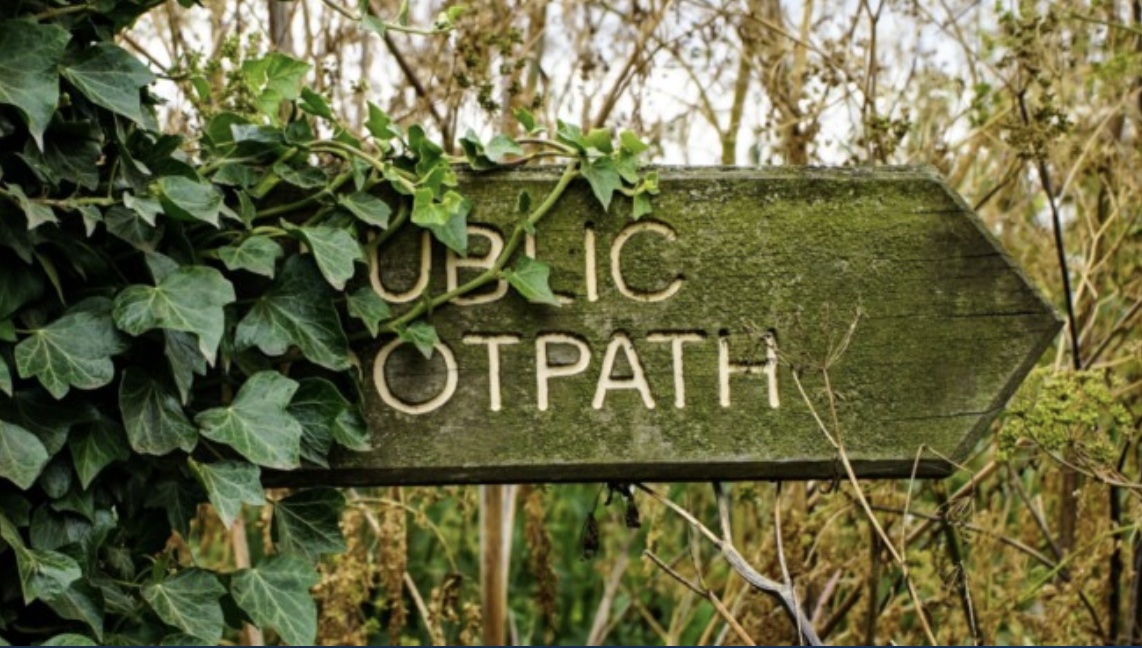
Hundreds of thousands of miles of paths reach into, and connect, communities across England and Wales. By 2026, 10,000 miles of undiscovered footpaths around Britain stand to be lost. Jack Cornish has dedicated the last five years of his life to walking these forgotten routes. It is Jack’s hope that the result, his book The Lost Paths, will show just how special these forgotten rights of way are, and how embedded each path is in the history of Britain.
Footpaths, tracks, country lanes and urban streets illuminate how our ancestors interacted with and shaped their landscapes in the pursuit of commerce, salvation, escape, war and leisure. Paths are an often overlooked part of our everyday life and our country’s history, crucial to understanding the cultural and environmental history of us in the landscape.
After dedicating his time and energy to fighting for their survival, The Lost Paths is Jack’s personal journey and exploration of the deep history of English and Welsh footways. This narrative history takes us through ancient forests, exposed mountainsides, urban back streets and coastal vistas to reveal how this millennia-old network was created and has been transformed.
This is a celebration of an ancient network and a rallying cry to reclaim what has been lost and preserve it for future generations.
Jack Cornish is Head of Paths at the Ramblers, Britain’s largest walking charity, with over 100,000 members.In 2017, he walked across the country from Land’s End to John O’Groats and is ten years into a (probably futile) attempt to walk every street in London.
Related
lorg-coise….footprint
In March 2014 I had a walking residency with Deveron Arts (now Deveron Projects) exploring the large expanse of land between the Aberdeenshire / Moray heartland in the north and the Cairngorm mountains in the south, encompassing the Ladder Hills. I walked widely, and often slowly, throughout the area, identifying sites or landforms of significance….often
walknow
The website walknowtracks.co.uk serves as an archive and resource focused on walking routes primarily within the United Kingdom. It catalogues a diverse range of walks, emphasizing detailed route maps, descriptions, and geographical points of interest along each path. The platform integrates cultural and historical contexts related to the routes, enriching the understanding of the landscapes and communities encountered during the walks. The site also enables users to access walking tracks with GPS data, supporting an intersection of digital navigation and traditional walking practices. Additionally, walknowtracks.co.uk functions as a hub for walking enthusiasts and researchers interested in exploring how walking intersects with cultural geography and spatial experience. Through its curated walks, the site documents the relationship between physical movement across terrains and the cultural narratives embedded within those spaces. This approach reflects the broader field of walking art, where walking is both an act of exploration and a method of engaging with place-specific stories, heritage, and environment.
Walking the Deveron
The website "walking-the-deveron.freewebspace.com" focuses on the Deveron River, situated in northeast Scotland, and offers detailed information about walking routes along its course. It provides descriptions of various trails, emphasizing the natural and cultural features visible during the walks, including landscapes, wildlife, historical sites, and local landmarks. The site highlights the river’s geography and its relationship to the surrounding communities, supporting an understanding of the area’s environmental and heritage significance. Additionally, the site includes practical details such as route distances and suggested starting points, often referencing specific villages and natural features along the Deveron. The content combines cartographic elements with textual narratives, allowing readers to appreciate both the physical terrain and the cultural layer shaped by human interaction with the river environment over time. This resource serves as a contextual exploration of the Deveron’s role within regional geography and local identity.

You must be logged in to post a comment.