Search
My feed

Of Walking on Thin Ice

COP26 pilgrimmage image

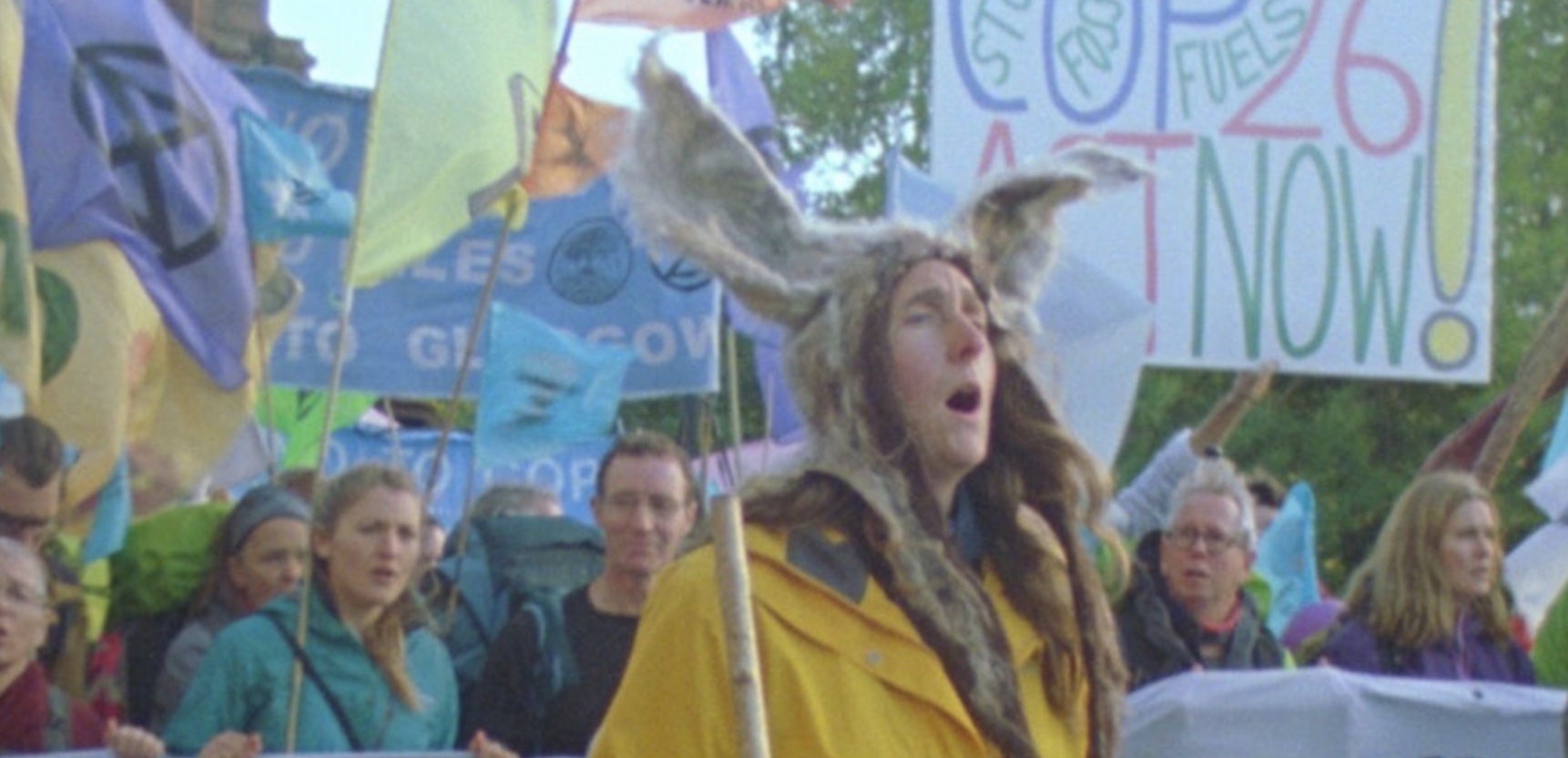
“A walk; a pilgrimage, an odyssey for the planet. Five hundred miles from London to Glasgow Cop26: Eight weeks, 56 days and more than 56 host organisations, over a thousand walkers and thirty rolls of 16mm celluloid film.” 

This film documents the Camino to COP26: a people’s walk carrying a message of love, hope, grief, fear, and connection with the natural world to leaders deciding on the future of our climate. 

Filmmaker Benjamin Wigley walked with the group, who became known as ‘Caministas’, filming their experiences and capturing the sense of pilgrimage on this emotional and purposeful journey. More than a thousand walkers, aged from eight to 80 plus, joined the Camino for a few hours, a day or more, or completing the entire route to Glasgow.

Followed by a panel discussion with guests Vanessa Elston, Melanie Nazareth and Helen Locke (tbc).

Submitted by: Andrew Stuck
This event has happened

2023-11-20 19:00
2023-11-20 19:00
2023-11-20 19:00

Hosted by: St John's Chruch, Waterloo
St John’s Church, Waterloo, Waterloo Road, London SE1 8TY, UK

film

8 sub-collections · 134 items
Sub-collection

long distance walking

Sub-collection · 32 items
Sub-collection

pilgrimage

Sub-collection · 84 items

Related

post

Why walk? A slow journey in a three-piece business suit.

For Walking the questions, Monique Besten went on a walk from Barcelona to Galicia, to be able to answer questions by living them. This walking piece is one of the shortlisted pieces in the Marŝarto Awards 2023. Here, Monique discusses her work. What is my territory? What is yours? What does belonging mean? What do you truly own? Where is the

Monique Besten
book

Lone Wolf: Walking the Faultlines of Europe

From Adam Weymouth, the winner of the Sunday Times Young Writer of the Year Award comes an epic walk across the Alps in the footsteps of a wolf, throwing unique light on Europe’s mountainous hinterlands at a moment of political and environmental change. In 2011, a young wolf named Slavc set out from Slovenia. Tracked by GPS,

Adam Weymouth
book

The Long Way Home

A closely observed account of the author’s actual 5-week, 500-mile walk from Chicago to Minneapolis and parallel journey through the memories of his traumatic and painful life as a young man. His meetings with people and places along the journey open up the history, culture and experience of this part of the Midwest in a

Timothy Herwig
book

A Philosophy of Walking

By walking, you escape from the very idea of identity, the temptation to be someone, to have a name and a history … The freedom in walking lies in not being anyone; for the walking body has no history, it is just an eddy in the stream of immemorial life. In A Philosophy of Walking, a

Frédéric Gros

pedestrian acts

By de Certeau: In “Walking in the City”, de Certeau conceives pedestrianism as a practice that is performed in the public space, whose architecture and behavioural habits substantially determine the way we walk. For de Certeau, the spatial order “organises an ensemble of possibilities (e.g. by a place in which one can move) and interdictions (e.g. by a wall that prevents one from going further)” and the walker “actualises some of these possibilities” by performing within its rules and limitations. “In that way,” says de Certeau, “he makes them exist as well as emerge.” Thus, pedestrians, as they walk conforming to the possibilities that are brought about by the spatial order of the city, constantly repeat and re-produce that spatial order, in a way ensuring its continuity. But, a pedestrian could also invent other possibilities. According to de Certeau, “the crossing, drifting away, or improvisation of walking privilege, transform or abandon spatial elements.” Hence, the pedestrians could, to a certain extent, elude the discipline of the spatial order of the city. Instead of repeating and re-producing the possibilities that are allowed, they can deviate, digress, drift away, depart, contravene, disrupt, subvert, or resist them. These acts, as he calls them, are pedestrian acts.

Problem?

Encountered a problem? Report it to let us know.

  • Include the page on which you encountered the problem.
  • Describe what happened.
  • Describe what you expected to happen.
Follow us