Search
My feed

Reimagining High Streets Conference

RE-Imagine the High Street

A 1-day event exploring regeneration through community-led culture and heritage. 

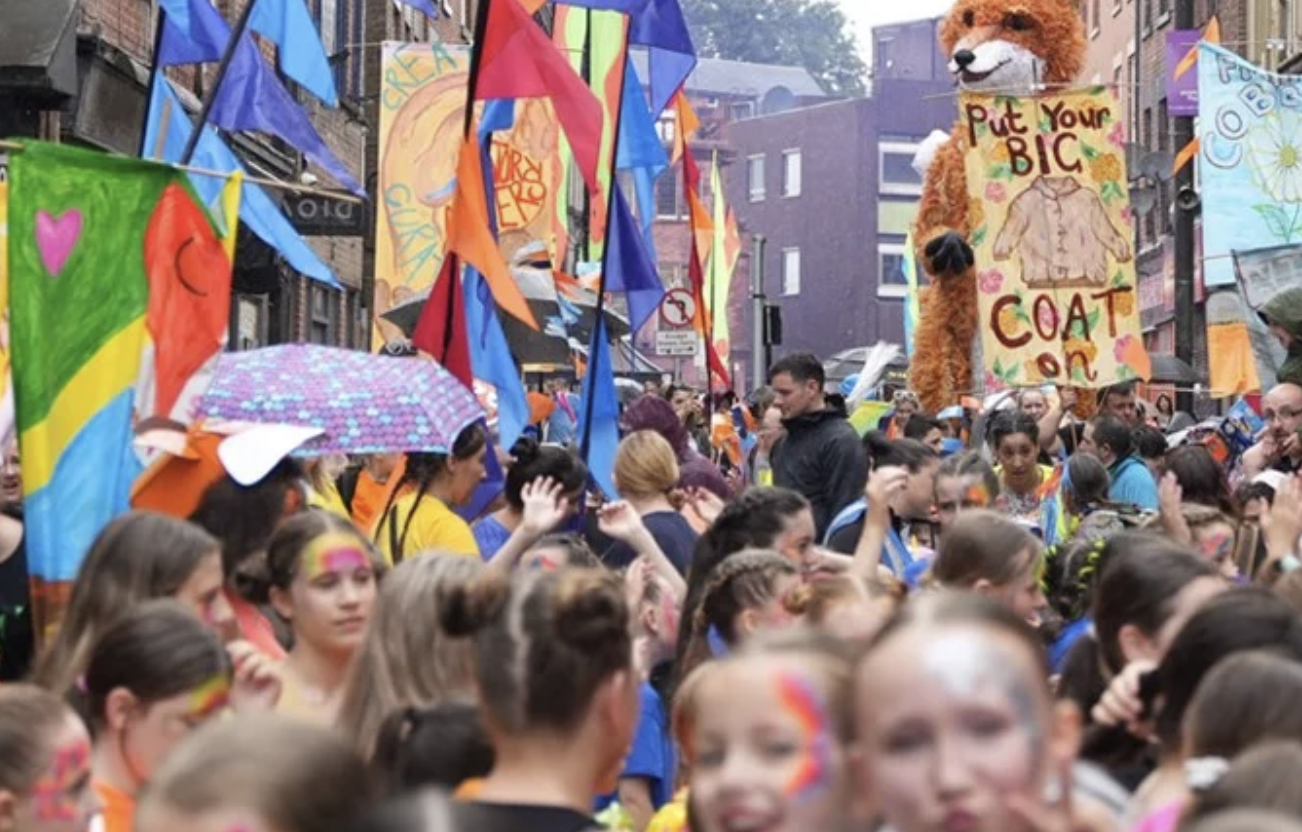
Reimagining High Streets is an exciting 1-day event for those working in the arts, heritage and local authorities to explore how community-led culture and heritage activities can support place-shaping and regeneration. 

The event will draw on the learning from the High Street Heritage Action Zones cultural programme, Historic England‘s four-year programme to revitalise more than 60 high streets. There will also be speakers from other organisations working with communities to shape local places.  

Hear from a wide variety of individual projects as they present the successes and challenges of delivering community-led engagement with culture and heritage and the impact this work has on local regeneration.   

The day will be made up of panel discussions, interactive workshops and market-place style presentations with speakers from across arts and heritage. Participants will have the opportunity to:

  • Network with others working in similar fields
  • Reflect on your own work
  • Seek practical hints and tips
  • Contribute ideas to help projects develop the work further

The event is free, however, booking is essential.

Submitted by: Andrew Stuck
This event has happened

2024-02-20 10:00
2024-02-20 10:00
2024-02-20 10:00

Hosted by: Historic England
Hippodrome Theatre, Hurst Street, Southside, Birmingham, UK

heritage

5 sub-collections · 92 items

Imaginary

Collection · 10 items

networking

Collection · 6 items

Related

url

Richard White: walking/media/heritage – Blog

Artist/researcher critically exploring walking, social media and intangible cultural heritage. Walking-with, walking and asking questions, as a creative, ecological, non-confrontational engagement with obscured and reluctant heritage.

post

What sounding heritage means to me

The sound walk Along These Lines is a collaboration between Quiet Down There and sound artist Anna Celeste Edmonds, creating an immersive experience that explores Brighton’s laundry heritage.

Anna Celeste Edmonds
book

Breaking the Dead Silence – Engaging with the Legacies of Empire and Slave-Ownership in Bath and Bristol’s Memoryscapes

Diverse and distinctive voices in the wake of the murder of George Floyd and the toppling of the Colston statue in Bristol. Timely commentaries, insights and experiences in the memoryscape enriching and transforming an uncomfortable heritage through empathy and creativity. Multiple perspectives from academics, artists, activists and heritage professionals, contribute ideas and strategies towards re-telling

Richard White
Sound walk

Tastes Like Home

A GPS-triggered audio trail in Bedford Town Centre, telling stories by local creatives inspired by town heritage & residents' memories of food & drink. Listening points are placed near benches or areas that are comfortable to be in. Allow 90 minutes.

Rad Aggarwal

pedestrian acts

By de Certeau: In “Walking in the City”, de Certeau conceives pedestrianism as a practice that is performed in the public space, whose architecture and behavioural habits substantially determine the way we walk. For de Certeau, the spatial order “organises an ensemble of possibilities (e.g. by a place in which one can move) and interdictions (e.g. by a wall that prevents one from going further)” and the walker “actualises some of these possibilities” by performing within its rules and limitations. “In that way,” says de Certeau, “he makes them exist as well as emerge.” Thus, pedestrians, as they walk conforming to the possibilities that are brought about by the spatial order of the city, constantly repeat and re-produce that spatial order, in a way ensuring its continuity. But, a pedestrian could also invent other possibilities. According to de Certeau, “the crossing, drifting away, or improvisation of walking privilege, transform or abandon spatial elements.” Hence, the pedestrians could, to a certain extent, elude the discipline of the spatial order of the city. Instead of repeating and re-producing the possibilities that are allowed, they can deviate, digress, drift away, depart, contravene, disrupt, subvert, or resist them. These acts, as he calls them, are pedestrian acts.

Problem?

Encountered a problem? Report it to let us know.

  • Include the page on which you encountered the problem.
  • Describe what happened.
  • Describe what you expected to happen.
Follow us