Search
My feed

Secrets of the Stour

Secrets of the Stour

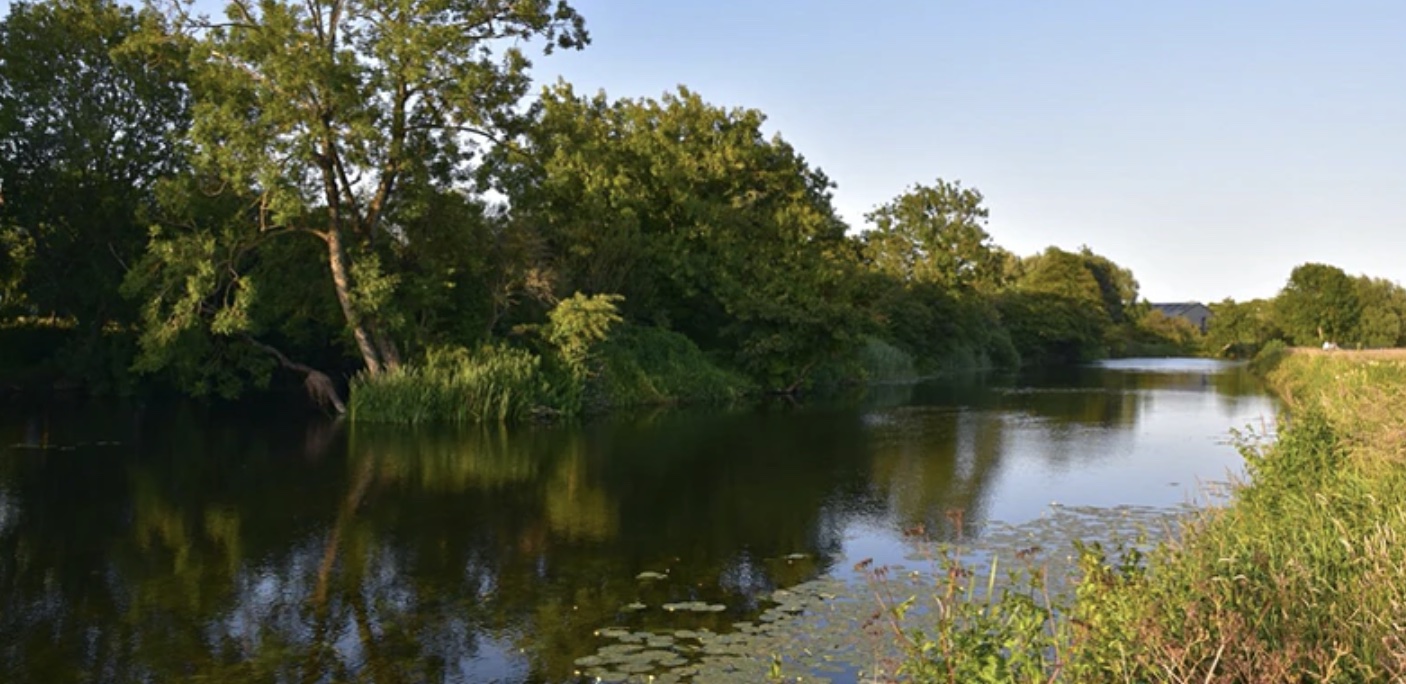
A promenade, site-specific theatre performance that engages the audience in traversing a floodplain near the River Stour in Wimborne, on a quest to find out the rivers secrets. On the way, you will meet a series of colourful characters who can open portals and allow glimpses into the secret world of a river, provided you can guess the riddles and meet the challenges. Starting from a wake for a passionate naturalist, the action follows his grandchildren as they try to make sense of the modern world, beset by pandemics and environmental crises. The performance, which includes drama, dance, live music and singing, puppets and sound installations, is performed by an inclusive cast of all ages under the umbrella of Wimborne Community Theatre, celebrating its thirtieth year of outdoor, site-specific performances celebrating Dorset’s unique environment.

This event has happened

6 - 9 Jul, 2022
6 - 9 Jul, 2022

Hosted by: Wimborne community Theatre and Millstream Theatre
Wimborne, Dorset, UK

dance

Collection · 44 items

river

Collection · 65 items

Theatre

Collection · 20 items

Related

walkingevent

Theatre Walks

Theatre doors are no longer sealed nowadays and performance often ventures outside. It embraces walking as a “theatrical scenario” and goes in quest of new, mobile, non-material or outdoor spatialities to replace or amplify the conventional stage. Site-specific and site-generic theatre events, walking performances, audio-guided drama, mobile theatre(s) and performance interventions, all flesh a theatre

Maria Ristani
url

HERE

HERE (the Harvard Experimental Research Ensemble) is a multidisciplinary arts organization that focuses on the intersection of urban environments, performance, and public space. Founded in 1993 and based in New York City, HERE produces original theater, dance, and multimedia performances that often explore social, political, and spatial themes through experimental forms. The organization emphasizes site-specific and immersive works that engage audiences outside traditional theater settings, drawing attention to the ways environments shape cultural and individual experiences. Moreover, HERE collaborates with a diverse range of artists, including emerging and established voices from various disciplines, fostering innovative artistic practices that challenge conventional narratives. Its projects frequently incorporate live music, technology, and visual art to create hybrid performances that reflect contemporary urban realities. As a research-driven institution, HERE supports artistic experimentation and critical inquiry into the relationship between space, identity, and storytelling.

url

Bernadette Russell

I’m an author, performance storyteller, poet, playwright, theatre maker and tree planter

url

Mapping memories: river Sava

more about my project: Mapping memories: river Sava


pedestrian acts

By de Certeau: In “Walking in the City”, de Certeau conceives pedestrianism as a practice that is performed in the public space, whose architecture and behavioural habits substantially determine the way we walk. For de Certeau, the spatial order “organises an ensemble of possibilities (e.g. by a place in which one can move) and interdictions (e.g. by a wall that prevents one from going further)” and the walker “actualises some of these possibilities” by performing within its rules and limitations. “In that way,” says de Certeau, “he makes them exist as well as emerge.” Thus, pedestrians, as they walk conforming to the possibilities that are brought about by the spatial order of the city, constantly repeat and re-produce that spatial order, in a way ensuring its continuity. But, a pedestrian could also invent other possibilities. According to de Certeau, “the crossing, drifting away, or improvisation of walking privilege, transform or abandon spatial elements.” Hence, the pedestrians could, to a certain extent, elude the discipline of the spatial order of the city. Instead of repeating and re-producing the possibilities that are allowed, they can deviate, digress, drift away, depart, contravene, disrupt, subvert, or resist them. These acts, as he calls them, are pedestrian acts.

Problem?

Encountered a problem? Report it to let us know.

  • Include the page on which you encountered the problem.
  • Describe what happened.
  • Describe what you expected to happen.
Follow us