Search
My feed

Walking, Landscape and Environment with Dave Borthwick

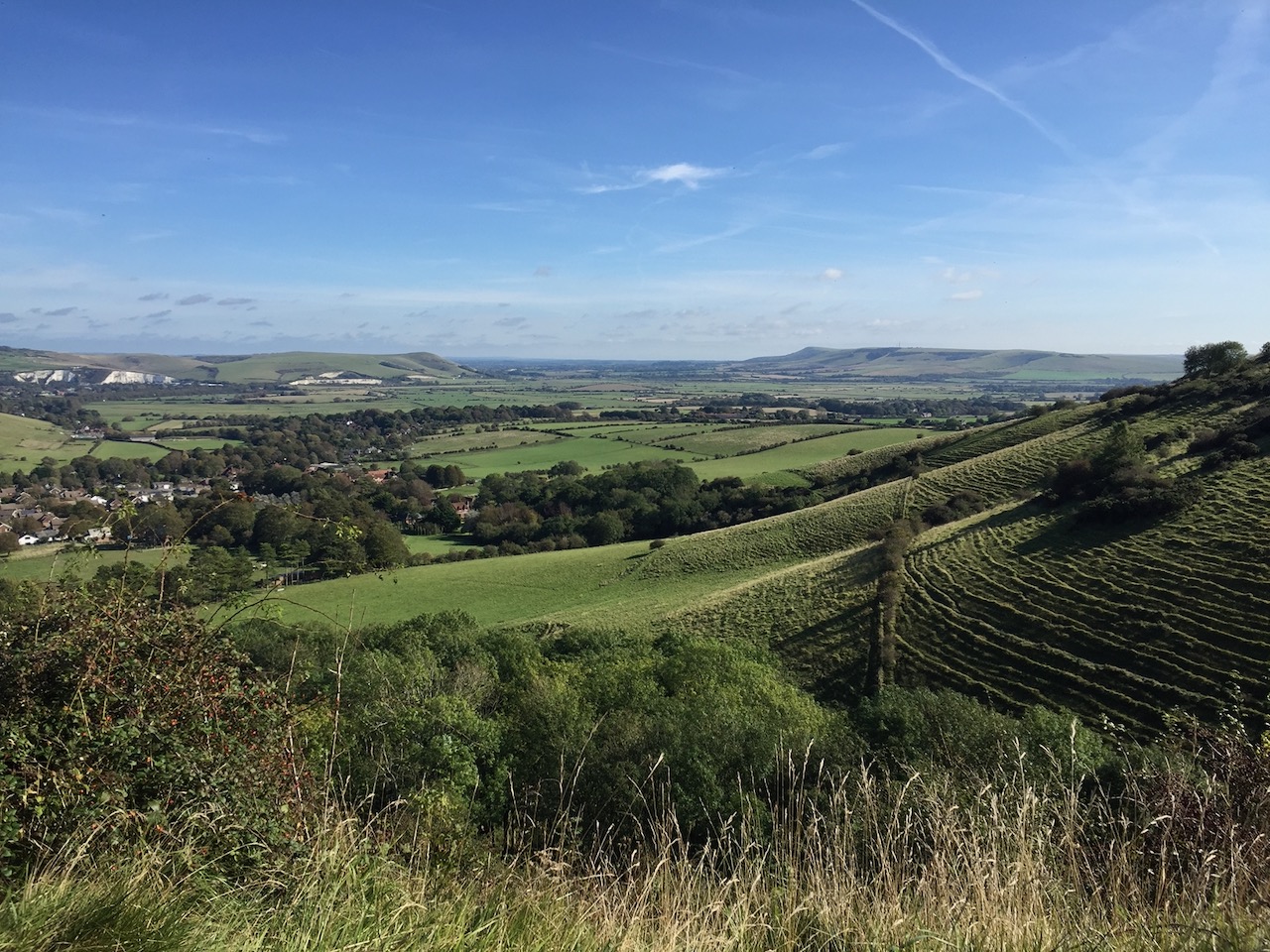
IMG_8665

Meet the authors who are writing about walking and the landscapes through which we walk, at walk · listen · create’s Walking Writers Salons. We are delighted to have eco-poet and editor Dave Borthwick join us in April, exploring walking as a method of research and practice, and how walking has been applied by poets and prose writers to examine and depict the nature of place. Dave was one of the editors of the recently published collection of essays on Walking, Landscape and Environment. (Routledge 2019)

Walking, Landscape and Environment explores walking as a method of research and practice in the humanities and creative arts, emerging from a recent surge of growth in urban and rural walking. This edited collection of essays from leading figures in the field presents an enquiry into, and a critique of, the methods and results of cutting-edge ‘walking research’. Walking negotiates the intersections between the human self, place and space, offering a cross-disciplinary collaborative method of research which can be utilised in areas such as ecocriticism, landscape architecture, literature, cultural geography and the visual arts. Bringing together a multitude of perspectives from different disciplines, on topics including health and wellbeing, disability studies, social justice, ecology and gender, this book provides a unique appraisal of the humanist perspective on landscape. In doing so, it challenges Romantic approaches to walking, applying new ideas in contemporary critical thought and alternative perspectives on embodiment and trans-corporeality.

Walking Writers Salons are hour-long events in which you will get to meet a Walking Writer and learn from them how they weave writing and walking, and how they interpret their surroundings. Each Salon will include a discussion with the author led by Andrew Stuck, inviting questions from the audience, and will include a multiple choice quiz in which winners will receive prizes including print copies of WALKING (RRP €4.50) and WALKING HOME (RRP €4.99) our own limited edition illustrated chapbook anthologies of poems and prose.

Hosts

David Borthwick

David Borthwick

 
Andrew Stuck

Andrew Stuck

Co-founder of walk · listen · create (United Kingdom) 
This event has happened
Log in to book a ticket. Not registered yet? Register first.
Lost your password?

2023-04-11 18:00
2023-04-11 18:00
2023-04-11 18:00

Video recording of the Salon with Dave Borthwick
Only available to registered users.
Online

Walking Writers Salon

Collection · 48 items

Related

video

Walking, Landscape and Environment with Dave Borthwick

We are delighted to have eco-poet and editor Dave Borthwick join us in April, exploring walking as a method of research and practice, and how walking has been applied by poets and prose writers to examine and depict the nature of place.

David Borthwick Andrew Stuck
Walking piece

Find Your London: Tree or False?

Devised by Andrew Stuck of the Museum of London, this walkshop became a regular event as part of the Mayor of London’s London Tree Week, and subsequent Urban Tree Festivals. Everyone has heard ‘an old wives’ tale’ about a certain tree species, some of which have a layer of truth within them, others are downright

Andrew Stuck
walkingevent

Every path tells a story

Alan Cleaver walks the paths taken by postmen and post women on their daily delivery in rural Britain. The Postal Paths is a celebration of loyalty and committed public service.

Alan Cleaver Andrew Stuck
walkingevent

The Writer’s Path – following fact and fiction with Tim Parks

7pm GMT Tuesday 25 February How do master storytellers approach the act of walking in their writing? What are the subtle yet important differences between crafting a non-fiction travelogue and weaving walking into a fictional narrative? Our upcoming Walking Writers Salon delves into these questions. Our featured guest, Tim Parks, a writer with over forty

Tim Parks Andrew Stuck
walkingevent

Keep Walking Intently

Meet the authors who are writing about walking and the landscapes through which we walk, at Walking Writers Salons. We are delighted to welcome art critic and historian Lori Waxman who will be talking with Babak Fakhamzadeh about her book Keep Walking Intently, a seminal history of walking art in the Twentieth century. Lead art critic

Lori Waxman Babak Fakhamzadeh
walkingevent

Colonial Britain Revealed

Corrine Fowler, author Our Island Stories: Country Walks through Colonial Britain talks with Richard White, walking artist and slavery researcher - come join the conversation.

Corinne Fowler Richard White

pedestrian acts

By de Certeau: In “Walking in the City”, de Certeau conceives pedestrianism as a practice that is performed in the public space, whose architecture and behavioural habits substantially determine the way we walk. For de Certeau, the spatial order “organises an ensemble of possibilities (e.g. by a place in which one can move) and interdictions (e.g. by a wall that prevents one from going further)” and the walker “actualises some of these possibilities” by performing within its rules and limitations. “In that way,” says de Certeau, “he makes them exist as well as emerge.” Thus, pedestrians, as they walk conforming to the possibilities that are brought about by the spatial order of the city, constantly repeat and re-produce that spatial order, in a way ensuring its continuity. But, a pedestrian could also invent other possibilities. According to de Certeau, “the crossing, drifting away, or improvisation of walking privilege, transform or abandon spatial elements.” Hence, the pedestrians could, to a certain extent, elude the discipline of the spatial order of the city. Instead of repeating and re-producing the possibilities that are allowed, they can deviate, digress, drift away, depart, contravene, disrupt, subvert, or resist them. These acts, as he calls them, are pedestrian acts.

Problem?

Encountered a problem? Report it to let us know.

  • Include the page on which you encountered the problem.
  • Describe what happened.
  • Describe what you expected to happen.
Follow us