Search
My feed
2021

A Secular Pilgrim: Discussing the Efficacy of Pain and Suffering in Endurance Walking.

A Secular Pilgrim
United Kingdom
24 minutes

Walking as a Question

4 - 17 Jul, 2021 · 109 items

England

Collection · 23 items
Sub-collection

pilgrimage

Sub-collection · 85 items

renewal

Collection · 3 items

weather

Collection · 6 items

Related

walkingevent

Walking as a Question, crossing walking, writing and listening

Some years ago Kristine Samson und Sanne Krogh Grogh proposed the Audio Paper bringing together audio, performance and text in a new and hybrid format. This concept was extended into a new form of audio walk, during the Walking Arts Encounters / Conference in Prespa. Writers of these audio papers are invited to talk at this Walk Listen Café.

Geert Vermeire Yannis Ziogas +6
Sound walk

Hiking With The Yamabushi Mountain Monks

This piece invites the listener to discover the inner realms and wonders of the Yamabushi. Join them on their journey through the sacred Dewa Sanzan mountains, sit with them under night skies and hear their voices echo through the forest...

materichart
Sound walk

Granite Blessings of the Woman’s Stone: Clach Bhan

Three quarters of the way up a mountain in the rugged Cairngorms of rural Scotland is a site that was precious to women for generations. We walk this mountain to search for this site, exploring what significance it holds for the modern day.

StoriesScotland
Sound walk

The Reluctant Pilgrim (Radio Walks Podcast)… a funny thing happened on the way to the priory

When does a walk become a pilgrimage?

Jonathan Kempster
book

The Way of the Gardener: Lost in the Weeds Along the Camino de Santiago

The Camino de Santiago has been a journey for pilgrims for more than 1,000 years, testing―to varying degrees―their spirit, faith, and physical endurance. Lyndon Penner’s attention lies elsewhere. A renowned gardener and lover of literature, he revels in the plants, trees, and flowers that tell the history of the people and ecology of northern Spain.

Lyndon Penner

England

Collection · 23 items
Sub-collection

pilgrimage

Sub-collection · 85 items

renewal

Collection · 3 items

weather

Collection · 6 items

Related

walkingevent

Walking as a Question, crossing walking, writing and listening

Some years ago Kristine Samson und Sanne Krogh Grogh proposed the Audio Paper bringing together audio, performance and text in a new and hybrid format. This concept was extended into a new form of audio walk, during the Walking Arts Encounters / Conference in Prespa. Writers of these audio papers are invited to talk at this Walk Listen Café.

Geert Vermeire Yannis Ziogas +6
Sound walk

Hiking With The Yamabushi Mountain Monks

This piece invites the listener to discover the inner realms and wonders of the Yamabushi. Join them on their journey through the sacred Dewa Sanzan mountains, sit with them under night skies and hear their voices echo through the forest...

materichart
Sound walk

Granite Blessings of the Woman’s Stone: Clach Bhan

Three quarters of the way up a mountain in the rugged Cairngorms of rural Scotland is a site that was precious to women for generations. We walk this mountain to search for this site, exploring what significance it holds for the modern day.

StoriesScotland
Sound walk

The Reluctant Pilgrim (Radio Walks Podcast)… a funny thing happened on the way to the priory

When does a walk become a pilgrimage?

Jonathan Kempster
book

The Way of the Gardener: Lost in the Weeds Along the Camino de Santiago

The Camino de Santiago has been a journey for pilgrims for more than 1,000 years, testing―to varying degrees―their spirit, faith, and physical endurance. Lyndon Penner’s attention lies elsewhere. A renowned gardener and lover of literature, he revels in the plants, trees, and flowers that tell the history of the people and ecology of northern Spain.

Lyndon Penner
Sound walk
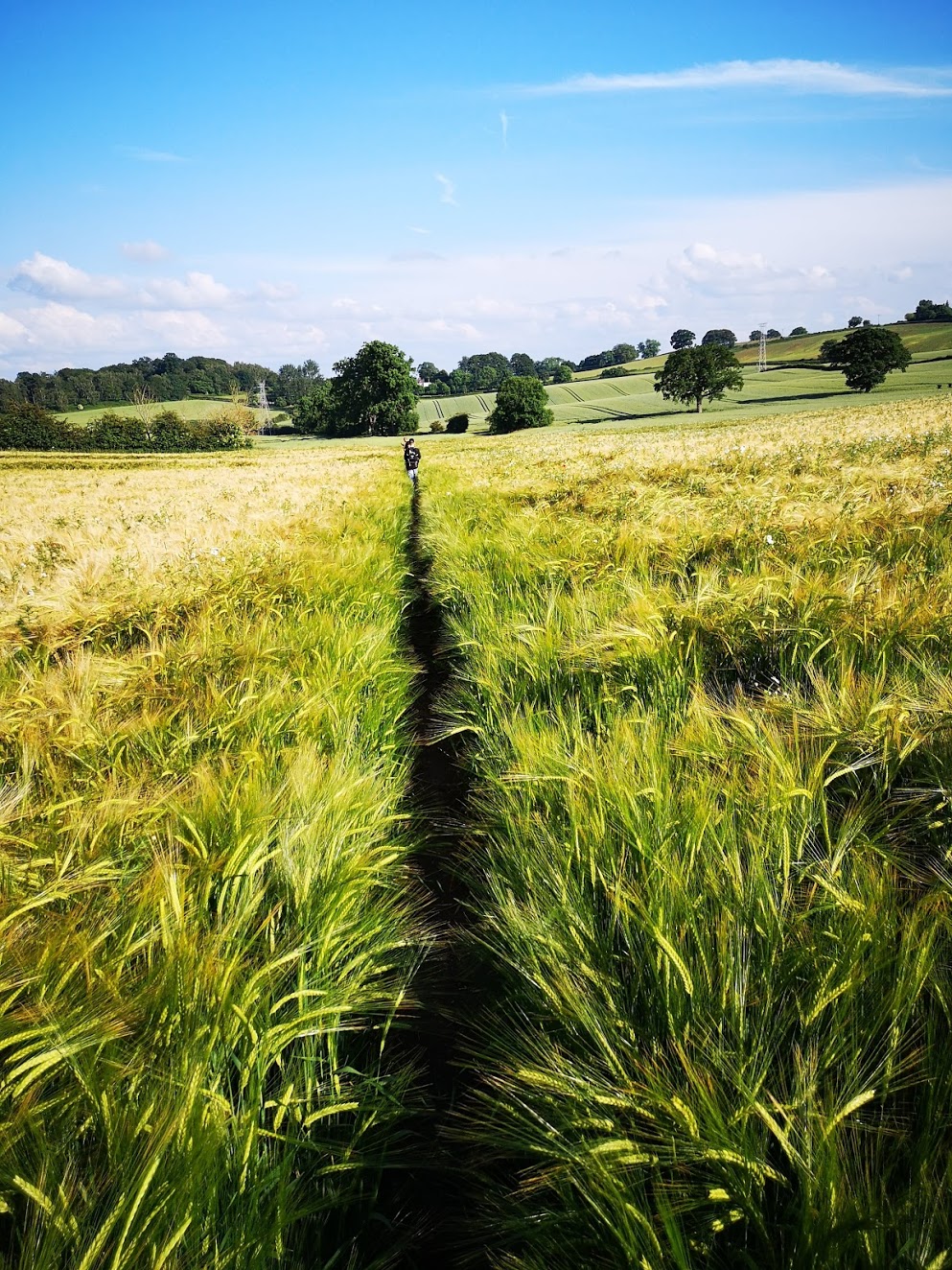
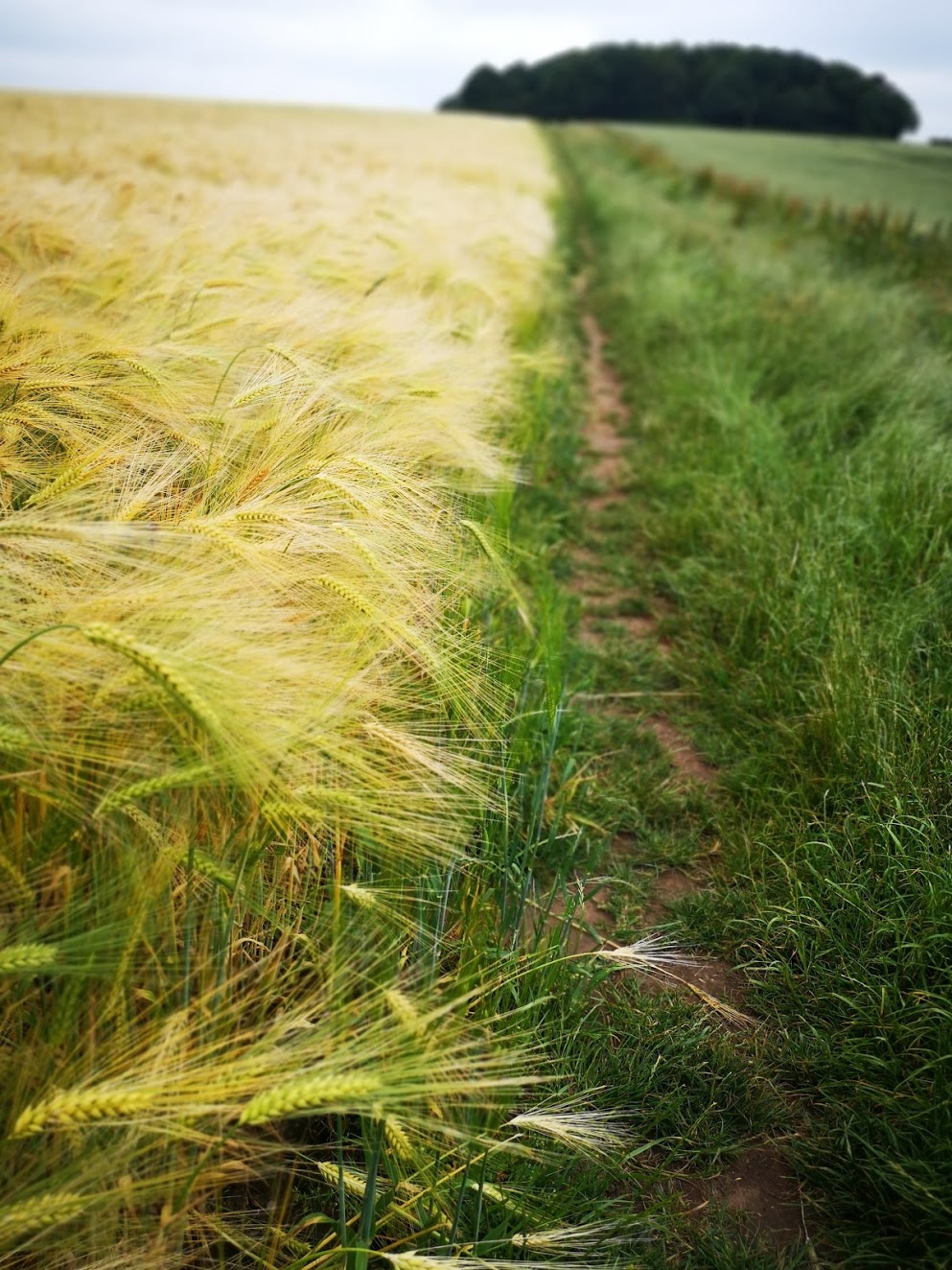
This Audio Paper documents a 160 km walk along the North Pilgrim’s Way in North Wales and The Two Saints Way between Cheshire and Lichfield, exploring the performative and embodied aspects of pilgrimage. The discussion focuses on the significance of the route itself, examining themes of meditation, repetition, pain, and the interaction with nature in both secular and sacred contexts.

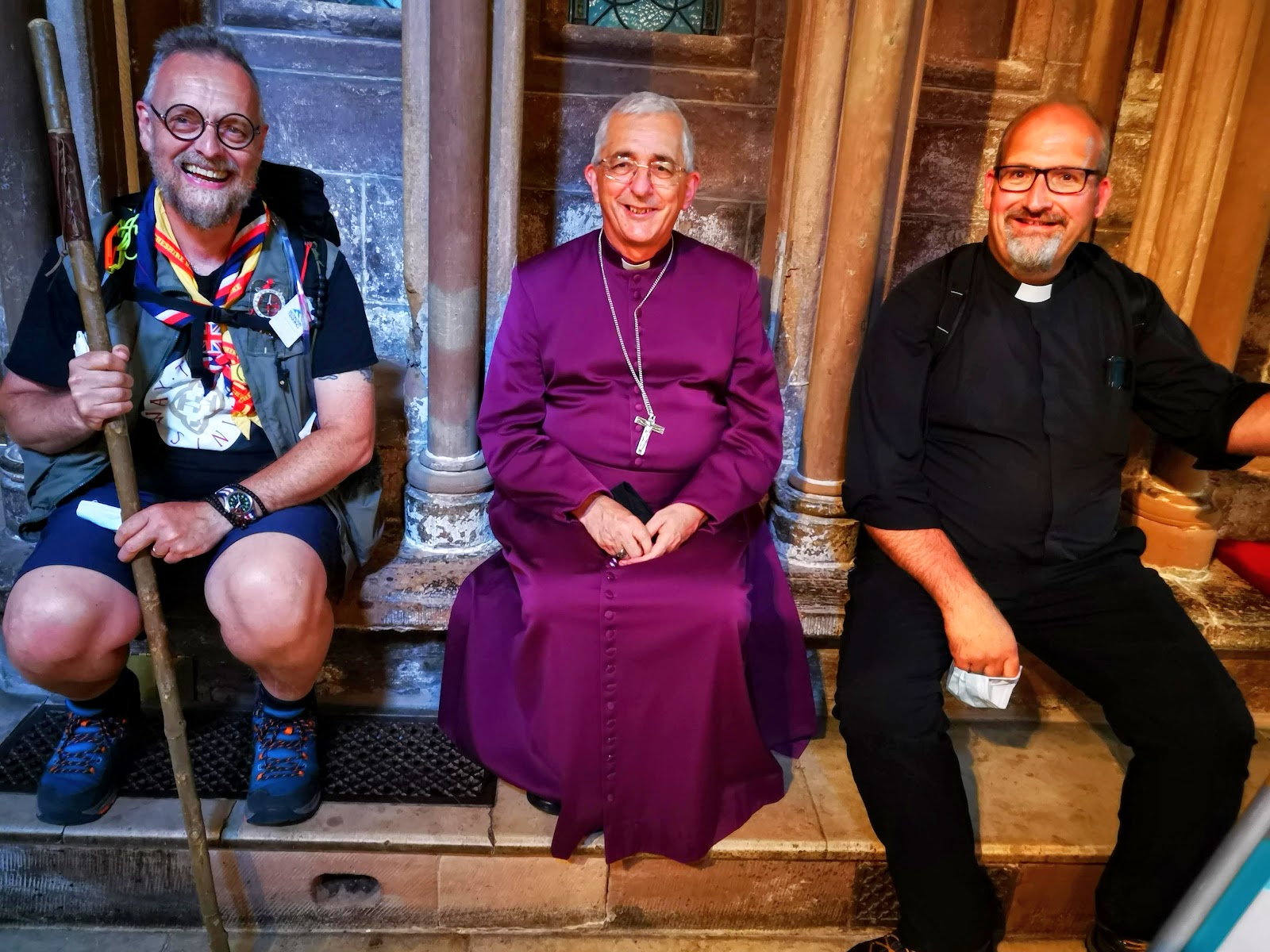
This Audio Paper was mainly recorded on the North Pilgrim’s Way in North Wales, and The Two Saints Way between Cheshire and Lichfield in England. I walked initially with with Father Robert Icke, a friend and Anglican Priest and my other friend, Dr Kris Darby, who has also been interested in the performative act of walking for a number of years. This discussion builds on my newly published chapter exploring the efficacy of pain and suffering in pilgrimage, in addition to the mind/body experience (published in ‘The Performances of Sacred Places: Crossing, Breathing, Resisting’, Silvia Battista (Ed.), Intellect).

My emerging argument is for the processual importance of the route itself rather than the final fixed venue and therefore for the increasing relevance of the experience of pilgrimage in a secular context. For this paper I have walked an ancient route over 160km, discussing the relationship of meditation and repetition en route to the possibly penitential experience of pain and exhaustion. Whilst doing so we discussed the well-trodden path, the impact of nature, the experience of weather and the crucial relationship of these external factors on both the liminoid quest for renewal (or in the Catholic tradition, indulgence) and our sense of mortality in the experience of nature.

A Secular Pilgrim

CC-BY-NC: Simon Piasecki

APA style reference

Piasecki, S. (2021). A Secular Pilgrim: Discussing the Efficacy of Pain and Suffering in Endurance Walking.. walk · listen · create. https://walklistencreate.org/walkingpiece/a-secular-pilgrim-discussing-the-efficacy-of-pain-and-suffering-in-endurance-walking/

pedestrian acts

By de Certeau: In “Walking in the City”, de Certeau conceives pedestrianism as a practice that is performed in the public space, whose architecture and behavioural habits substantially determine the way we walk. For de Certeau, the spatial order “organises an ensemble of possibilities (e.g. by a place in which one can move) and interdictions (e.g. by a wall that prevents one from going further)” and the walker “actualises some of these possibilities” by performing within its rules and limitations. “In that way,” says de Certeau, “he makes them exist as well as emerge.” Thus, pedestrians, as they walk conforming to the possibilities that are brought about by the spatial order of the city, constantly repeat and re-produce that spatial order, in a way ensuring its continuity. But, a pedestrian could also invent other possibilities. According to de Certeau, “the crossing, drifting away, or improvisation of walking privilege, transform or abandon spatial elements.” Hence, the pedestrians could, to a certain extent, elude the discipline of the spatial order of the city. Instead of repeating and re-producing the possibilities that are allowed, they can deviate, digress, drift away, depart, contravene, disrupt, subvert, or resist them. These acts, as he calls them, are pedestrian acts.

Problem?

Encountered a problem? Report it to let us know.

  • Include the page on which you encountered the problem.
  • Describe what happened.
  • Describe what you expected to happen.
Follow us