Search
My feed
2017

RIVER LISTENING: SOUND + ENVIRONMENT 2017

Import from Echoes
Hull, City Of Kingston Upon Hull, England, United Kingdom

Sub-collection

Acoustic Ecology

Sub-collection · 20 items

environment

4 sub-collections · 170 items

river

Collection · 65 items
Sub-collection

soundscapes

Sub-collection · 30 items

Related

Sound walk

Hydrology: Earth Optimism

Hydrology features underwater recordings of diverse aquatic soundscapes from locations including Mexico’s Sian Ka’an Biosphere Reserve, Norway’s Kvina River, and Queensland’s coastline. Created by Leah Barclay for the Earth Optimism Summit in Washington, DC, the work connects ecological sounds with the voices of water protectors and river communities worldwide.

Leah Barclay
Sound walk

Echo Erode STep Tap

This post invites readers to take a mindful walk in Peace Park, Ashbury, NSW, or a nearby park of their choice. The walk encourages careful observation of the surrounding environment and reflection on how public spaces are designed and experienced.

thandi.b
Sound walk

Soundwalk: “Aquí habita un río” (A river lives here)

This post explores the relationship between Panama City and its urban waterways through a multisensorial soundwalk along the six-kilometer Matasnillo River, the most polluted in the area. It offers an open letter reflecting on what the river reveals about the environment and human connection from its source to the ocean.

Mar Alzamora
walkingevent

(Soundscapers’ forum) – Forum des Paysagistes Sonores

** Warning the event is in France and thus french speaking ** The soundscapers’ forum is the first edition hold by PePaSon groupe with the aim to gather various personalities who hold transdiscipliniary projects based on soundscapes. From art to science, through pedagogy and contemplation, people will share about their ideas and dreams for a

PePaSon
Sub-collection

Acoustic Ecology

Sub-collection · 20 items

environment

4 sub-collections · 170 items

river

Collection · 65 items
Sub-collection

soundscapes

Sub-collection · 30 items

Related

Sound walk

Hydrology: Earth Optimism

Hydrology features underwater recordings of diverse aquatic soundscapes from locations including Mexico’s Sian Ka’an Biosphere Reserve, Norway’s Kvina River, and Queensland’s coastline. Created by Leah Barclay for the Earth Optimism Summit in Washington, DC, the work connects ecological sounds with the voices of water protectors and river communities worldwide.

Leah Barclay
Sound walk

Echo Erode STep Tap

This post invites readers to take a mindful walk in Peace Park, Ashbury, NSW, or a nearby park of their choice. The walk encourages careful observation of the surrounding environment and reflection on how public spaces are designed and experienced.

thandi.b
Sound walk

Soundwalk: “Aquí habita un río” (A river lives here)

This post explores the relationship between Panama City and its urban waterways through a multisensorial soundwalk along the six-kilometer Matasnillo River, the most polluted in the area. It offers an open letter reflecting on what the river reveals about the environment and human connection from its source to the ocean.

Mar Alzamora
walkingevent

(Soundscapers’ forum) – Forum des Paysagistes Sonores

** Warning the event is in France and thus french speaking ** The soundscapers’ forum is the first edition hold by PePaSon groupe with the aim to gather various personalities who hold transdiscipliniary projects based on soundscapes. From art to science, through pedagogy and contemplation, people will share about their ideas and dreams for a

PePaSon
Sound walk
River Listening is an interdisciplinary project that uses sound to explore the cultural and biological diversity of global river systems and monitor their health through noninvasive recording technologies. The 2017 installation at the Sound + Environment conference showcases soundscapes from rivers worldwide, combining acoustic ecology, science, and digital technology to inform freshwater conservation.

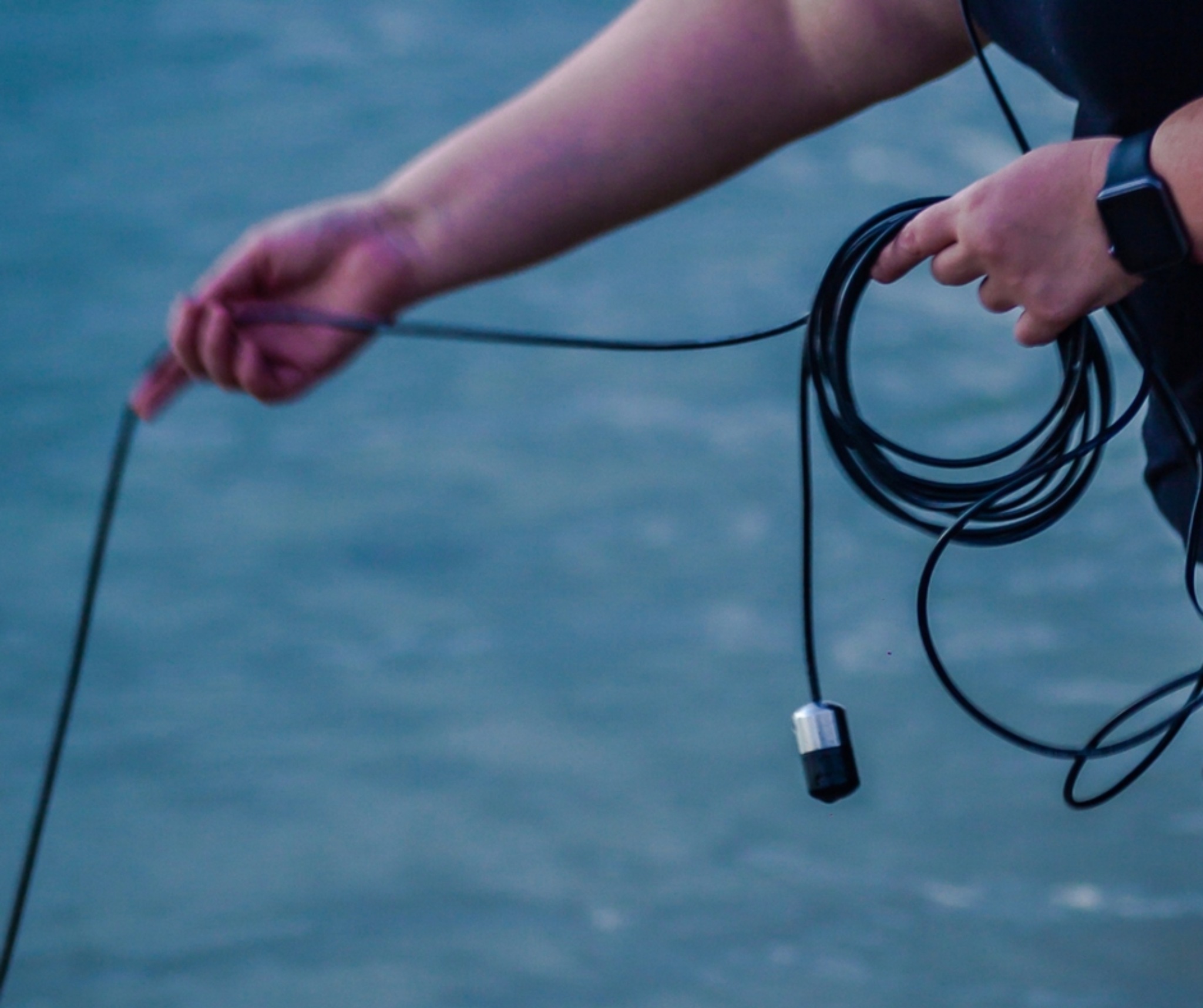
River Listening is an interdisciplinary research project exploring the cultural and biological diversity of global river systems through sound. The project examines the creative possibilities of accessible and noninvasive recording technologies to monitor river health and engage local communities in the conservation of global river systems. River Listening combines emerging fields of science with acoustic ecology, creativity and digital technology to further the understanding of aquatic biodiversity and inspire action at a time when the conservation and management of freshwater ecosystems is a critical priority.

This River Listening installation has been created for the 2017 Sound + Environment conference at the University of Hull and features soundscapes from river systems across the world.

Share your listening experiences on social media #RiverListening

APA style reference

Barclay, L. (2017). RIVER LISTENING: SOUND + ENVIRONMENT 2017. walk · listen · create. https://walklistencreate.org/walkingpiece/river-listening-sound-environment-2017/

pedestrian acts

By de Certeau: In “Walking in the City”, de Certeau conceives pedestrianism as a practice that is performed in the public space, whose architecture and behavioural habits substantially determine the way we walk. For de Certeau, the spatial order “organises an ensemble of possibilities (e.g. by a place in which one can move) and interdictions (e.g. by a wall that prevents one from going further)” and the walker “actualises some of these possibilities” by performing within its rules and limitations. “In that way,” says de Certeau, “he makes them exist as well as emerge.” Thus, pedestrians, as they walk conforming to the possibilities that are brought about by the spatial order of the city, constantly repeat and re-produce that spatial order, in a way ensuring its continuity. But, a pedestrian could also invent other possibilities. According to de Certeau, “the crossing, drifting away, or improvisation of walking privilege, transform or abandon spatial elements.” Hence, the pedestrians could, to a certain extent, elude the discipline of the spatial order of the city. Instead of repeating and re-producing the possibilities that are allowed, they can deviate, digress, drift away, depart, contravene, disrupt, subvert, or resist them. These acts, as he calls them, are pedestrian acts.

Problem?

Encountered a problem? Report it to let us know.

  • Include the page on which you encountered the problem.
  • Describe what happened.
  • Describe what you expected to happen.
Follow us