Search
My feed

Walking in circles

walking in circles
Oman

experiential

Collection · 8 items

oman

Collection · 1 items

Perimeter

Collection · 4 items

Related

url

Emmie Anne Alderson Theatre

A Pilgrimage for Sylvia is a ongoing performance and research project which focuses on Emmie's pursuit to find the remaining traces of Sylvia Plath's presence. The project so far h as taken the form...

url

Aurora dos Campos

Aurora dos Campos is a set designer, artist and researcher. She holds a PhD in Fine Arts from the Faculty of Fine Arts of the University of Porto [FBAUP], having received a grant from the Foundation for Science and Technology [FCT] for her research entitled “Fictionalising Matter ∩ Materialising Fiction: The Artistic Practice of a Set Designer”. She is a research fellow at the Institute for Research in Art, Design and Society [I2ADS]. She holds a Master’s degree in Art and Design for Public Space from the Faculty of Fine Arts of the University of Porto, with the dissertation “Dramaturgies of the Everyday: Speculations on the Fictional Dimension of the Real” [FBAUP | 2019] and holds a Bachelor’s degree in Performing Arts with a specialisation in set design from the Federal University of the State of Rio de Janeiro [UNIRIO | 2006].

walkingevent

The Lucky Trikes: Listening Pasts – Listening Futures

Storyteller Deirdre Harrison brings this storytelling chamber band that has been delighting intergenerational audiences since 2014. Dynamic, interactive readings of well-known and award-winning books are accompanied by improvised and composed music.

wfaesec
Walking piece

Property Lines

Property Lines is a collection of graphite rubbings on paper documenting 76 property line floor markings in New York City sidewalks.

Francisca Benítez
post

The endlessness of walking

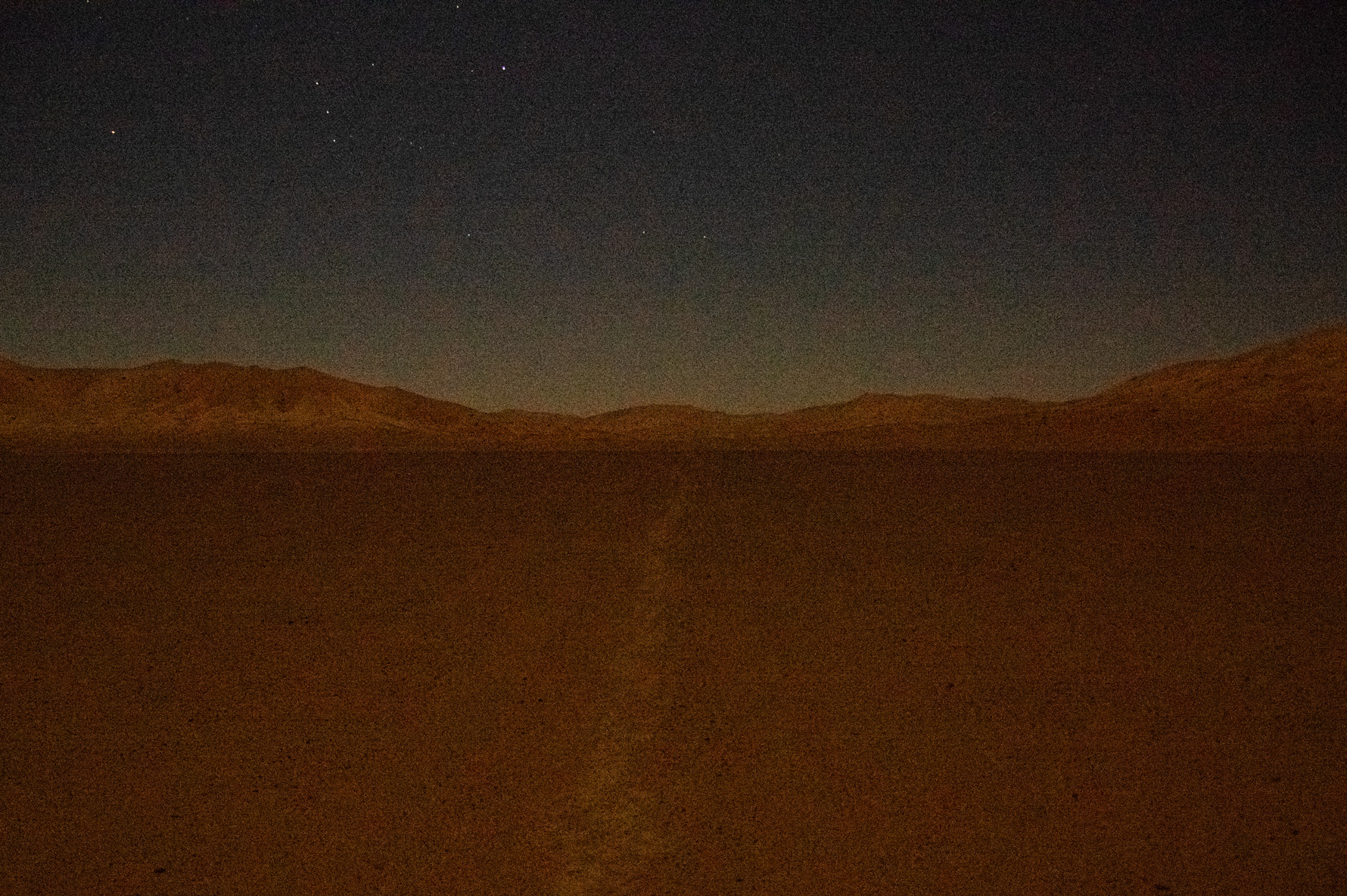
Roelant Meijer's "Walking in Circles" is set in the Rub’ al Khali desert. Meijer intentionally walks a 3.7km circle over seven days, reflecting on the concept of getting lost, the imperfections of life, and the philosophical questions surrounding our existence.

Roelant Meijer
post

Introducing this year’s outstanding walking art

It's the announcement of the Marŝarto Awards 2023 shortlist!

Babak Fakhamzadeh Andrew Stuck +1

experiential

Collection · 8 items

oman

Collection · 1 items

Perimeter

Collection · 4 items

Related

url

Emmie Anne Alderson Theatre

A Pilgrimage for Sylvia is a ongoing performance and research project which focuses on Emmie's pursuit to find the remaining traces of Sylvia Plath's presence. The project so far h as taken the form...

url

Aurora dos Campos

Aurora dos Campos is a set designer, artist and researcher. She holds a PhD in Fine Arts from the Faculty of Fine Arts of the University of Porto [FBAUP], having received a grant from the Foundation for Science and Technology [FCT] for her research entitled “Fictionalising Matter ∩ Materialising Fiction: The Artistic Practice of a Set Designer”. She is a research fellow at the Institute for Research in Art, Design and Society [I2ADS]. She holds a Master’s degree in Art and Design for Public Space from the Faculty of Fine Arts of the University of Porto, with the dissertation “Dramaturgies of the Everyday: Speculations on the Fictional Dimension of the Real” [FBAUP | 2019] and holds a Bachelor’s degree in Performing Arts with a specialisation in set design from the Federal University of the State of Rio de Janeiro [UNIRIO | 2006].

walkingevent

The Lucky Trikes: Listening Pasts – Listening Futures

Storyteller Deirdre Harrison brings this storytelling chamber band that has been delighting intergenerational audiences since 2014. Dynamic, interactive readings of well-known and award-winning books are accompanied by improvised and composed music.

wfaesec
Walking piece

Property Lines

Property Lines is a collection of graphite rubbings on paper documenting 76 property line floor markings in New York City sidewalks.

Francisca Benítez
post

The endlessness of walking

Roelant Meijer's "Walking in Circles" is set in the Rub’ al Khali desert. Meijer intentionally walks a 3.7km circle over seven days, reflecting on the concept of getting lost, the imperfections of life, and the philosophical questions surrounding our existence.

Roelant Meijer
post

Introducing this year’s outstanding walking art

It's the announcement of the Marŝarto Awards 2023 shortlist!

Babak Fakhamzadeh Andrew Stuck +1
When you are lost, it seems a good idea to walk a straight line. This piece reflects my experiment: for seven consecutive days I walked the same circle in the desert. Don’t we all walk in circles in our own lives, thinking we are going straight?

When you are lost in the desert, you might think your best option is to keep walking in a straight line, in the hope of hitting a road or some other landmark. Research has shown that you will most likely walk in a circle and end up where you started.

I wanted to experiment with getting lost by intentionally walking in circles. I chose the emptiest, most isolated landscape you can imagine: the Rub’ al Khali desert in Oman. In a dry flat valley – a wadi – I created a circle by walking the same route on seven consecutive days. The perimeter of the circle was about 3.7 kilometres, a 45 minute walk. Along the track I created chalk circles with text. You cannot see these from afar, they only appear when you are really close.

By walking for seven days in a row, I emphasise the endlessness of walking round in circles. Day after day, ending up where I began, following my own footsteps. In the empty wadi, in the punishing heat, you can’t walk away from questions.
-is it possible to get lost?
– is it a problem if you return at your starting point? If you end up where you began?
– aren’t we all walking in circles in life, all the while thinking we are going in a straight line?

My feet create the track. When I stop walking, the track will disappear and all will be gone but not lost.

APA style reference

Meijer, R. (2022). Walking in circles. walk · listen · create. https://walklistencreate.org/walkingpiece/walking-in-circles/

pedestrian acts

By de Certeau: In “Walking in the City”, de Certeau conceives pedestrianism as a practice that is performed in the public space, whose architecture and behavioural habits substantially determine the way we walk. For de Certeau, the spatial order “organises an ensemble of possibilities (e.g. by a place in which one can move) and interdictions (e.g. by a wall that prevents one from going further)” and the walker “actualises some of these possibilities” by performing within its rules and limitations. “In that way,” says de Certeau, “he makes them exist as well as emerge.” Thus, pedestrians, as they walk conforming to the possibilities that are brought about by the spatial order of the city, constantly repeat and re-produce that spatial order, in a way ensuring its continuity. But, a pedestrian could also invent other possibilities. According to de Certeau, “the crossing, drifting away, or improvisation of walking privilege, transform or abandon spatial elements.” Hence, the pedestrians could, to a certain extent, elude the discipline of the spatial order of the city. Instead of repeating and re-producing the possibilities that are allowed, they can deviate, digress, drift away, depart, contravene, disrupt, subvert, or resist them. These acts, as he calls them, are pedestrian acts.

Problem?

Encountered a problem? Report it to let us know.

  • Include the page on which you encountered the problem.
  • Describe what happened.
  • Describe what you expected to happen.
Follow us