Search
My feed

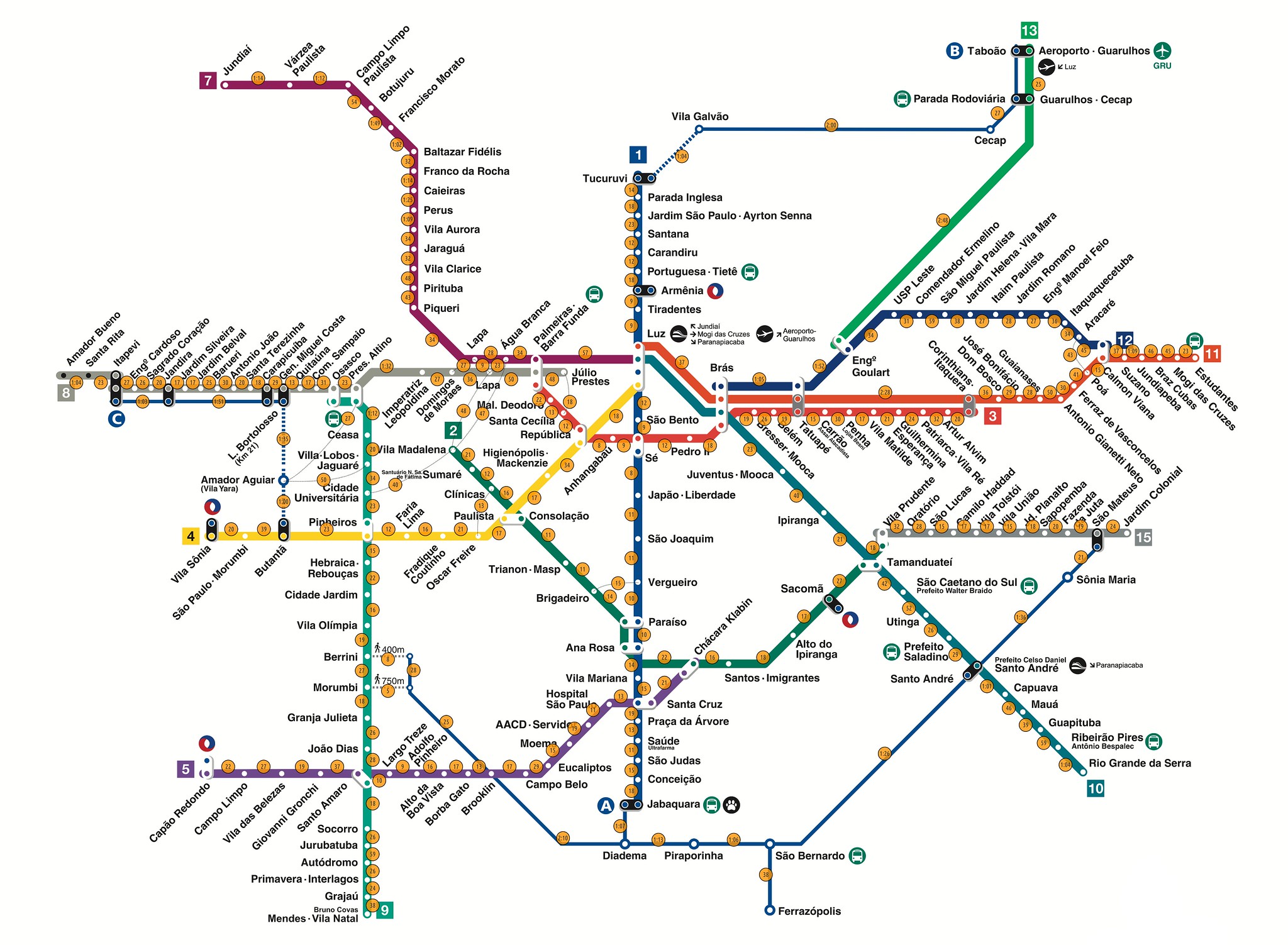
Walking times between Sao Paulo metro stations

Map of walking distances between metro stations in São Paulo
São Paulo, State of São Paulo, Brazil
Free

metro

Collection · 6 items

place

Collection · 195 items

public transport

Collection · 14 items

Sao Paulo

Collection · 10 items

Related

Sound walk

long shadow

DB Amorin's long shadow is a 40-minute "soundride" on the MAX Red Line in Portland, OR inspired by the sustained yearning to revisit former homes during the COVID-19 lockdown, a longing which over time became its own interior landscape to traverse.

walkingevent

From the center to independence, and back

Known as “The cry of Ipiranga”, the exclamation, by Dom Pedro I, was the moment Brazil became independent, in 1822, 200 years ago. To mark the historic moment, going back and forward in time, I’ll take a circular walk through São Paulo.

Babak Fakhamzadeh
walkingevent

Last Tuesday Cafe

We’ll pick up on threads and themes that have been developing as we have collectively been considering aspects of place . Please register your interest by replying to this email by Sunday 25th April and we’ll send you additional details and link to the zoom call.

Kel Portman
walkingevent

Walk21

The Walk21 International Conference series on Walking and Liveable Communities celebrates the work of our speakers and delegates on an international scale as well as promoting the international profile of walking.

Babak Fakhamzadeh

metro

Collection · 6 items

place

Collection · 195 items

public transport

Collection · 14 items

Sao Paulo

Collection · 10 items

Related

Sound walk

long shadow

DB Amorin's long shadow is a 40-minute "soundride" on the MAX Red Line in Portland, OR inspired by the sustained yearning to revisit former homes during the COVID-19 lockdown, a longing which over time became its own interior landscape to traverse.

walkingevent

From the center to independence, and back

Known as “The cry of Ipiranga”, the exclamation, by Dom Pedro I, was the moment Brazil became independent, in 1822, 200 years ago. To mark the historic moment, going back and forward in time, I’ll take a circular walk through São Paulo.

Babak Fakhamzadeh
walkingevent

Last Tuesday Cafe

We’ll pick up on threads and themes that have been developing as we have collectively been considering aspects of place . Please register your interest by replying to this email by Sunday 25th April and we’ll send you additional details and link to the zoom call.

Kel Portman
walkingevent

Walk21

The Walk21 International Conference series on Walking and Liveable Communities celebrates the work of our speakers and delegates on an international scale as well as promoting the international profile of walking.

Babak Fakhamzadeh
Walking piece
The metro map of São Paulo, but with walking times between adjacent stations.

Like many, I find the typical design of public transport maps rather gorgeous. They speak to my imagination on several levels. There is the challenge of abstracting complex and rich information, simplifying as much as possible, but not more. Then, an extensive public transport network also speaks to the level of service the state provides to its people. More public transport dovetails with other policies that favour the working class. And, public transport maps are roadmaps for extensive local travel.

I adjusted the official São Paulo metro map, showing walking times between all adjacent stations, and between a few stations on different lines, but which are geographically reasonably close to each other.

My own main insight from this exercise is the emphasis on how incredibly huge São Paulo is. To walk between the two stations furthest apart, Jundiaí and Estudantes, would take more than 23 hours, uninterrupted.

APA style reference

Fakhamzadeh, B. (2023). Walking times between Sao Paulo metro stations. walk · listen · create. https://walklistencreate.org/walkingpiece/walking-times-between-sao-paulo-metro-stations/

pedestrian acts

By de Certeau: In “Walking in the City”, de Certeau conceives pedestrianism as a practice that is performed in the public space, whose architecture and behavioural habits substantially determine the way we walk. For de Certeau, the spatial order “organises an ensemble of possibilities (e.g. by a place in which one can move) and interdictions (e.g. by a wall that prevents one from going further)” and the walker “actualises some of these possibilities” by performing within its rules and limitations. “In that way,” says de Certeau, “he makes them exist as well as emerge.” Thus, pedestrians, as they walk conforming to the possibilities that are brought about by the spatial order of the city, constantly repeat and re-produce that spatial order, in a way ensuring its continuity. But, a pedestrian could also invent other possibilities. According to de Certeau, “the crossing, drifting away, or improvisation of walking privilege, transform or abandon spatial elements.” Hence, the pedestrians could, to a certain extent, elude the discipline of the spatial order of the city. Instead of repeating and re-producing the possibilities that are allowed, they can deviate, digress, drift away, depart, contravene, disrupt, subvert, or resist them. These acts, as he calls them, are pedestrian acts.

Problem?

Encountered a problem? Report it to let us know.

  • Include the page on which you encountered the problem.
  • Describe what happened.
  • Describe what you expected to happen.
Follow us