Turn inland from the celebrated coast path to find wild moors and thickly wooded valleys — an interior landscape disparaged by early visitors and still overlooked today – Tim Hannigan
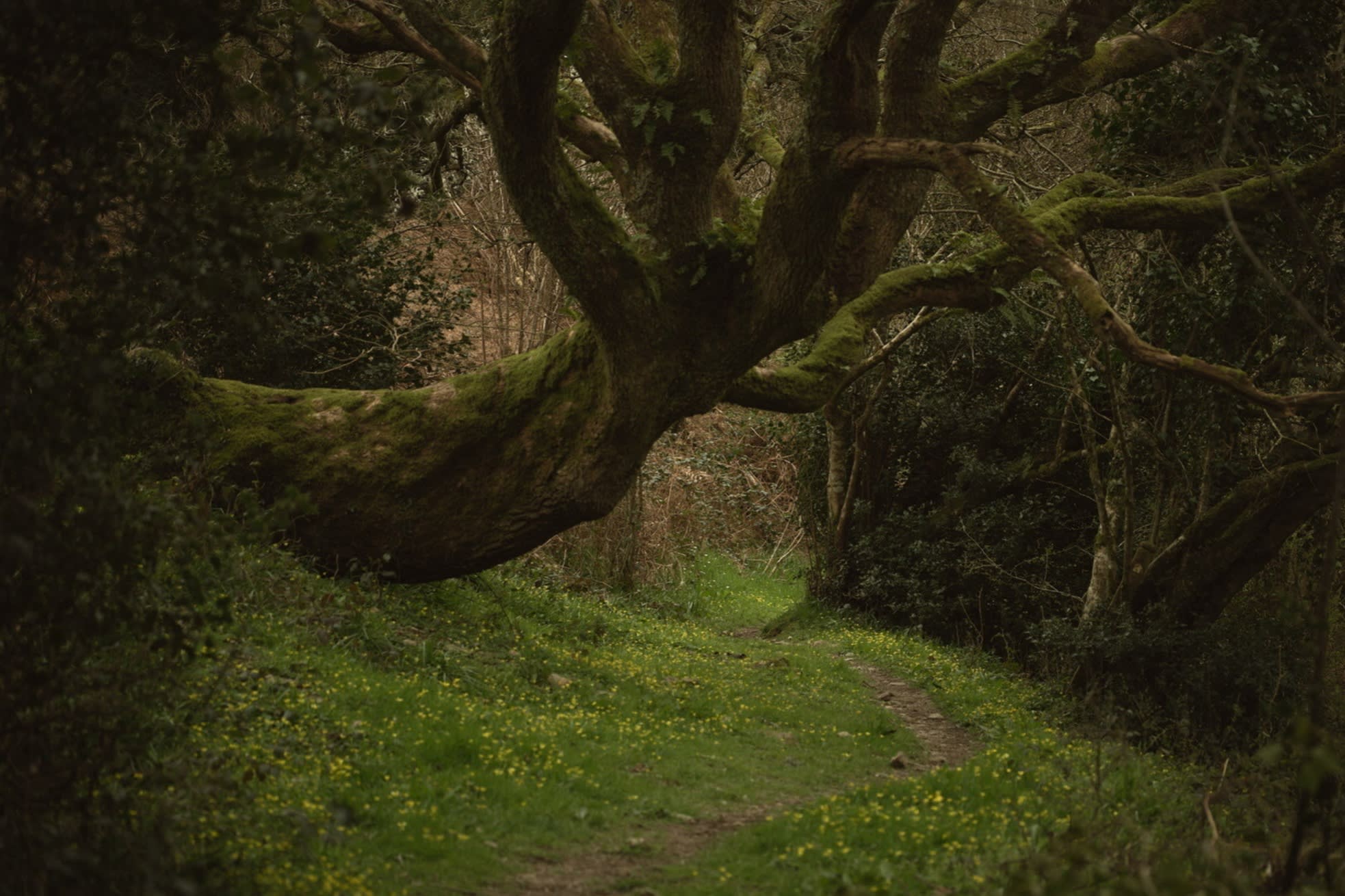
Source: The hidden heart of Cornwall | Financial Times
Inspired by the Manchester Ramblers, who campaigned on exclusion and the countryside, I’m also taking a stand Source: Walking the Pennine Way put everything into perspective for me, including my right to be here | Anita Sethi | The Guardian
If you live or work in the west of Paris, you may have come face to face with chalk drawings on building facades. Lovers of Jean-Charles de Castelbajac’s work will surely have recognized the famous French designer’s pencil stroke. Source: Street art: Jean-Charles de Castelbajac’s drawings spread across western Paris – Sortiraparis.com
A path in the Madonie natural park once used by itinerant friars takes present-day hikers on mountain trails through a terrain rich in wildlife Source: Walking in solitude and sunshine in Sicily: a newly restored pilgrim’s trail | Sicily holidays | The Guardian
Turn inland from the celebrated coast path to find wild moors and thickly wooded valleys — an interior landscape disparaged by early visitors and still overlooked today – Tim Hannigan
Source: The hidden heart of Cornwall | Financial Times
pedestrian acts
By de Certeau: In “Walking in the City”, de Certeau conceives pedestrianism as a practice that is performed in the public space, whose architecture and behavioural habits substantially determine the way we walk. For de Certeau, the spatial order “organises an ensemble of possibilities (e.g. by a place in which one can move) and interdictions (e.g. by a wall that prevents one from going further)” and the walker “actualises some of these possibilities” by performing within its rules and limitations. “In that way,” says de Certeau, “he makes them exist as well as emerge.” Thus, pedestrians, as they walk conforming to the possibilities that are brought about by the spatial order of the city, constantly repeat and re-produce that spatial order, in a way ensuring its continuity. But, a pedestrian could also invent other possibilities. According to de Certeau, “the crossing, drifting away, or improvisation of walking privilege, transform or abandon spatial elements.” Hence, the pedestrians could, to a certain extent, elude the discipline of the spatial order of the city. Instead of repeating and re-producing the possibilities that are allowed, they can deviate, digress, drift away, depart, contravene, disrupt, subvert, or resist them. These acts, as he calls them, are pedestrian acts.
Encountered a problem? Report it to let us know.
You must be logged in to post a comment.