Search
My feed

Sounds from the Chase and Chalke

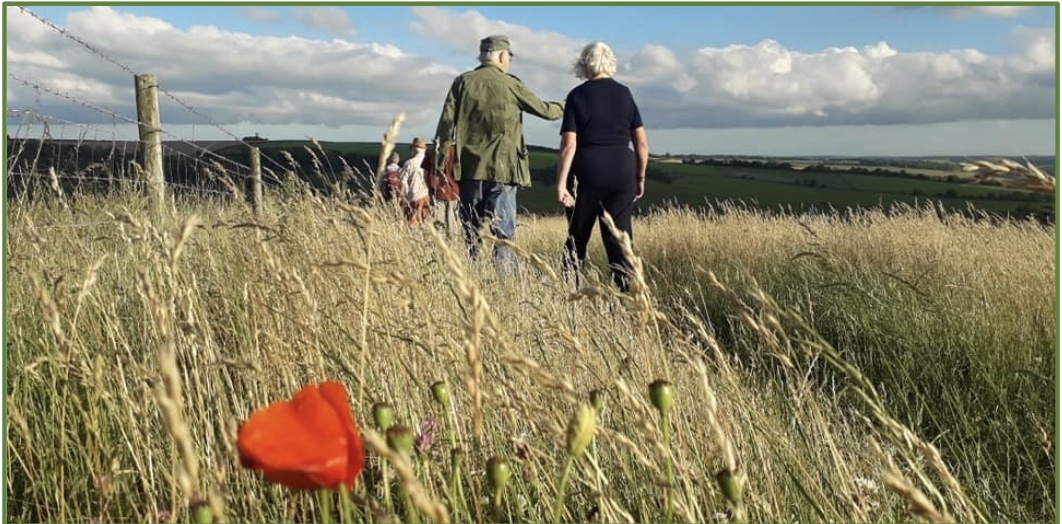
Chase & Chalke image

A “How to make a sound walk” workshop

Ever wondered what everyone walking around wearing head phones are actually listening to?  Want merely to be a consumer or rather a creator of great listening experiences that people can enjoy outdoors? Join this exciting on-line workshop to learn how to make immersive sound walks and record soundscapes, with the opportunity of having your worked published and listened to by hundreds.

Chase & Chalke Landscape Partnership and the Museum of Walking have commissioned leading sound walk producer and sound artist, Marcin Barski from Krakow in Poland and London-based podcaster Andrew Stuck to lead this 75 minute on-line workshop in which you get to learn about planning, writing, recording, editing and locating a sound walk of your very own.

Then join the challenges to record a sound walk or soundscape piece of your own and submit it to Sound Walk September (with the chance of picking up an Award) and having your worked published and listened to by hundreds, maybe thousands of people around the world.

You will need:

A computer, tablet/iPad or smartphone for the on-line workshop plus an open mind, a pen and paper, a smartphone to record your sound walk later on.

What will take place:

Sound walk composition, the score and framework of a sound walk (similar to a story arc), from where to record and where to geo-locate or design for people to hear their recorded piece, drawing on examples from the WalkListenCreate archive of 250+ sound walks and soundscapes.

Audience 16+

The on-line workshop will be recorded.

During Sound Walk September join the 30 Days of Walking challenge to record a sound walk for every day of the month, or contribute to Shorelines a geo-located collection of poetry and prose.

Photo credit: Chase & Chalke Landscape Partnership

To book:

This free event is part of the ChalkEscape Walking Festival 2020 – Lightfooted booking is via Eventbrite managed by the Chase & Chalke Landscape Area Partnership

This event has happened

2020-09-18 09:30
2020-09-18 09:30
2020-09-18 09:30

Hosted by: Chase & Chalke Landscape Area Partnership
Online

outdoors

Collection · 14 items

Recording

Collection · 6 items

Related

Walking piece

Squatting and Common Land in Hackney

What has encouraged the rise in squatting today – what are the political, economic and legislative currents that encouraged this, and what is the impact of squatting not just in its immediate locale, but also across our collective culture?  Who should care if it is on the increase? All this and much more was revelaed in Melissa Bliss’ Squatting and the Common Land walk co-produced by Andrew Stuck at the Museum of Walking.

Andrew Stuck
walkingevent

Daydream Livorno SoundWalk 2

Listening and Recording In the second step we head outside again and take the same route we took a week before, however this time, make an audio/video recording of your entire journey with a smart phone or digital recorder. You can ‘set and forget’ the recording device, or use it creatively to frame your journey

Elisabetta Senesi
walkingevent

Wambuul Soundwalk

The Wambuul Soundwalk will be a Sunday afternoon stroll through Biddybungie Reserve on the western bank of the Wambuul/ Macquarie, introducing you to a sonic riverside world you will have never heard before. This is a free community event.

Kim V. Goldsmith
walkingevent

London Street Noises

In September of 1928 five locations across central London were recorded by a team from Columbia Records led by Commander Daniel and supported by the Daily Mail. The project was prompted by a pressing concern for the impact on health and wellbeing from traffic noise. As well as traffic sounds of the day accompanied by

John Levack Drever
walkingevent

Contested developments in Peckham: A Practical Listening walk

Listening walk through housing estates that face redevelopment

Andrew Stuck

pedestrian acts

By de Certeau: In “Walking in the City”, de Certeau conceives pedestrianism as a practice that is performed in the public space, whose architecture and behavioural habits substantially determine the way we walk. For de Certeau, the spatial order “organises an ensemble of possibilities (e.g. by a place in which one can move) and interdictions (e.g. by a wall that prevents one from going further)” and the walker “actualises some of these possibilities” by performing within its rules and limitations. “In that way,” says de Certeau, “he makes them exist as well as emerge.” Thus, pedestrians, as they walk conforming to the possibilities that are brought about by the spatial order of the city, constantly repeat and re-produce that spatial order, in a way ensuring its continuity. But, a pedestrian could also invent other possibilities. According to de Certeau, “the crossing, drifting away, or improvisation of walking privilege, transform or abandon spatial elements.” Hence, the pedestrians could, to a certain extent, elude the discipline of the spatial order of the city. Instead of repeating and re-producing the possibilities that are allowed, they can deviate, digress, drift away, depart, contravene, disrupt, subvert, or resist them. These acts, as he calls them, are pedestrian acts.

Problem?

Encountered a problem? Report it to let us know.

  • Include the page on which you encountered the problem.
  • Describe what happened.
  • Describe what you expected to happen.
Follow us