Search
My feed

Urban Tree Festival creative writing workshop (online)

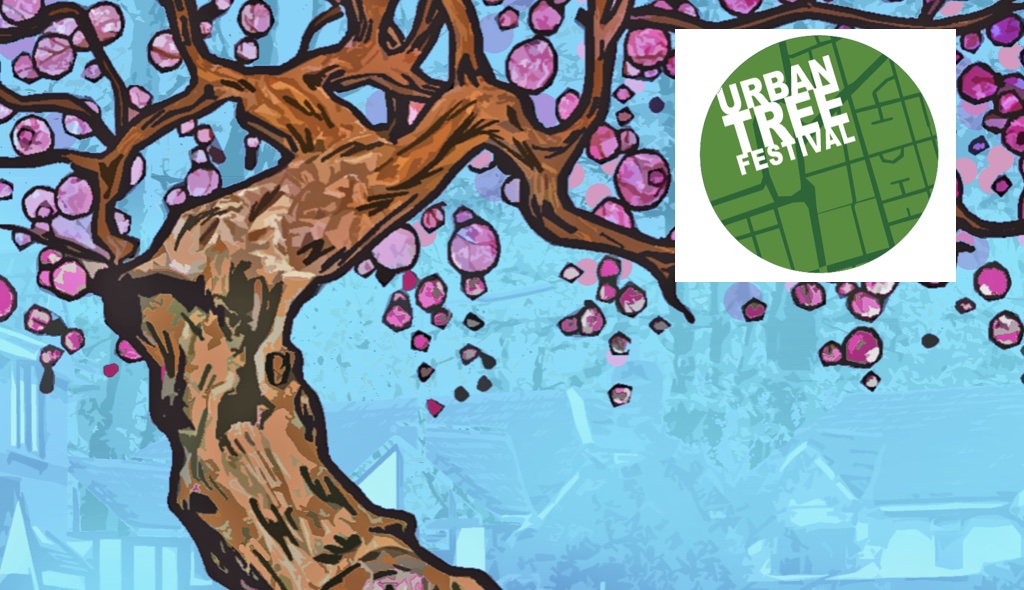
UTF Creative writing image for JW workshop

How can we use art to inspire words? Ekphrasis translates as ‘description’ in Greek and, today, an ekphrasis is used to mean a literary description of art. In effect, it is one artist responding to another, using a verbal response to visual representations. But beyond writing about what you see, it is about connecting to an image, exploring how our encounter with it makes us feel. What memories does it evoke? What story might it be telling? What do you think the artist was trying to say and what might you say to them?  

In this 75 minute workshop, led by Joanna Wolfarth, the Urban Tree Festival writer-in-residence, we will use art as the subject matter and inspiration for your own poetry and prose on the theme of Secrets of the Trees. After exploring some examples of ekphrasis, Joanna will present and discuss several artworks before leading a writing exercise in response to these visual prompts. 

Hopefully the workshop will inspire you to submit an entry to the Urban Tree festival 2023 writing competition that has the theme of Secrets of the Trees.

Early bird and discounted tickets are available to the first 12 bookers, and there are 3 free places for those unable to afford a ticket, please get in touch if you need to claim one. Go to the About / Who we are page and scroll to the bottom to complete the contact form.

This event has happened
Log in to book a ticket. Not registered yet? Register first.
Lost your password?

2023-02-15 20:00
2023-02-15 20:00
2023-02-15 20:00

Online
Sub-collection

creative writing

Sub-collection · 166 items

Related

walkingevent

Walking Writers’ Circle – Walking Together

An “Invitation Only” event for shortlisted authors in the Walking Together writing ocmpetition with VIP guests. VIP guests confirmed include Amelia Hodsdon, our current writer-in-residence, and Ann de Forest, author, poet and editor of “Ways of Walking”.

Andrew Stuck
url

The Works of Alexandra and Jyanne

This website will lead you to the collected works of Alexandra Samarova and Jyanne Palaruan. The website is a Notion site and is being updated constantly.

post

The Privilege of Walking and Writing: A Journey Down the Street and Across the World 

During the past many summers, I’ve explored the relationship between walking and writing. As Kathleen Rooney, our flâneuse laureate of Chicago, wrote “A walk is almost never the fastest way to get somewhere. But both walks and poems can afford a more textured and deep experience of space and time.” Source: The Privilege of Walking

Andrew Stuck
walkingevent

MIX 2023 Storytelling in Immersive Media

Presented in partnership with Bath Spa University, MIX 2023 is an opportunity for scholars and practitioners to come together to share current research and practice in the rapidly developing field of storytelling in immersive environments. 

Stella Wisdom

pedestrian acts

By de Certeau: In “Walking in the City”, de Certeau conceives pedestrianism as a practice that is performed in the public space, whose architecture and behavioural habits substantially determine the way we walk. For de Certeau, the spatial order “organises an ensemble of possibilities (e.g. by a place in which one can move) and interdictions (e.g. by a wall that prevents one from going further)” and the walker “actualises some of these possibilities” by performing within its rules and limitations. “In that way,” says de Certeau, “he makes them exist as well as emerge.” Thus, pedestrians, as they walk conforming to the possibilities that are brought about by the spatial order of the city, constantly repeat and re-produce that spatial order, in a way ensuring its continuity. But, a pedestrian could also invent other possibilities. According to de Certeau, “the crossing, drifting away, or improvisation of walking privilege, transform or abandon spatial elements.” Hence, the pedestrians could, to a certain extent, elude the discipline of the spatial order of the city. Instead of repeating and re-producing the possibilities that are allowed, they can deviate, digress, drift away, depart, contravene, disrupt, subvert, or resist them. These acts, as he calls them, are pedestrian acts.

Problem?

Encountered a problem? Report it to let us know.

  • Include the page on which you encountered the problem.
  • Describe what happened.
  • Describe what you expected to happen.
Follow us