Search
My feed
2021

St Non’s Sound Walk

Holy Well of St Non – Pembrokeshire Coast National Park
St Non's Bay, United Kingdom
110 minutes

ancient

Collection · 9 items

Horatio Clare

Collection · 2 items

Ireland

Collection · 52 items

tourism

Collection · 24 items

Related

Curated news

‘Sometimes Google Maps doesn’t work and Irish people help by walking you to the place you want’ – The Irish Times

New to the Parish: Fatemeh Amerehi arrived from Iran in 2021 Source: ‘Sometimes Google Maps doesn’t work and Irish people help by walking you to the place you want’ – The Irish Times

Walking piece

Terminalia 24 – a provocation

Terminalia 24 https://youtu.be/WoorOqkUS9w Images and words by invited artists, responding to Kel Portman's provocation concerning boundaries

Kel Portman rozchalk +2
Walking piece

Down to the Woods

Writer Arnold Thomas Fanning takes up photography, and quickly realises that to get better he will have to take a lot of photos: so he begins to go out with his camera on 'PhotoWalks.' This podcast documents a PhotoWalk in a local forest.

Arnold Thomas Fanning
Sound walk

Back on the Drom: Steps in Time (episode 1)

The listener joins our hosts Livvi & Gus as they explore the old ruin of Moore Hall, near Lough Cara Co. Mayo. Although one is not required to listen in situ, it would certainly enhance the experience - safely exploring as one listens to the piece.

sonicbloom_rh

ancient

Collection · 9 items

Horatio Clare

Collection · 2 items

Ireland

Collection · 52 items

tourism

Collection · 24 items

Related

Curated news

‘Sometimes Google Maps doesn’t work and Irish people help by walking you to the place you want’ – The Irish Times

New to the Parish: Fatemeh Amerehi arrived from Iran in 2021 Source: ‘Sometimes Google Maps doesn’t work and Irish people help by walking you to the place you want’ – The Irish Times

Walking piece

Terminalia 24 – a provocation

Terminalia 24 https://youtu.be/WoorOqkUS9w Images and words by invited artists, responding to Kel Portman's provocation concerning boundaries

Kel Portman rozchalk +2
Walking piece

Down to the Woods

Writer Arnold Thomas Fanning takes up photography, and quickly realises that to get better he will have to take a lot of photos: so he begins to go out with his camera on 'PhotoWalks.' This podcast documents a PhotoWalk in a local forest.

Arnold Thomas Fanning
Sound walk

Back on the Drom: Steps in Time (episode 1)

The listener joins our hosts Livvi & Gus as they explore the old ruin of Moore Hall, near Lough Cara Co. Mayo. Although one is not required to listen in situ, it would certainly enhance the experience - safely exploring as one listens to the piece.

sonicbloom_rh
Sound walk
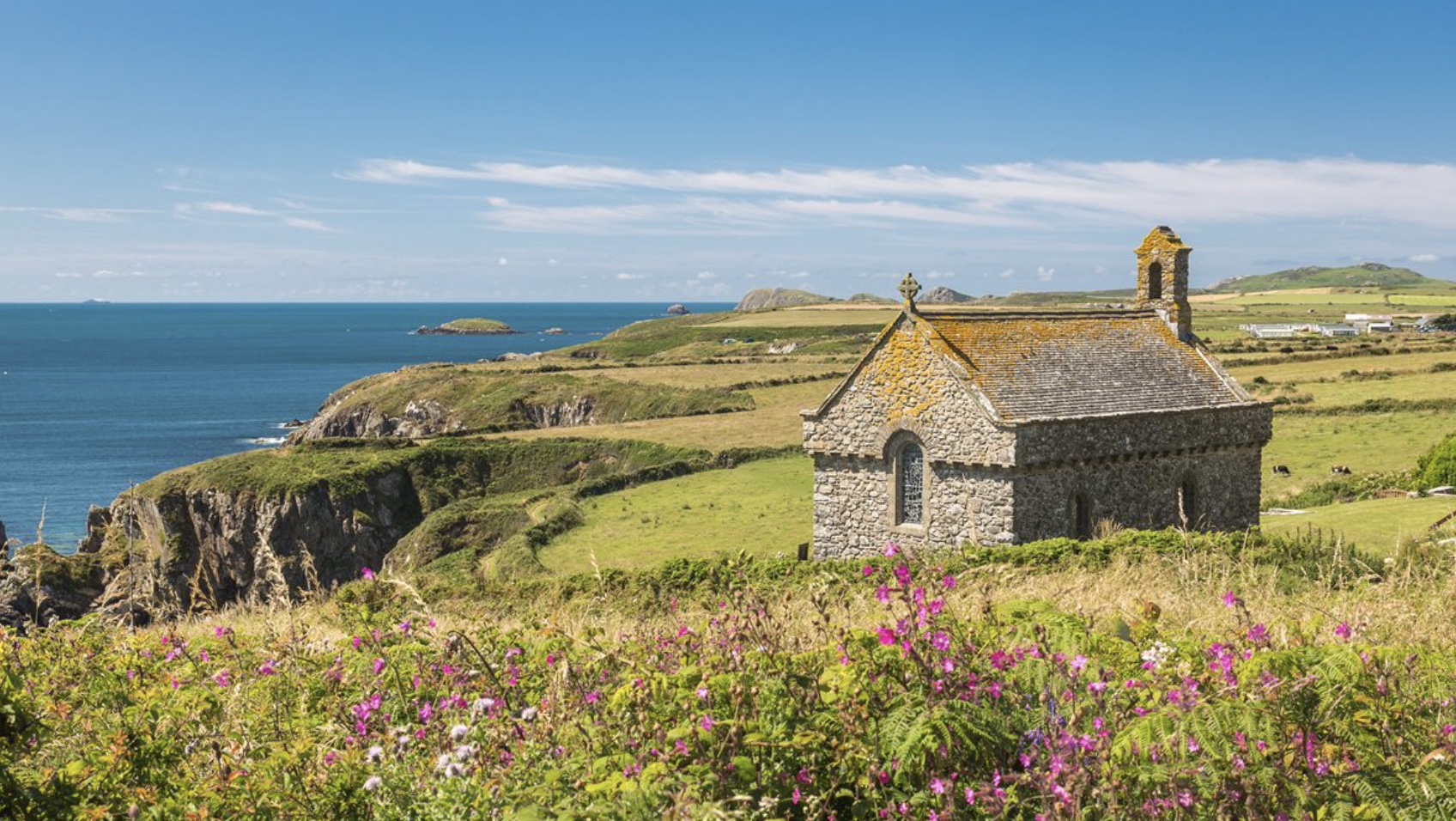
This podcast gives people from all over the world the chance to follow in the footsteps of ancient pilgrims and experience the stories, secrets and sounds of St Non’s Chapel and Holy Well, the reported birthplace of Wales’ patron saint.

This podcast gives people from all over the world the chance to follow in the footsteps of ancient pilgrims and experience the stories, secrets and sounds of St Non’s Chapel and Holy Well, the reported birthplace of Wales’ patron saint.

The St Non’s Sound Walk, created by acclaimed Welsh writer and broadcaster Horatio Clare, takes listeners on a journey by boat and on foot, revealing an inspirational landscape wedged between the sea and Britain’s smallest city, St Davids.

This audio tour-de-force is built around the voices of artists, farmers, historians, musicians, seafarers and writers who speak about their relationships to St Non’s, the sea, the landscape, the history, the myths, the creativity and spirituality of the place.

Horatio is joined by writer/broadcaster Laura Barton, who brings a writer’s eye and a traveller’s curiosity to the sound walk as they stroll along the Coast Path to visit St Non’s on a sunny summer’s morning.

There are contributions from female sea captain Ffion Rees, Welsh writers Jon Gower and Brenig Davies, singers Mike Chant, Roy Jones, Lis Cousens and Rudi Lloyd Benson, artists Jackie Morris and Becky Lloyd, farmers Elspeth Cotton and Robert Davies, scholar Dean Sarah Rowland Jones, marine archaeologist Julian Whitewright and seafarer Graham da Gama Howells.

Recorded in August 2021, the sound walk was funded by Ancient Connections, a project that is reviving the ancient links between North Wexford in Ireland and North Pembrokeshire, as well as Ireland and Wales, in order to create sustainable tourism in and between these regions.

Credits

Hosted by: Pembrokeshire Coast National Park

APA style reference

Clare, H. (2021). St Non’s Sound Walk. walk · listen · create. https://walklistencreate.org/walkingpiece/st-nons-sound-walk/

pedestrian acts

By de Certeau: In “Walking in the City”, de Certeau conceives pedestrianism as a practice that is performed in the public space, whose architecture and behavioural habits substantially determine the way we walk. For de Certeau, the spatial order “organises an ensemble of possibilities (e.g. by a place in which one can move) and interdictions (e.g. by a wall that prevents one from going further)” and the walker “actualises some of these possibilities” by performing within its rules and limitations. “In that way,” says de Certeau, “he makes them exist as well as emerge.” Thus, pedestrians, as they walk conforming to the possibilities that are brought about by the spatial order of the city, constantly repeat and re-produce that spatial order, in a way ensuring its continuity. But, a pedestrian could also invent other possibilities. According to de Certeau, “the crossing, drifting away, or improvisation of walking privilege, transform or abandon spatial elements.” Hence, the pedestrians could, to a certain extent, elude the discipline of the spatial order of the city. Instead of repeating and re-producing the possibilities that are allowed, they can deviate, digress, drift away, depart, contravene, disrupt, subvert, or resist them. These acts, as he calls them, are pedestrian acts.

Problem?

Encountered a problem? Report it to let us know.

  • Include the page on which you encountered the problem.
  • Describe what happened.
  • Describe what you expected to happen.
Follow us