Search
My feed
MPE working tight crop

The 42 walks of Contención Island

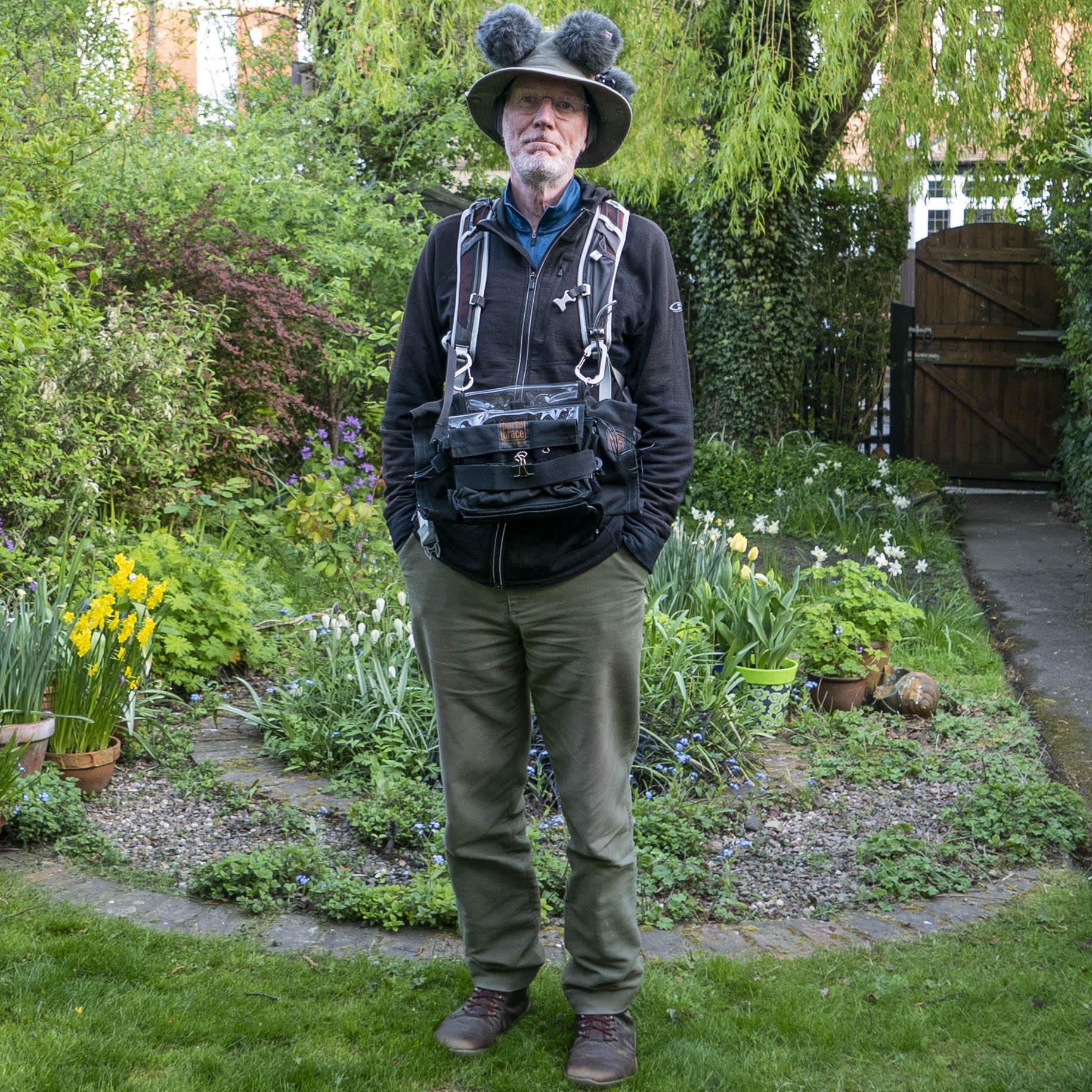
Martin P Eccles is a sound artist and poet, who uses a range of methods to respond to time, distance and place in the landscape.

His work The 42 walks of Contención island, in which he went on 42 different walks from his house during the COVID quarantine in the UK, is shortlisted for the Sound Walk September 2020 Awards.

Below, Martin discusses the background to his work.

in the covid-19 pandemic   containment slows spread   locked down for six weeks   take one period of exercise a day   forty-five minutes of walking walk in any   and every direction   walking while contained   walk on Contención Island   walking maps a fantastical island   listen to the walks   listen to six weeks   listen to forty-two days   listen to lockdown   walk in your imagination   the isle is full of noises sounds and sweet airs   sounds drift   sounds carry   sounds flow   the tumble into south haven   Contención’s distant thunder   another joins it, in from the north   spating, roaring, seething along   a lost river crosses the island   to flow out by skerries in the south east   a lowland vale links south and north haven   at the mouth of north haven   church point, remote and peaceful   the north west peninsula is quiet   in the north west is convent shield   a refuge, where birds sing above the bench   walk a conjured coastline   by Oswald’s Bay – too exposed to offer safe mooring   by rocky bays between Saint Nicholas’ point and the Cow Head cliffs   back along the long dunes of the south   return, reverse, retrace   walk pace step stride   another day walking on Contención Island

The approach of lockdown was heralded. The week before, in Galway, we had cut short our visit in advance of the uncertainties of Eire’s impending lockdown – our friend’s re-scheduled flight, our rebooked ferry and an ‘against the clock’ drive to Dublin all contributed to the uneasy inevitability. As it transpired the UK was just behind and once lockdown was arriving, I was faced with how to respond. I had already realised that walking, daily walking for exercise and well-being, was going to be important. The parameters for daily exercise were never formally stated but I decided that I would be walking away from our house for about 20 minutes and then returning, though as the walks evolved, they settled into a duration of around 60 minutes. I walked at different times of the day, spread from before dawn to dusk, and I recorded each walk in three ways – firstly in a sound recording; secondly as a trace on a map and thirdly in poetry.

Though I was recording the walks, in anticipation of subsequent presentation or installation, they were an artistic response of both exploration and listening. Exploration of places I had never been whilst living in the area for 40 years; exploration of ways of walking – avoiding other pedestrians, stepping off pavements, passing by on the other side of the street. The widely commented drop in traffic felt more visible than it was audible – the sounds of even a small amount of traffic created a background hum (or roar, depending on distance) – and this made urban listening a relatively familiar act. It was only on the early morning, dawn walks that mechanical noise was scarce, leaving birdsong uncontested.

The trace of the walks, incrementally marked on a map, drew out an island. Contención Island (contención is containment in Esperanto – an international name for an international virus) was an irregular shape – indented and fissured – progress on the ground was shaped by the places walked through – cul-de-sacs stopped routes joining, as did main road traffic or the local Metro rail lines while alleyways and cemeteries offered novel routes through. Thus, an island emerged, and the outline marked the shore of our lockdown world. Beyond was the uncharted. For the poetry, as I would be writing a poem a day, I used a form that could respond to the pace of the production of my walks. The mesostic (prominently championed by John Cage) offered a form that allowed me a rapid poetic response, a distillation of the walk (across the horizontal text) and a comment on the political context (down the ‘spine’ word(s)).

The walks had always been intended as a vehicle for a listener’s mental excursion, a mind-walk, for other walkers or for those who could not themselves get out, those shielding themselves or shielding others. I posted the recordings of each day’s walk on my website blog, Facebook and Soundcloud; once a week I emailed a group of friends and others who have previously expressed interest in my work. Over the 42-day period of the work there were 650 contacts; the daily, regular, repetitive blog posting generated a sense of liveness – a sense of an activity that was ongoing, being continued and developing on a daily basis. Whilst the format of a daily blog was helpful in generating a sense of ‘liveness’, it was necessary to present the work in a slightly different way to offer a view of the completed whole. Radio compositions offered another way of considering and offering the work, with an upcoming listening on Radiophrenia.

However, the idea of the island lives on – Contención Island, a fantastical island inside a city, a place of containment, a place of freedom to walk – and it is to Contención Island that I now return as we approach our second time of lockdown.

Martin’s background on his 42 walks is the fifth in a series of the artists shortlisted for the Sound Walk September 2020 Awards talking about their work.

APA style reference

Eccles, M. (2020). The 42 walks of Contención Island. walk · listen · create. https://walklistencreate.org/2020/11/12/the-42-walks-of-contencion-island/
Newcastle upon Tyne, UK
Sub-collection

Covid-19

Sub-collection · 50 items
Sub-collection

lockdown

Sub-collection · 24 items

Related

Sound walk

The 42 walks of Contención Island

During the UK's COVID-19 lockdown, the author conducted daily 20-minute walks in all directions from their home, creating and mapping a fictional place called Contención Island through recorded sounds and poems over 42 days. This project combines walking, audio recordings, and poetic texts to explore a mapped imaginary island shaped by the paths of lockdown walks.

Martin Eccles
Sound walk

The Ears May Travel

The Ears May Travel came into existence spontaneously during the covid-19 pandemic in spring 2020. During lockdown I simply felt the urge to travel – at least in imagination. But it is not only a vacation for the senses. It is a commentary in a time when countries around the globe are closing their borders.

La Pesch
book

Afoot and Lighthearted: A Journal for Mindful Walking

Afoot and Lighthearted will teach readers how to harness the power of walking to cultivate and nourish attention, inspiration, and determination, as well as to combat distraction, anxiety, and the dreaded creative block.  Organized around thematic prompts designed to help makers take a break from digital life and tap into the transformational magic of creative journaling, Afoot

Bonnie Smith Whitehouse
book

EDGE

An Eyeglass zine with photographs and written text by Julius Smit. £2.50 “Breathtaking shots and a much-needed dose of poignant intelligence.”

Julius Smit

pedestrian acts

By de Certeau: In “Walking in the City”, de Certeau conceives pedestrianism as a practice that is performed in the public space, whose architecture and behavioural habits substantially determine the way we walk. For de Certeau, the spatial order “organises an ensemble of possibilities (e.g. by a place in which one can move) and interdictions (e.g. by a wall that prevents one from going further)” and the walker “actualises some of these possibilities” by performing within its rules and limitations. “In that way,” says de Certeau, “he makes them exist as well as emerge.” Thus, pedestrians, as they walk conforming to the possibilities that are brought about by the spatial order of the city, constantly repeat and re-produce that spatial order, in a way ensuring its continuity. But, a pedestrian could also invent other possibilities. According to de Certeau, “the crossing, drifting away, or improvisation of walking privilege, transform or abandon spatial elements.” Hence, the pedestrians could, to a certain extent, elude the discipline of the spatial order of the city. Instead of repeating and re-producing the possibilities that are allowed, they can deviate, digress, drift away, depart, contravene, disrupt, subvert, or resist them. These acts, as he calls them, are pedestrian acts.

Problem?

Encountered a problem? Report it to let us know.

  • Include the page on which you encountered the problem.
  • Describe what happened.
  • Describe what you expected to happen.
Follow us